

A floor’s performance is shaped before the final coating goes down. Epoxy resin flooring is often chosen for its continuous appearance and practical upkeep, but the coating alone doesn’t determine how well it suits a space or performs over time.
An epoxy system typically combines resin and hardener, applied over prepared concrete in layers that may include a primer, a body coat and a protective finish. Each layer has a role, and the condition of the concrete beneath them matters just as much. Knowing how the system is built helps you assess whether it fits your room’s daily demands.
This guide explains how epoxy flooring works, where it may be suitable and what to consider before planning a project. You’ll learn how preparation supports adhesion, why moisture and surface condition need attention, and how traffic, cleaning and finish affect the decision. Use these points to weigh epoxy’s practical benefits against its limitations and identify the right questions for your floor.
Key Takeaways
- Epoxy resin flooring forms a continuous surface, but systems can differ in their layers, texture and finish.
- Match the flooring choice to how the room is used, including its traffic, cleaning routine and exposure to spills.
- Cracks, contamination, moisture and old coverings can affect preparation and project planning.
- Measuring, concrete grinding and floor preparation are part of Vic Concrete Polished’s epoxy flooring work.
- Decorative flakes can add colour variation and texture to a coating system.
What is epoxy resin flooring, and where is it commonly used?
Epoxy resin flooring is a coating system made by combining resin with a hardener and applying the mixture over a prepared substrate, commonly concrete. As it cures, the components form a solid surface bonded to the floor beneath. The concrete slab provides the structure; the resin system creates the visible finish. Existing joints or cracks in the concrete may still affect the finished surface.
Epoxy is often described as seamless because it creates a continuous surface without the grout lines found between tiles. That can make routine cleaning more straightforward, but it doesn’t mean every system performs in the same way. Preparation, the coating layers and conditions in the space all influence the result. Epoxy is a broad class of materials used in many applications. Flooring is one use, shaped by the selected system and the substrate.
Garages, workshops and commercial spaces may suit resin coatings where the floor needs to handle regular foot traffic, equipment or recurring cleaning. A home garage has different demands from a workshop where tools, vehicle movement or spills are part of everyday use. Consider the type and frequency of traffic, cleaning methods and substances the floor may encounter when deciding whether a coating is appropriate and what finish to choose.
What does epoxy resin flooring look and feel like?
The finished floor can appear smooth and uniform, with colour and sheen determined by the coating system. Some finishes are plain and understated; others include decorative effects. Surface feel can vary too, so a glossy appearance doesn’t indicate a particular level of grip. Decorative flakes add colour variation and texture. Their appearance depends on the system and application. The decorative flake epoxy floor guide explains this option in more detail.
Which spaces can epoxy flooring suit?
Suitability depends on matching the flooring system to the room’s use. A home garage, hands-on workshop and commercial area can have different traffic patterns, cleaning routines and exposure to substances. Those conditions inform the coating and finish choices. The concrete’s condition and other site factors matter as well, so a familiar use case alone isn’t enough to determine the right application.
Start by considering how the room is used day to day, not just how the finished floor might look. Vic Concrete Polished provides epoxy and resin flooring alongside concrete grinding and floor preparation, bringing the surface assessment and finish together in the project plan.
How does an epoxy resin flooring system work?
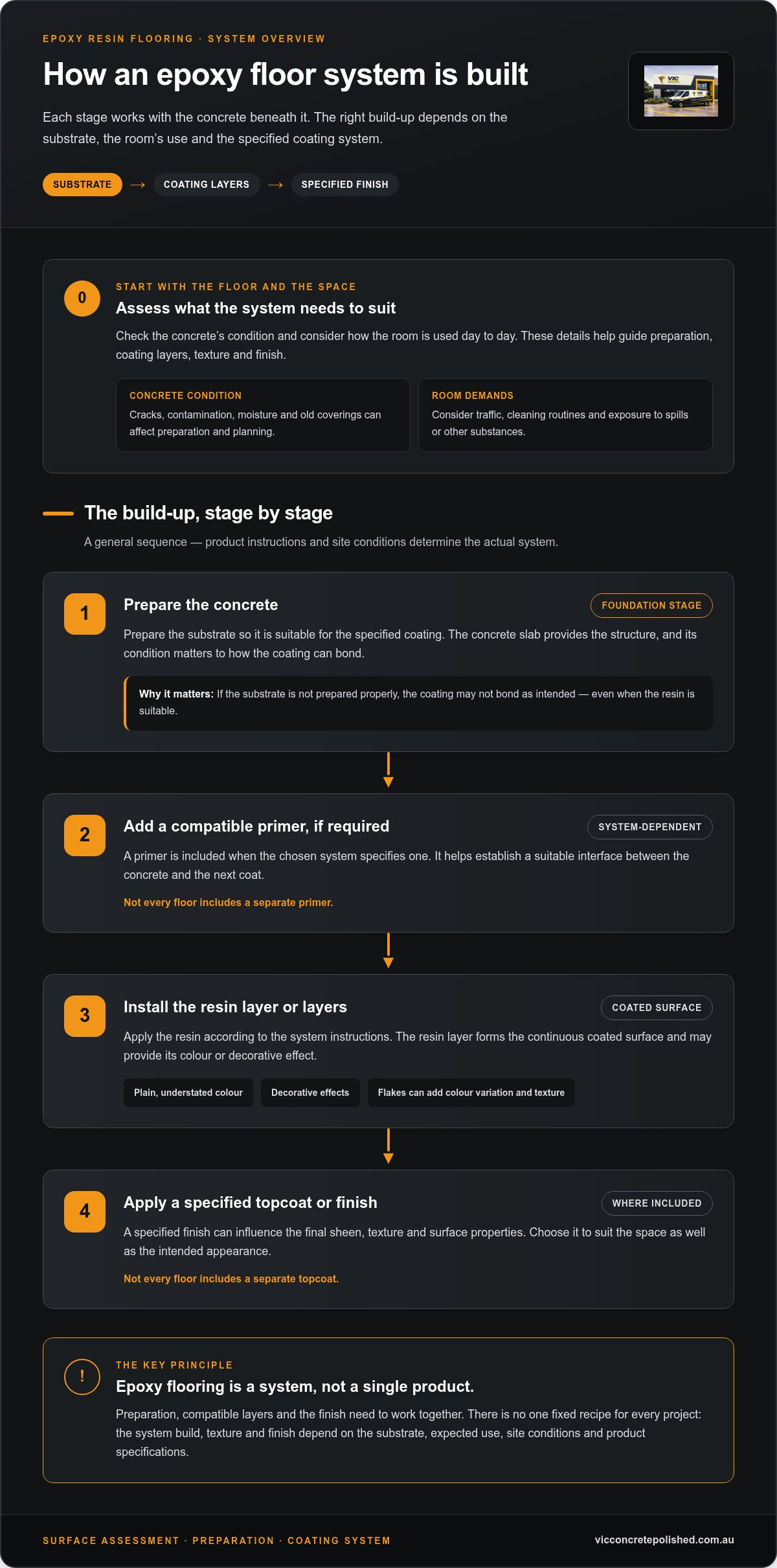
An epoxy floor is built in stages, with each part selected to suit the prepared concrete and the conditions in the space. The general sequence is substrate preparation, a compatible primer where the system requires one, one or more resin layers, then a finish if specified. This is a general outline, not a fixed recipe. Product instructions and site conditions determine the actual build-up.
Epoxy flooring is a system, not a single product: performance depends on how the prepared substrate, coating layers and finish work together. Bonding is the connection between the coating and concrete. If the substrate isn’t prepared properly, the coating may not bond as intended, even when the resin is suitable. Surface preparation is part of the flooring system, not a separate detail to overlook.
In practical terms, the sequence may involve:
- Preparing the concrete so it is suitable for the specified coating.
- Applying a compatible primer if the system requires one.
- Installing the resin layer or layers according to the system instructions.
- Applying a specified topcoat or finish, where included in the design.
What does each layer contribute?
Preparation creates the starting surface. A primer, when specified, helps establish a suitable interface between the concrete and the next coat. The resin layer forms the continuous coated surface and may provide its colour or decorative effect. A specified topcoat can influence the final sheen, texture and surface properties. The role of each layer depends on the products used; not every floor includes a separate primer or topcoat.
Why do epoxy flooring systems differ?
Different rooms place different demands on a floor, so system selection follows the intended use and the manufacturer’s specifications. The coating build, texture and finish can vary with the substrate, expected use and desired appearance. A decorative finish, for example, may use different layers from a plain coating. There isn’t one sequence or specification for every project.
Compatibility matters throughout. Layers need to work together and be applied according to their instructions. Changing one part of the system can affect how the rest performs. The finish also needs to suit the space, rather than being selected for appearance alone. A workshop and a lightly used room may call for different considerations, even if both use epoxy.
Planning starts with the floor and the conditions it will face, then matches those details to a suitable system. Vic Concrete Polished provides epoxy and resin flooring alongside floor preparation and concrete grinding, bringing the substrate and finish into the same project plan.
What can epoxy flooring do well, and what should you assess carefully?
An epoxy coating can create a continuous, easy-to-clean surface and is available in different colours and finishes. These are useful qualities, but they don’t guarantee how a particular floor will perform. Durability, chemical resistance and slip performance depend on the selected system, the concrete’s condition and how the space is used.
A coating can’t correct an unsuitable slab or compensate for poor preparation. Cracks, contamination, uneven areas or moisture concerns may affect how the coating bonds and wears. The floor needs to be assessed and prepared for the intended system; the resin finish is only one part of the result.
| Consideration | What it may offer | What to assess |
|---|---|---|
| Continuous finish | Fewer joints than a tiled surface can make routine cleaning more straightforward. | Existing cracks and floor movement can still show through or affect the coating. |
| Wear and chemical exposure | A suitable system may be selected for the traffic or substances expected. | Vehicle movement, equipment, spills and cleaning products place different demands on the floor. |
| Surface texture | Texture and finish can be chosen to suit the application. | Gloss or colour alone doesn’t indicate slip performance; this is system-specific. |
Which performance claims need context?
“Hard-wearing” and “chemical-resistant” describe potential properties, not a universal result. A coating’s response depends on the system and the type, concentration and duration of exposure. A workshop floor with occasional drips has different demands from one exposed to frequent spills, heavy traffic or repeated cleaning. Regular cleaning methods are part of the floor’s real operating conditions too.
Slip performance needs the same care. A smooth-looking or glossy coating shouldn’t be assumed to be slippery, and a textured appearance isn’t proof of grip. Consider how the area is used, including whether contaminants or wet cleaning are likely.
How does epoxy compare with other concrete finishes?
Epoxy is a resin coating applied over concrete. Mechanically polished concrete uses grinding and polishing to refine the concrete itself as the finished surface. Their appearance and maintenance considerations differ because one is a coating system and the other is a mechanically finished slab. With mechanical polishing, the concrete remains the visible surface.
Grind and seal is another option: the concrete is ground, then sealed, rather than covered with a resin coating system. Compare these finishes by looking at the existing slab and how the space operates. A grind and seal concrete floor has a different look and surface treatment. Considering the substrate alongside traffic, cleaning and exposure helps narrow down the suitable finish.
What should you check before planning epoxy resin flooring?
Start with the room and the floor already in it. Before planning epoxy resin flooring, note how the space is used, what the existing surface is made of, its visible condition and the finish you want. These details help shape the system and identify preparation needs before coating work begins.
Use this sequence to organise the information:
- Describe the room’s use. Note regular foot traffic, vehicle use, equipment and any substances that may reach the floor.
- Identify the existing surface. Record whether it’s bare concrete or has tiles, carpet, vinyl or another covering.
- Look closely at its condition. Note visible cracks, uneven areas, stains, residue or places where a previous covering is lifting.
- Set finish priorities. Consider colour, appearance and texture alongside cleaning and day-to-day use.
Be specific. A small oil-marked area, old adhesive or a low spot can affect the work required, even if the rest of the floor looks sound. Photos and notes can help make these observations clear during project planning.
How do you assess the existing concrete floor?
Record the slab’s visible condition and any previous floor coverings, including adhesive or residue left after removal. Cracks may need assessment. Contamination can interfere with coating adhesion, while unevenness may affect the finished appearance. Existing coverings can conceal the concrete, so their removal may be part of preparation. Assessment helps identify whether concrete grinding, covering removal or other project-specific preparation is needed before coating.
Preparation isn’t a standard set of steps applied identically to every floor. It depends on what’s present and what the selected system requires. Vic Concrete Polished’s concrete floor preparation guide explains why the substrate matters before coating.
A careful substrate assessment gives the flooring system a more reliable foundation. It can also bring potential issues to light before they’re hidden beneath a new finish.
How do room use and finish priorities shape the brief?
Consider what the floor faces during an ordinary week, not just on installation day. Vehicle movement in a garage, equipment in a workshop, possible spills and the cleaning routine all help define the surface’s demands. Think about the appearance you want and whether texture is a priority. These details help tailor the coating system and finish to the space instead of relying on a generic specification.
Vic Concrete Polished provides flooring measurement, concrete grinding, covering removal and epoxy and resin flooring. Discuss your epoxy flooring project with the team to plan around the existing floor and how you use the space.
How Vic Concrete Polished approaches epoxy resin flooring projects
A well-planned epoxy floor starts with the space and substrate, not just the colour or finish. Vic Concrete Polished provides epoxy and resin flooring for residential and commercial spaces, along with floor preparation, measuring, concrete grinding and floor-covering removal. Bringing these services into the project plan helps align the coating choice with the existing floor and the way the area will be used.
The work can be planned in stages: measure the area, assess the surface, identify preparation needs, then apply the selected coating system and finish. Each stage informs the next. A floor with an existing covering, for example, may need the covering removed before the concrete can be assessed. The condition of exposed concrete then helps guide preparation for the chosen system.
How does preparation fit into the flooring work?
Concrete grinding and floor-covering removal are part of Vic Concrete Polished’s surface-preparation work. Preparation addresses the substrate in line with the coating system’s requirements; it isn’t a standard step that looks the same on every job. Existing coverings, residue, uneven areas or visible damage can influence the work needed before a resin coating is applied.
Careful groundwork supports the connection between the concrete and coating, as well as the quality of the finished surface. The appropriate preparation depends on the substrate and selected system. Assessing the floor before settling on a finish is practical because the condition beneath the coating matters to the whole project.
What is a useful next step for a flooring project?
Put together a clear picture of the space. Note whether it’s residential or commercial, what the floor is used for and what currently covers it. Record visible issues such as cracks, stains or uneven patches, and think about the appearance and practical finish you want. These details provide a useful starting point for planning a surface-finishing approach.
- Space: Describe the room and its intended use.
- Current floor: Note the existing surface, coverings and visible condition.
- Priorities: Outline traffic, cleaning needs and finish preferences.
With this information in hand, you can have a focused conversation about how measuring, preparation and coating fit together for your floor. Discuss your epoxy flooring project with Vic Concrete Polished.
Make the next flooring decision with confidence
Before committing to epoxy resin flooring, think about how the space needs to serve you over time, not only how you want it to look when the work is complete. Consider the room’s everyday traffic, cleaning routine and exposure to spills, then weigh those practical demands against your priorities for colour, sheen and texture.
A clear brief helps keep the project focused on a finish that fits the space, rather than a look chosen in isolation. You don’t need every detail settled before taking the next step. Notes about the existing surface, visible issues and intended use provide a useful starting point.
Vic Concrete Polished provides epoxy and resin flooring, concrete grinding, measuring and floor preparation. Start a conversation about your floor to plan a finish around your space and how you use it.
Frequently Asked Questions
How long does epoxy resin flooring take to cure before the floor can be used?
There isn’t one cure time that applies to every epoxy floor. Product instructions, site conditions and the coating build affect when people can walk on it and when it’s ready for vehicles, equipment or cleaning. These are different stages: a surface may feel dry before it’s ready for heavier use. Plan access around the specified return-to-service guidance, rather than relying on touch alone.
Can epoxy resin flooring be applied over an existing coating?
Sometimes, but only if the existing coating is firmly bonded and compatible with the new system. Peeling, soft, contaminated or poorly adhered material can undermine the new finish, so simply coating over it may not be suitable. A flaking patch in a garage, for example, could need removal and further preparation. Assess the existing coating as part of planning, and follow the new system’s requirements.
Does epoxy flooring have a strong smell during installation?
Odour during installation varies with the coating product and application conditions, so there isn’t one answer for every system. If odour is a concern, factor it into planning, particularly in an occupied home or a workplace that shares air with the area. Follow the product’s handling and ventilation instructions, and keep people away from the work zone as directed during application and curing.
Can epoxy resin flooring be installed over damp concrete?
Not without assessing what’s causing the moisture and whether the selected system is designed for the measured conditions. Concrete that looks dry can still contain moisture, while visible dampness may indicate a problem that needs attention before coating. Applying a system without accounting for moisture can affect adhesion or lead to coating issues. Moisture assessment and the manufacturer’s limits should guide whether preparation or a suitable mitigation approach is needed.
Will epoxy flooring cover cracks in a concrete floor?
A coating may bridge or conceal some minor surface marks, but it shouldn’t be treated as a repair for every crack. A crack that moves, widens or relates to a deeper slab issue can reappear through the finish or affect it. Note the crack’s location and appearance before planning the work. Its cause and condition help determine whether repair is needed and whether coating the area is appropriate.
Is epoxy resin flooring suitable for homes as well as commercial spaces?
Yes, epoxy resin flooring can be considered for residential and commercial settings, but the same specification won’t suit every room. A home garage, for example, may face vehicle tyres and occasional spills, while a retail or work area may have different traffic and cleaning routines. Consider how the floor will be used each day, then match the system and finish to those practical demands.
Can epoxy resin flooring become slippery when wet?
It can present a slip risk when wet, but the level of grip depends on the chosen system, surface texture and conditions underfoot. Water, cleaning residue, oils or other contaminants can change how a floor feels in use. A glossy appearance alone doesn’t tell you how slip-resistant a surface is. Consider where wetness or spills are likely, and include the required texture and cleaning routine in the flooring brief.


