

What if the biggest factor in your epoxy floor coating cost in Australia isn’t the finish you choose, but what the concrete needs before coating begins? Online estimates can offer a starting point, but they can’t account for every crack, old floor covering or preparation requirement.
It’s reasonable to want a durable floor without paying for a system your space doesn’t need. The key is to compare the full scope of work, not just a headline rate. Preparation and coating go hand in hand: the concrete’s condition, how the area will be used and the finish you prefer all shape the work involved.
This guide explains the main factors behind an epoxy flooring quote in Australia and how resin and decorative flake systems differ in use, finish and scope. You’ll also learn what details to gather before requesting a tailored quote, so you can compare options with a clearer picture of what each includes. Vic Concrete Polished brings floor preparation and coating together as connected parts of a flooring project.
Key Takeaways
- Understand why epoxy floor coating cost Australia depends on the floor’s condition and the work required, not just the coating material.
- See how floor size, layout, access and existing tiles, carpet or vinyl can affect the preparation and application scope.
- Compare resin and decorative flake systems by appearance, intended use and the layers included, rather than headline price alone.
- Prepare a clearer project brief with measurements, details about the current floor, intended use, photos and notes on visible damage or uneven areas.
- Learn how Vic Concrete Polished brings measuring, floor preparation and epoxy resin or decorative flake coating together in a project suited to the floor.
Epoxy floor coating cost in Australia: why there is no single project price
Epoxy floor coating cost reflects the project scope, not just the resin. The work may include assessing and preparing the concrete, applying the chosen coating system and completing its finish. The amount of work depends on the floor’s area and condition, the preparation required and the finish selected.
That’s why two projects with similar floor areas can need different scopes. A clean, sound concrete surface may need less preparation than one with old adhesive, uneven patches or visible damage. A decorative finish may also involve different application stages from a straightforward resin coating. Compare what each estimate includes and how the proposed work suits the floor’s intended use.
What does an epoxy floor coating quote cover?
A quote should describe the proposed coating system and the stages involved in applying it. Depending on the floor and finish, the scope may cover surface preparation, such as concrete grinding, coating materials and labour for application. A decorative flake system may also include applying flakes and a finishing layer, if those steps are part of the selected system.
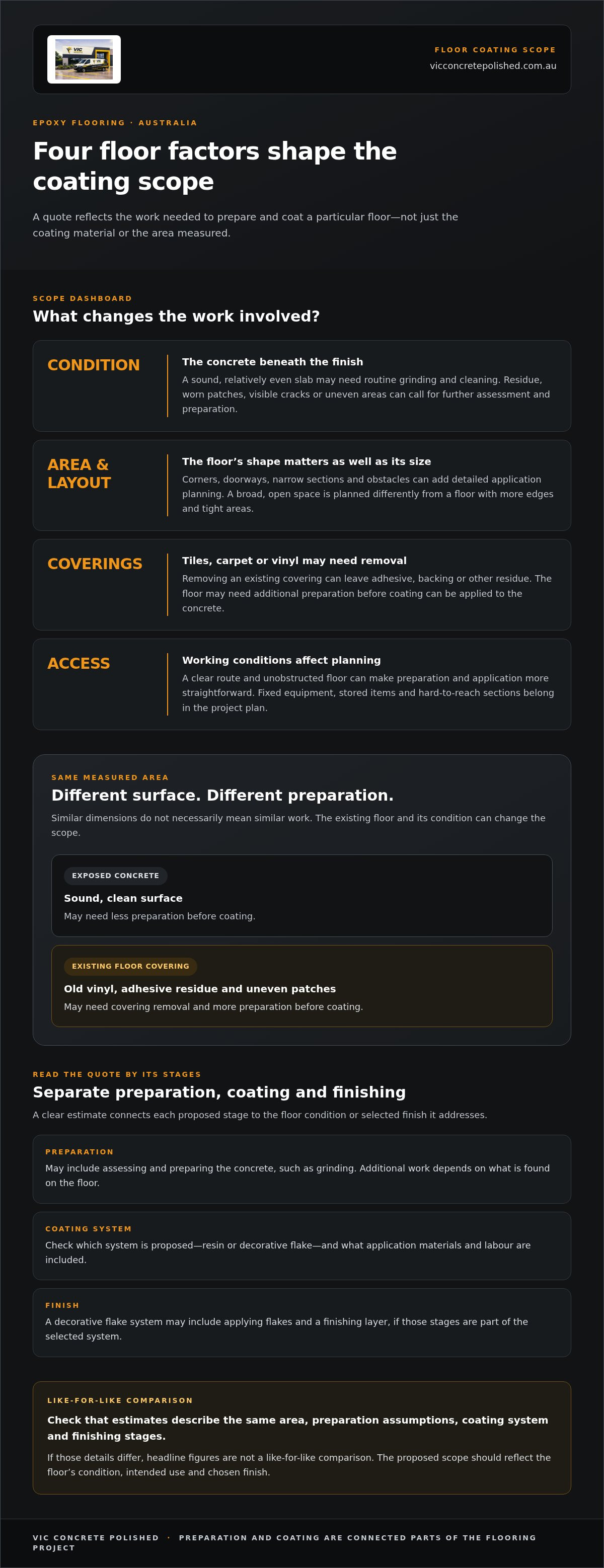
Separate the components when reviewing an estimate: preparation is distinct from coating, and finishing work is distinct from both. This helps you see whether the proposed scope addresses the concrete as well as the visible finish. Inclusions should reflect the floor’s condition and the selected coating, rather than assume every project needs identical steps.
Look for a clear description of the work, not simply a coating label. Broad descriptions of preparation or finishing make it difficult to compare estimates fairly. A useful quote connects each proposed stage to the floor or finish it addresses.
Why do online epoxy flooring estimates vary?
Online estimates are broad guide figures, not assessments of a particular slab. They can explain general cost factors, but they can’t show whether a specific floor needs extra preparation or removal of an existing covering. For a useful comparison, the scope needs to account for the surface being coated and the system being applied.
Consider two rooms with the same measured area. One has exposed concrete in sound condition; the other has old vinyl, adhesive residue and uneven patches. The second floor may need covering removal and more preparation before coating. The finish and application stages may differ too. Similar dimensions don’t necessarily mean similar work.
Project-specific coating cost is the cost of preparing and coating a particular floor to suit its condition, intended use and chosen finish.
When comparing estimates, check that they describe the same area, preparation assumptions, coating system and finishing stages. If those details differ, the headline figures aren’t like-for-like. A clear scope shows what each estimate allows for and where the proposed work changes.
The concrete floor factors that shape epoxy coating costs
The concrete itself can change how much work a coating project involves. Floor area matters, but so do the surface condition, room layout, access and any existing covering that needs to come up. The epoxy floor coating cost Australia property owners are quoted therefore depends on how the floor must be prepared as well as how it will be finished.
A practical assessment considers the floor from edge to edge: what is already on the surface, the concrete’s condition and whether corners, doorways or fixed obstacles add to the work. These details help establish a scope based on the actual floor rather than its area alone.
How does concrete condition change the preparation scope?
The existing surface guides the preparation. A relatively even, sound slab may need routine grinding and cleaning before coating, while worn patches, residue or visible cracks can call for further assessment and preparation. The right response depends on what is found; not every mark or flaw calls for the same treatment.
The condition of the concrete determines the preparation needed before coating. Grinding helps prepare the surface, while uneven areas may need separate attention if they affect the finish. Preparation isn’t a decorative extra: it connects the coating system to the floor beneath it.
It’s useful to distinguish ordinary surface preparation from additional remediation. Grinding to prepare concrete is different from addressing a localised defect or uneven section. The extent of any extra work depends on the condition and requirements of that floor, rather than its dimensions alone.
How do floor size, layout and existing coverings matter?
Measuring the full area establishes how much floor is in scope, but the shape of that area also matters. A broad, open space is planned differently from a room broken up by corners, doorways, narrow sections or obstacles. Edges and tight areas can need more detailed application planning, even when the total floor area is similar.
Access also affects how the work is organised. A clear route into the space and an unobstructed floor can make preparation and application more straightforward. Fixed equipment, stored items or difficult-to-reach sections should be included in the project plan so the scope reflects the working conditions.
Existing tiles, carpet or vinyl may need removal before a coating can be applied to the concrete. That can leave adhesive, backing or other residue requiring further preparation. Considering the covering and its removal helps avoid treating the visible floor as if it were already coating-ready concrete.
- Area: measure the entire section to be coated, including adjoining areas in scope.
- Layout: note corners, narrow sections, edges and fixed obstacles.
- Current surface: record whether the floor is bare concrete, tiled, carpeted or covered in vinyl.
- Condition: identify visible cracks, worn patches and uneven areas for assessment.
These details give a clearer starting point for a project-specific scope. Vic Concrete Polished combines measuring and floor preparation services with coating work, so the proposed approach can account for both the concrete and the selected finish.
Compare epoxy coating systems by finish, use and included work
A coating system is more than a colour choice. Resin coating and decorative flake coating create different looks and may involve different application stages, so compare the full scope as well as the visible finish. For anyone researching epoxy floor coating cost Australia, this distinction helps explain why two quotes can describe different work even when both refer to epoxy flooring.
The table outlines common differences to consider. Exact inclusions depend on the concrete, intended use and system selected, so use it as a guide to comparing scope rather than a fixed specification.
| Consideration | Epoxy resin coating | Decorative flake coating |
|---|---|---|
| Appearance | Typically provides a continuous, solid-colour finish. | Decorative flakes are incorporated into the coating for a multi-toned finish. |
| Texture | Surface feel depends on the selected system and finish. | Flakes add visual variation; the finished texture depends on the system and any finishing layers. |
| Application scope | Includes the preparation and resin application stages specified for the floor. | May include applying flakes and a clear topcoat where these form part of the chosen system. |
| Useful comparison | Consider the preferred colour, intended use and required finish. | Consider the flake appearance, surface feel and layers included in the scope. |
What changes between a resin finish and a decorative flake system?
Decorative acrylic flakes create a distinct finish within a coating system. Choosing flakes affects the appearance and can change the application scope, including whether flakes and a clear topcoat are included. A resin coating offers a different finish. The useful comparison isn’t simply one system against another, but the specific layers and preparation proposed for your floor.
For an overview of how resin systems work and where they may suit, see this epoxy resin flooring guide. If you’re considering flakes, the decorative flake epoxy floor guide explains that system in more detail.
How should the space’s use guide the coating choice?
The intended use helps define the coating system’s requirements. A home garage, a workshop and a commercial space can place different demands on a floor. Consider expected foot or vehicle traffic, possible contact with chemicals and the day-to-day activity in the area. These practical details help match the finish and scope to how the space operates.
For example, a workshop where equipment is moved across the floor may have different priorities from a garage where appearance is a key consideration. A commercial area may need its use and traffic patterns considered as part of the system choice. Durability and chemical exposure are factors to discuss in context, not promises that every finish will perform the same in every setting.
To compare proposals fairly, line up the intended use, concrete preparation, coating stages, flake application where relevant and any clear topcoat. This makes differences visible and helps keep the chosen system suited to the space, rather than paying for a finish or feature that doesn’t serve its purpose.
Prepare a clear epoxy flooring project brief before comparing quotes
A useful project brief gives each estimate the same starting information. It doesn’t need to diagnose the concrete or prescribe a coating. Measurements, notes about the existing surface and a clear description of how you use the space help make the discussion more specific. This is especially helpful when comparing epoxy floor coating cost Australia estimates, because the proposed preparation and system can vary with the floor.
What details should you record about the floor?
Work through the space in order, recording what you can observe. Measurements and photographs provide context, while notes about visible damage can identify areas that may need closer assessment. Keep observations separate from assumptions: a photo can show a crack or uneven patch, but an assessment determines what preparation it calls for.
- Measure the area. Note the length and width of each section and the total area to be coated. For an irregular room, sketch the shape and mark adjoining areas separately.
- Describe the layout and access. Mark doorways, corners, narrow sections, fixed obstacles and the route into the space. These details help explain the working area beyond the overall measurement.
- Record the current covering. Note whether the surface is bare concrete, tiles, carpet, vinyl or an earlier coating. If a covering is present, say whether you know what lies underneath, without assuming it’s coating-ready concrete.
- Note the intended use and visible condition. Explain whether the area is a garage, workshop or another space, and describe expected activity. Photograph visible cracks, stains, worn areas or uneven sections in clear light, with a wider view for context.
How can you compare project scopes fairly?
Once the brief is ready, put the proposed work side by side. Check that each estimate refers to the same measured area and intended use, then compare preparation, coating stages and finish. A resin system and a decorative flake system may not include the same application steps, so a headline figure alone can conceal important differences in scope.
- Preparation: identify what grinding or other surface work is described, and whether removal of existing coverings is included.
- Coating and finish: note the system, layers and decorative application stated, including whether a clear topcoat forms part of the proposed scope.
- Exclusions and assumptions: separate work that’s explicitly included from items described as conditional, excluded or not assessed.
A useful brief won’t replace an assessment, but it makes the first project conversation more focused and helps reveal gaps between unlike scopes. For background on suitability and system fundamentals, consult the epoxy flooring process and suitability guide.
Have your measurements, notes and photos ready? Discuss your epoxy flooring project with Vic Concrete Polished.
How Vic Concrete Polished approaches epoxy floor coating projects
A considered epoxy floor project brings measuring, preparation and coating together. The proposed scope needs to suit the floor as it is, the way the space will be used and the finish you want. Treating those elements as connected keeps attention on the groundwork as well as the finished surface.
Vic Concrete Polished provides epoxy resin and decorative flake coating systems, alongside floor preparation, measuring, concrete grinding and removal of existing floor coverings. With more than 18 years of industry experience, the team brings practical knowledge to projects where the existing floor and selected finish both matter.
A preparation-led approach to epoxy flooring
Measuring establishes the area in scope, while considering the existing floor helps identify the preparation relevant to the project. Concrete grinding can prepare the surface for coating, and removing tiles, carpet or vinyl may be part of the work where these coverings are present. The required steps depend on what the floor needs, rather than following the same sequence for every space.
The coating is applied over the prepared surface, so the concrete and visible finish need to be considered as parts of one project. This keeps preparation in view from the outset and makes it easier to understand what the proposed work includes.
Discuss a tailored coating scope for your space
A useful starting point is a short description of the area and how you plan to use it. Note whether the floor is bare concrete or covered by tiles, carpet, vinyl or an earlier coating. Measurements, photos and observations about visible damage or uneven sections can add helpful context to the discussion.
The finish you prefer also helps shape the project conversation. A resin coating and a decorative flake system create different appearances and may involve different application stages. Alongside the floor’s condition and intended use, those preferences help frame a scope suited to the space rather than based on a generic assumption.
These details can also make it easier to discuss the factors behind epoxy floor coating cost Australia. Instead of focusing only on a per-square-metre figure, you can consider how the measured area, preparation requirements and selected coating system fit together. That gives you a clearer starting point for understanding the work involved, without assuming every floor needs the same treatment.
Whether you’re planning a garage, workshop or another space, Vic Concrete Polished can discuss the floor, its intended use and your preferred finish as part of an epoxy coating project. Share the details you have to begin a tailored conversation.
Discuss your epoxy flooring project with Vic Concrete Polished.
Turn your flooring plans into a clear next step
Before settling on a coating, decide what you need the finished floor to do day to day. A clear priority, such as a particular appearance, straightforward upkeep or suitability for regular activity, gives the project discussion a practical focus. It can also help you separate essential requirements from optional finish choices.
Use that priority to shape your next conversation. Share your measurements and any notes or photos you’ve gathered, then discuss how the floor and intended finish influence the scope. This makes the epoxy floor coating cost Australia discussion more useful, because attention stays on the work your space calls for rather than a generic figure.
Vic Concrete Polished can help you consider project requirements and coating options. Discuss your epoxy flooring project and take the next step towards a finish suited to your space.
Frequently Asked Questions
How much does epoxy floor coating cost in Australia?
There’s no single price that applies to every floor, so the epoxy floor coating cost Australia property owners receive depends on the project’s scope. A per-square-metre figure is only useful if you know what it includes. For a meaningful estimate, provide the floor dimensions, current surface, intended use and preferred finish. Then compare what each proposal allows for, rather than treating a broad guide figure as a tailored quote.
What factors affect the cost of an epoxy garage floor?
The coating system, preparation needs and garage layout all affect the work involved. For example, a garage with an existing covering to remove may need a different scope from one with exposed concrete. Narrow sections, storage areas and edges around fixed shelving can also affect access and application planning. Describing whether the space will be used for parking, storage or workshop tasks helps explain the demands the finished floor may face.
Is epoxy flooring more expensive than grind and seal?
Not necessarily; the comparison depends on the condition of the concrete and the finish being considered. Grind and seal involves mechanically grinding the existing concrete and applying a protective sealer, while epoxy uses a resin coating system. To compare them fairly, consider the preparation and finishing work each option requires, as well as the appearance you want. They are different finishes, so the lowest initial figure may not reflect your preferred outcome.
Can epoxy floor coating be applied over existing tiles?
Epoxy systems are generally applied to a suitably prepared surface, and existing tiles may need to be removed to expose the concrete beneath. Loose tiles, grout lines and changes in level can affect the surface and the preparation required. The condition below the covering matters too. Vic Concrete Polished provides tile removal as part of floor project work, helping make the existing floor covering part of the preparation discussion.
Does epoxy flooring need concrete grinding first?
Concrete grinding is commonly used to prepare a concrete surface for coating, but the required preparation depends on the floor’s condition and the coating system. Grinding can remove surface irregularities and help prepare the concrete for the next stage. A floor with previous coatings, residue or damaged areas may need additional assessment. The preparation plan should suit the actual surface, rather than assume every slab needs identical treatment.
How long does an epoxy floor take to cure before use?
Cure time varies by coating system and site conditions, so follow the product instructions and the installer’s guidance for when the floor can be used. Also clarify what “ready” means: light foot traffic and moving a vehicle back onto the surface may have different requirements. Don’t rely on the coating feeling dry to judge whether it’s fully cured. Planning access around the stated cure guidance helps protect the new finish.
Is DIY epoxy flooring a suitable option for every concrete floor?
No. DIY may suit a straightforward floor where the surface is in suitable condition and the installer can follow the product instructions carefully. It can be less suitable if the concrete has uneven areas, residue, an existing coating or floor coverings that need removal. Preparation and application both affect the finished result. Before choosing a kit, consider whether you can complete the required groundwork and manage each application step consistently.


