

High-gloss epoxy is protected as much by the way it’s cleaned as by the coating itself. A practical epoxy floor care and maintenance plan starts with a pH-neutral, non-corrosive cleaner and a soft mop or broom, then allows the new surface time to cure. Keep a newly installed floor dry for one week before wet cleaning, and allow at least 72 hours after sealing before heavy traffic or moving furniture.
It’s understandable to want a simple routine that keeps your epoxy floor clean without dulling its sheen. The essentials are straightforward: remove grit before it scratches, wipe up spills promptly and avoid harsh or abrasive cleaners that can damage the surface over time.
This guide explains how to choose a low-pH cleaner, care for epoxy during curing, protect the finish from furniture and appliances, and maintain a high-gloss appearance. You’ll also see how routine care changes with the floor’s use, so the surface stays practical as well as polished.
Key Takeaways
- Follow cleaner dilution directions and rinse away detergent film so residue doesn’t cloud the finish.
- Allow the coating to continue curing after it feels hard, and keep heavy loads off until it’s ready.
- Fit furniture with felt or rubber pads, and move heavy items with mechanical assistance to reduce scratching.
- Use a dry microfibre mop or soft-bristle broom to lift grit while preserving the high-gloss surface.
1. Choosing low-pH cleaners and avoiding detergent residue
Choose a pH-neutral, non-corrosive floor cleaner for routine epoxy cleaning. Dilute it with warm water according to the product directions, then use a damp mop or microfibre mop. An epoxy floor care and maintenance plan should specify the cleaner and dilution so everyone follows the same method and avoids unnecessary chemical exposure.
Detergent residue can leave a film that makes a glossy surface look cloudy. Follow the recommended dilution, change dirty water and rinse with clean water if the product directions call for it. Avoid bleach, solvents, abrasive powders and harsh acid cleaners, which can dull or soften resin over time. Choose ammonia-free products, as ammonia may accelerate yellowing.
Day to day, remove loose grit before damp-mopping. Wipe liquid spills promptly, especially oil or chemical spills, as some contaminants can stain if left sitting. Treat food stains and tyre marks within 12 hours. For paint or glue, lift the material carefully without spreading it, then use a cleaning method suitable for the coating.
In Australian workplaces, manage spills promptly and use a written cleaning schedule that lists products and equipment. There’s no single routine for every site: an epoxy floor care and maintenance plan should reflect traffic, dirt and spill risks. In garages, wet tyres and muddy boots can leave floors damp in winter, so clean more often and dry the surface thoroughly.
Textured resin floors need attention to their grooves. Dry-brush busy pedestrian areas during operating hours, then clean nightly with a neutral detergent solution. For busy facilities maintaining designated walkways, contractors like StripeGuys Warhouse Line Striping highlight that routine cleaning prevents dirt build-up from wearing away painted demarcation lines. For mechanical scrubbing, use a pH-neutral cleaner diluted according to the manufacturer’s directions. Avoid hard-bristled brushes on high-gloss coatings, as they may scratch the finish.
Coving at floor-wall junctions creates a continuous surface that helps limit dirt and grease build-up, according to Food Standards Australia New Zealand. Keep the written schedule practical: assign suitable tools and products to each area, and adjust the routine when site use changes.
2. Curing time and care during the first week after installation
A new epoxy surface may feel hard after a day or two, but curing continues beyond that. Keep people and vehicles off until the coating has cured enough for its intended use. Follow the applicator’s instructions, as the coating system and conditions affect when the floor can be used.
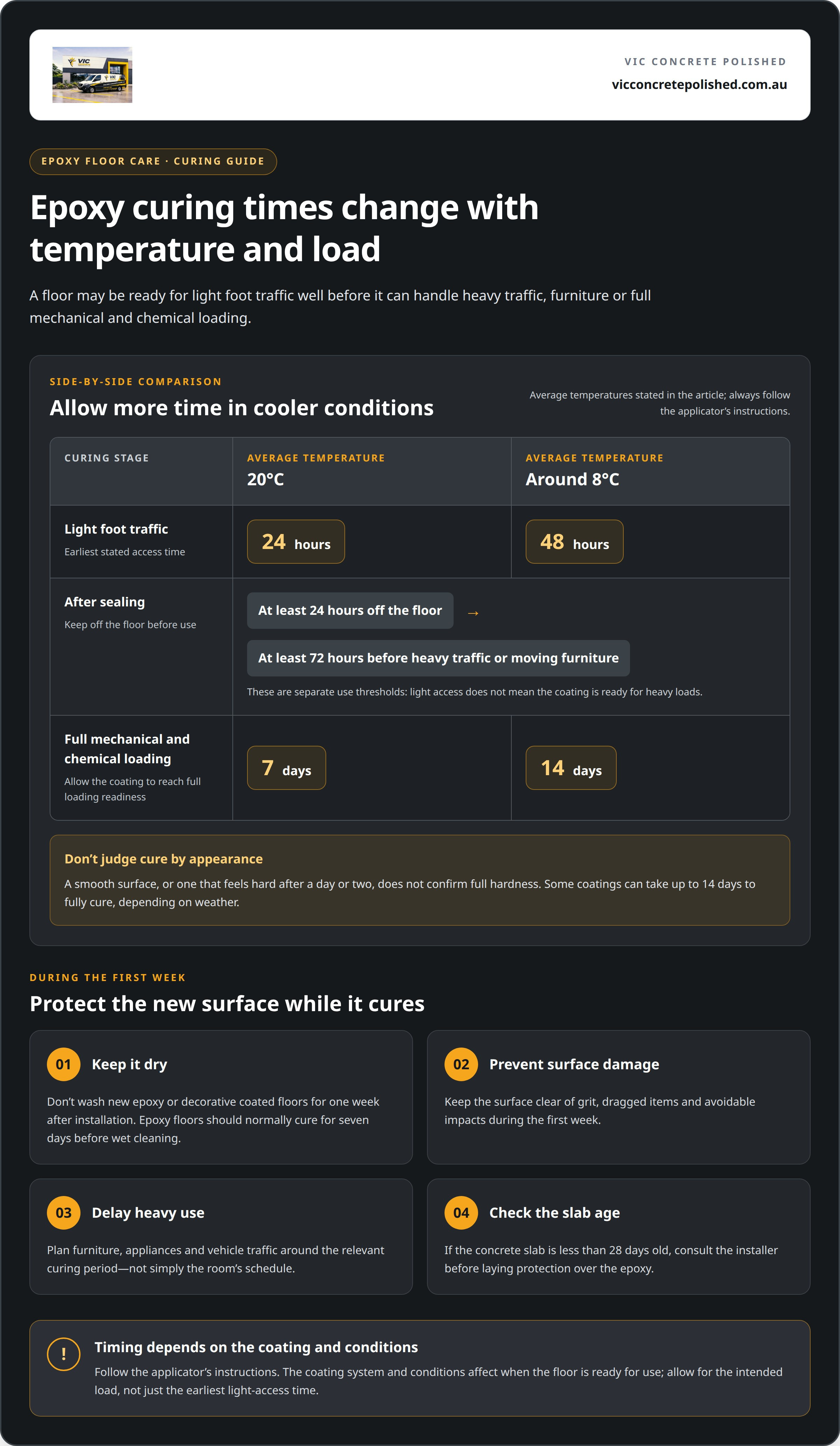
At an average temperature of 20°C, epoxy flooring can open to light foot traffic after 24 hours. At an average temperature of around 8°C, allow 48 hours. After sealing, keep off the floor for at least 24 hours, then allow at least 72 hours before heavy traffic or moving furniture. These timings serve different uses, so light access doesn’t mean the coating is ready for heavy loads.
Full mechanical and chemical loading takes seven days at an average temperature of 20°C. At an average temperature of 8°C, allow 14 days. Some coatings can take up to 14 days to fully cure, depending on weather. A smooth appearance alone doesn’t show whether the finish has reached full hardness.
During the first week, keep the surface dry and protect it from grit, dragged items and avoidable impact. Don’t wash new epoxy or decorative coated floors for one week after installation. Epoxy floors should normally cure for seven days before wet cleaning. If the concrete slab is less than 28 days old, consult the installer before laying protection over the epoxy.
Plan access around the coating, not just the room’s schedule. Delay furniture, appliances and vehicle traffic until the relevant curing period has passed. For a project involving concrete floor preparation, a sound prepared substrate supports the coating system, while careful curing protects its finish after application.
3. Furniture and appliance floor protectors
Furniture legs can concentrate pressure on a small area of epoxy, while trapped grit can score the finish. Fit clean felt or rubber pads to chairs, tables and movable appliances before placing them on the floor. Check the pads regularly: worn or dirty felt can become abrasive rather than protective.
Move heavy furniture with mechanical assistance instead of dragging it across the coating. For a fridge, washing machine or cabinet, plan the route first and use suitable lifting equipment or a protective moving aid. Prevent hard wheels and metal edges from scraping the surface. Once the item is in place, check that its feet sit evenly and its pads remain fitted.
Place a breathable mat beneath wheeled office chairs, especially where repeated movement could mark a high-gloss surface. Choose one that lies flat and doesn’t trap grit underneath. For furniture that’s moved often, rubber or felt pads provide a buffer between hard edges and the coating. These simple steps help limit scratches and scuffs during everyday use.
One or more coats of floor polish may help reduce scratching on epoxy. Apply polish only after cleaning and drying the surface, and follow the product directions for application and maintenance. A protective coat won’t replace pads or careful handling, but it can help protect a finish exposed to regular foot traffic.
Sunlight and heat also need attention. Use blinds or curtains where strong sunlight falls directly on the floor, and avoid leaving heat-producing appliances in contact with the coating. Hot tyres can lift a cheaper epoxy coating after a long motorway run, so where practical, park only after the tyres have cooled. Keep furniture pads fitted and floor protection clean, and check them whenever items are moved. A consistent routine helps preserve the coating and its appearance.
4. Care for high-gloss epoxy surfaces
A glossy epoxy surface readily shows dust, smears and cleaning marks, so use a consistent method. First remove loose grit with a dry microfibre mop or soft-bristle broom. When vacuuming, choose a microfibre head attachment without caster wheels, which can mark the coating. Dry-cleaning before mopping also prevents debris from dragging across the finish.
For routine washing, use a damp mop and pH-neutral cleaner, then rinse thoroughly if the product leaves a film. Avoid steam mops, as sustained heat can haze some finishes. Don’t use hard-bristled brushes on gloss; they can scratch the coating and strip its sheen. For pressure washing, keep the wand head at least 300 mm from the floor.
Clean acidic spills promptly because some liquids and foods can etch the coating. Absorb the spill rather than spreading it, then clean the area with a suitable neutral detergent. For a heavier clean, use hot water with a pH-neutral detergent and rinse thoroughly. Smooth epoxy floors generally don’t need water above 60°C.
Polish can refresh the appearance, but it won’t restore a worn top coat. If haze remains after rinsing with plain water, the top coat may have worn thin. Repeat floor-polishing applications every three months. Keep grit off the surface between applications, as loose debris can gradually wear away the gloss.
After cleaning, inspect the floor in natural light for persistent haze, scratches or dull patches. A mark that remains after rinsing may need more than routine cleaning. Don’t use acid-based stain treatments casually: they’re a last resort and can damage the finish if misused. A clear routine, gentle tools and prompt spill response help preserve the reflective surface.
If the coating has lost its gloss or shows wear, discuss your floor’s coating needs.
Vic Concrete Polished: Epoxy - Resin
Vic Concrete Polished provides Epoxy - Resin flooring for property owners planning a new coating or replacing a worn surface. Care begins before installation: floor preparation and measuring help establish a suitable base, while concrete floor grinding prepares the surface for the coating system. The right finish depends on the floor and how you plan to use the space.
If you’re considering a new epoxy floor, or the existing surface needs attention beyond routine cleaning, this is a practical point to discuss your project. Vic Concrete Polished also offers Grind and Seal, Mechanical Polished Concrete and Decorative Flakes Coating System for different flooring needs. Contact Vic Concrete Polished to talk about your flooring project.
Make your next flooring decision with confidence
A dependable epoxy floor care and maintenance plan involves more than cleaning. It helps you recognise when daily care is no longer enough and decide what the space needs next. Persistent dullness, visible wear or damage may be reasons to review the floor rather than simply try another cleaning product.
Consider how the room is used, what appearance matters to you and whether the existing surface still meets those needs. These details can guide a practical conversation about a new epoxy finish or another flooring option. Clear priorities make it easier to plan the work around how you use the space.
For support with your next flooring decision, discuss your project with Vic Concrete Polished. A considered next step can help you move towards a floor that works well for your property and its everyday use.
Frequently Asked Questions
What cleaning products and tools are safe for epoxy floors?
Use a pH-neutral cleaner and non-abrasive equipment suited to the coating. For larger commercial areas, a scrubber fitted with soft pads can help clean evenly; dilute the product according to the manufacturer’s directions. Don’t mix cleaning chemicals, as incompatible products can leave residue or affect the finish. For floors with a specialised texture or coating, choose tools that reach its profile without scratching raised areas.
How often should epoxy floors be swept, mopped, and deep cleaned?
Set the routine according to foot traffic, grit and the type of work in the space. A garage used daily needs a different schedule from a lightly used room; commercial kitchens have more demanding cleaning needs. Commercial and industrial epoxy floors should be mechanically scrubbed every 6-12 months, while commercial kitchen epoxy floors should be mechanically scrubbed daily. Review the schedule when use or soiling changes.
How do you remove oil, grease, tyre marks, and other stains from epoxy flooring?
Absorb oil promptly instead of letting it settle, then clean the area with a suitable neutral detergent. For tyre marks or food stains, act within 12 hours and use a non-abrasive cloth or mop. Grease around cooking equipment needs regular attention, as it can seep beneath coving and flooring. Avoid scraping with metal tools, which can scratch the coating and make the affected patch harder to clean.
How do you prevent scratches, dents, and wear on epoxy floors?
Reduce grit entering the space by placing mats at external entrances, and keep them clean so they don’t become a source of abrasion. Use a microfibre vacuum head without caster wheels, and avoid dragging hard-edged items across the coating. On busy commercial floors, a written cleaning schedule helps staff use consistent tools and spot wear early.
How do you repair scratches, chips, peeling, or damaged epoxy flooring?
Small areas of light wear can often be sanded back and recoated, but chips exposing bare concrete, bubbles or lifting edges may indicate a problem with the coating or slab. Don’t simply cover damage without addressing its cause. Have a perforation assessed for an appropriate repair, and attend to impact damage promptly to help prevent water or chemicals from getting underneath.
When should an epoxy floor be recoated or resealed, and what does it cost in Australia?
Consider recoating when wear, persistent dullness or localised damage remains after cleaning. The existing coating’s condition and adhesion affect whether it can be recoated, while preparation and the selected finish influence the work involved. Costs depend on the floor’s area, condition and preparation needs, and are provided after a quote request. Vic Concrete Polished offers free, no-obligation quotes for its flooring services.


