

A new colour doesn’t always mean a new floor. Whether you can change the colour of a polished concrete floor depends on the existing slab: its cement and aggregate are already set, so grinding can change what’s visible, while a dye or tinted sealer can shift the tone rather than replace it completely. Standard grey concrete can’t be ground or sealed to become white.
If you’re hoping to refresh an existing floor, it helps to consider the finish and colour together. Polished concrete is made by mechanically grinding and polishing the slab. This reveals its natural cement and stone while shaping the final sheen.
This guide explains what an existing slab can realistically offer, how grey tones and other colour treatments affect the result, and why a new pour allows a broader colour choice. You’ll also learn how lighting, aggregate exposure and the floor’s condition influence its appearance, helping you make a practical decision before work begins.
Key Takeaways
- Use the slab’s cement, sand and aggregate as a guide to the colour range and finish its natural surface can provide.
- Compare surface treatments for an existing floor with integral pigments and pale cement options planned for a new pour.
- See how grey dyes and the floor’s original tone can influence the final appearance.
- Learn how professional assessment and suitable recolouring methods can help refresh a polished floor while respecting its existing surface.
Can I choose the colour of an existing concrete slab?
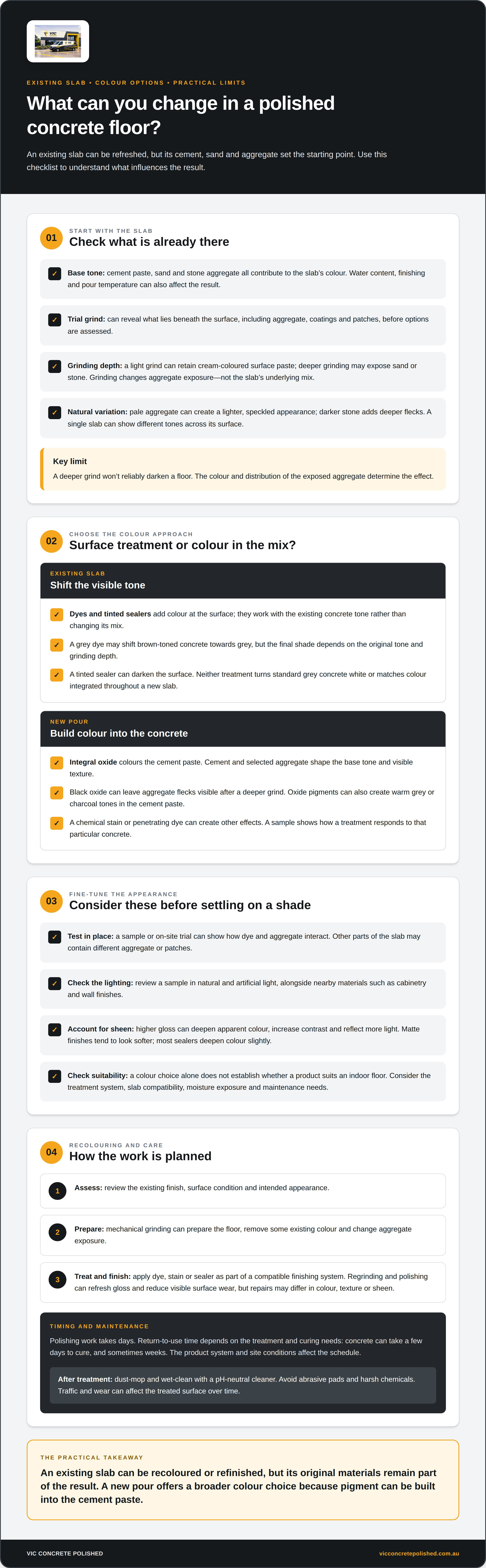
You can influence the finish, but the existing slab sets the colour range. Cement paste, sand and stone aggregate all contribute to its base tone. Water content, finishing and the temperature during the pour can also affect the result. A trial grind can reveal what lies beneath the surface, including aggregate, coatings and patches, before you assess the available options.
Grinding changes aggregate exposure, not the slab’s underlying mix. A light grind can retain the cream-coloured surface, while deeper grinding may expose sand or stone. Local aggregates bring their own colours and textures: pale stone can create a lighter, speckled appearance, while darker stone adds deeper flecks. A deeper grind won’t reliably darken a floor, because the colour and distribution of the exposed aggregate determine the effect. A single slab can also show different tones across its surface.
Dye results depend on the concrete’s existing tone and the grinding depth. A grey dye may shift brown-toned concrete towards grey, but it won’t make every slab the same shade. The treatment’s colour interacts with the base, much like a translucent layer over a painted surface. A sample or on-site trial can show how an area responds, though other parts of the slab may contain different aggregate or patches.
Australian building requirements aren’t a colour palette: a colour choice alone doesn’t establish whether a product suits an indoor floor. Suitability depends on the treatment system, its compatibility with the slab, moisture exposure and maintenance needs.
Sheen also changes how the same concrete looks. Higher gloss can deepen the apparent colour, increase contrast and reflect more light, while a matte finish tends to look softer. Most sealers deepen colour slightly, and traffic and wear can affect how a treated surface looks over time. Depending on the treatment and finishing process, recolouring can change the gloss or surface character as well as the visible shade.
Colour options for existing and new concrete slabs
An existing slab offers fewer colour choices than a new pour. The difference is whether colour is part of the concrete itself or applied to its surface.
Dyes, tinted sealers and colour limits
Dyes and tinted sealers add colour at the surface, so they can shift an existing floor’s appearance without changing its concrete mix. A dye’s result depends on the slab’s original tone and grinding depth. A tinted sealer can darken the surface, but neither treatment turns standard grey concrete white or matches colour integrated throughout a new slab.
For a new pour, integral oxide colours the cement paste, while the cement and selected aggregate shape the base and visible texture. Black oxide, for example, can leave aggregate flecks visible after a deeper grind. A chemical stain or penetrating dye can create other effects, but a sample helps show how the treatment responds to that particular floor.
Recolouring steps and timing
Professional recolouring starts by assessing the existing surface, then choosing preparation and treatment to suit its condition. Mechanical grinding can prepare the floor, remove some existing colour and change aggregate exposure. The dye, stain or sealer is then applied as part of a compatible finishing system. A specialist can assess the slab and match the process to the intended appearance.
Polishing work takes days, while the floor’s return-to-use time depends on the treatment and its curing needs. Concrete can take a few days to cure, and sometimes weeks. The product system and site conditions affect the schedule, so the work plan accounts for application and curing.
Regrinding and polishing can refresh gloss and reduce visible surface wear, but repairs may still differ in colour, texture or sheen. After treatment, dust-mop and wet-clean with a pH-neutral cleaner; avoid abrasive pads and harsh chemicals. An existing slab assessment can help determine suitable preparation and colour options.
Adding a grey tone to polished concrete
A brown-toned concrete slab can be made to appear greyer with a penetrating grey dye applied during the polishing process. The dye adds pigment at the surface; it doesn’t change the cement or aggregate beneath it. The existing concrete tone therefore influences the final shade, from a subtle cool cast to a more noticeable grey.
A water-based grey dye can produce a softer, more natural-looking result. This can suit a kitchen where a strong, uniform colour might compete with cabinetry or other finishes. The floor’s existing tone and aggregate exposure still show through, so a grey treatment may look different across one slab. A sample helps establish the likely colour and variation before treating the full floor.
Grinding depth affects how the grey reads. A light grind can retain more surface paste, while deeper grinding may reveal sand or stone. Those exposed materials introduce their own colours and textures, which can make a grey floor look speckled rather than consistent. A penetrating dye’s result also depends on the selected grinding depth.
For a new concrete slab, oxide pigments mixed into the pour can create warm grey or charcoal tones throughout the cement paste. This differs from adding grey dye to an existing floor, where the treatment works with the concrete’s current colour. A deeper grind can still reveal aggregate flecks through pigmented cement, so consider colour and exposure together.
Lighting changes how grey appears. Review a sample in the room’s natural and artificial light, alongside nearby materials such as cabinetry and wall finishes. When coordinating wall coatings with new floor tones, resources from property improvement and painting services like cos-painters.com can provide useful guidance on balancing lighting and colour palettes. Sheen also affects perception: a glossier surface can look richer and show stronger reflections than a matte finish. These comparisons help set a practical target for a decorative grey floor, while recognising that the slab’s existing materials remain visible.
How do you recolour polished concrete floors in Australia?
Professional recolouring begins with assessing the slab’s finish, existing coating and condition. The floor is checked for stains, contamination, repairs and areas where aggregate is already exposed. These details affect preparation and whether a dye, stain or coating suits the floor. An on-site trial can show how a small area responds, though it can’t establish that every part of the slab is identical.
For a polished surface, mechanical grinding prepares the concrete and can remove some of its existing colour. On a previously stained floor, grinding helps remove as much original colour as possible before applying a new stain or coating. How much comes out depends on how deeply the original stain penetrated. The stain or coating system must suit the concrete and intended finish.
Some professional processes apply acid stain after a 400 grind and before the densifier. Solvent-based dye is usually applied in several light coats, rather than one heavy application, to help it penetrate the surface. The process allows at least 15 minutes between dye applications. Acid stain can involve two applications, with the first left overnight and the second left for several hours.
Those timings describe application stages, not the full project schedule. Preparation, treatment, polishing and product curing all affect when the floor can return to use. The chosen material and site conditions also influence curing. A professional assessment accounts for each stage and plans the work around the floor’s condition and selected finish.
After recolouring, care depends on the treatment system. A penetrating stain, sealer or industrial coating each has different compatibility and maintenance considerations. For polished concrete, routine dust mopping and wet cleaning with a pH-neutral cleaner help keep the surface clean; abrasive pads and harsh chemicals can damage the finish. Arrange a professional polished concrete assessment to discuss suitable preparation and recolouring options.
Vic Concrete Polished
Vic Concrete Polished assesses existing concrete floors and helps you understand which finish may suit the slab’s condition and your appearance goals. The current colour, aggregate exposure, surface wear and any previous treatment all inform the options. Mechanical Polished Concrete and Grind and Seal offer different ways to finish concrete, while Decorative Flakes Coating System and Epoxy - Resin provide coating alternatives.
Turn to Vic Concrete Polished when you’re weighing up whether to refresh the existing surface or choose another finish. The discussion starts with the floor itself, considering its preparation needs and likely appearance alongside its intended use.
Contact Vic Concrete Polished to discuss your concrete floor.
Choose a finish that suits the space
If you’re weighing whether you can change the colour of a polished concrete floor, start by deciding how you want the room to feel. A quieter, natural-looking finish may preserve the slab’s character, while a more pronounced surface treatment can create a stronger design feature. That choice helps shape a clear brief for the work.
Consider the floor alongside the room’s planned use and overall design, rather than choosing a colour in isolation. Aim for a finish that feels considered in the space and works for everyday living. When planning broader renovations where flooring must coordinate with custom joinery and spatial layouts, design and fit-out specialists like rightsolutionuae.com show how cohesive material palettes can elevate an entire interior scheme.
Vic Concrete Polished offers Mechanical Polished Concrete, Grind and Seal, and Decorative Flakes Coating System. These options give you different ways to approach the floor’s finished appearance, depending on the direction you want to take.
Contact Vic Concrete Polished to discuss your floor and the finish you have in mind. A clear starting point can help you move forward with confidence.
Frequently Asked Questions
Does the sealer change the colour?
Yes, a sealer can deepen the floor’s colour slightly and change how its sheen appears. A clear, glossy sealer may make the same concrete look richer than a matte finish. For example, a mid-grey floor can appear darker under gloss, especially beside pale walls. The sealer’s suitability depends on the existing surface and product system, so assess colour and sheen together.
What determines concrete’s colour?
Concrete colour comes from its cement, sand and aggregate, alongside factors such as mix water and finishing. For example, a slab with pale cement and light stone can appear quite different from one containing darker aggregate. Pouring and curing conditions also influence the surface. Even slabs made with the same mix can vary, so a chosen colour reference is best treated as a guide.
Will a coloured floor match a sample exactly?
No sample can establish exact uniformity across every part of a concrete floor. A sample provides a reference for the expected colour and acceptable variation, while the full slab may contain different aggregate, patches or previous treatments. Natural and artificial lighting can also make the same finish look different. Viewing a sample in the room helps set a realistic visual target.
Can you change the colour of an existing polished concrete floor?
Yes, an existing polished floor can be recoloured to a degree, but the concrete beneath it limits the result. A surface treatment can shift the tone, while changing grey concrete to white requires a different base material. If the goal is simply a fresher appearance, regrinding may also adjust aggregate exposure and remove some surface wear.
Can polished concrete be stained or dyed after polishing?
Yes, a polished floor can be stained or dyed after polishing, but preparation affects how well the treatment takes. Existing sealers, contamination and the floor’s condition can interfere with colour application. A previously stained slab may need mechanical grinding to prepare the surface and remove as much original colour as possible. A trial area can help assess the response before treating the full floor.
What is the difference between concrete stain, dye and coating for changing floor colour?
Stain, dye and coating change a floor’s appearance in different ways. Stain can penetrate the concrete and interact with its surface, while dye adds pigment to influence the tone. A coating forms a separate surface layer rather than polishing the structural slab itself. The suitable option depends on the existing finish, desired appearance and the treatment system’s compatibility with the concrete.


