
A seamless floor coating can look smooth and simple, but appearance alone won’t tell you how it will perform in your space. The finish, texture and condition of the concrete beneath it all matter, particularly in areas that may get wet or need regular cleaning.
If you’re comparing epoxy with a decorative flake finish, or wondering whether a coated floor will be slippery or difficult to maintain, those are sensible questions to ask. “Seamless” describes a continuous finish, not a single coating type or a guarantee that every system suits every room.
This guide explains common seamless coating options and what to consider when matching a finish to the way your space is used. You’ll also learn how the existing concrete, moisture and surface preparation can affect the result. Vic Concrete Polished provides epoxy resin and decorative flake systems, alongside concrete grinding and floor preparation, so you can consider the finish as part of the whole floor rather than choosing by colour alone.
Key Takeaways
- A seamless floor coating has no tile-style grout joints, but existing concrete joints, cracks and movement still matter.
- Compare solid epoxy and decorative flake finishes by their appearance, texture and the demands of the room, rather than assuming one suits every space.
- Distinguish resin coatings from mechanical polished concrete and grind and seal, as these finishes are created through different processes.
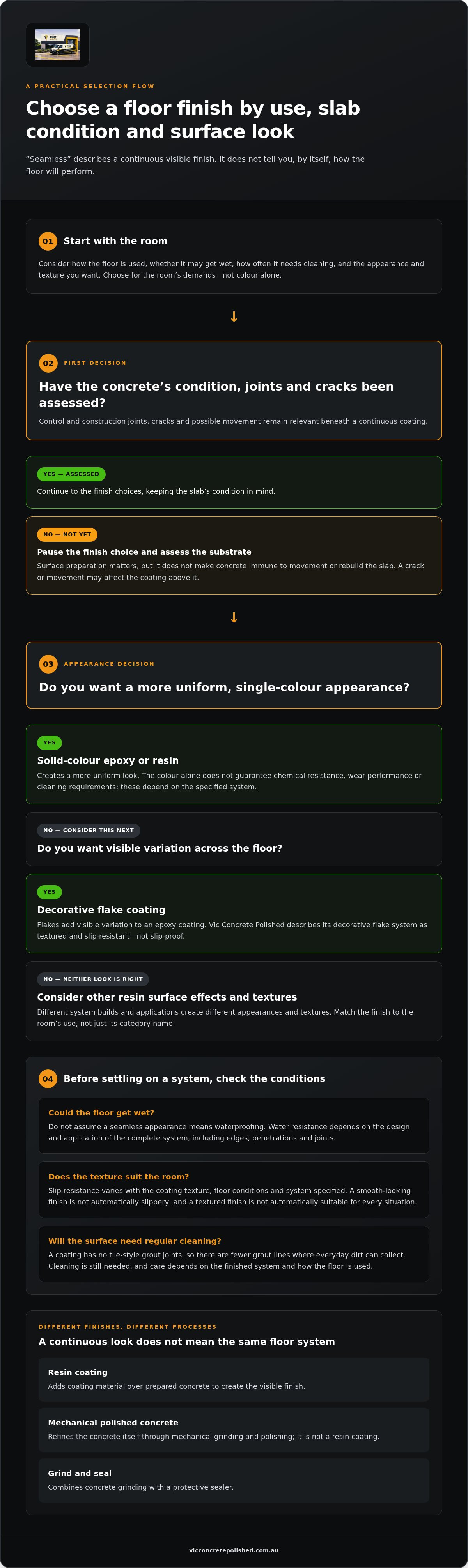
- Follow a clear selection sequence: define how the floor will be used, assess the slab, choose a finish, then prepare the surface before application.
- Vic Concrete Polished provides epoxy resin and decorative flake coatings, with concrete grinding and preparation to support the project.
What does seamless floor coating mean, and what does it not mean?
A seamless floor coating is a continuous applied finish without the tile-style grout joints between separate floor pieces. Resin layers are applied over a prepared substrate to create one unified visible surface. Depending on the system, those layers can provide colour, texture and protection. The term “seamless” describes the finish, not the structure beneath it.
A seamless finish is a continuous visible coating, not a guarantee that the concrete beneath it is joint-free or unable to move. Concrete slabs can have control joints, construction joints, cracks and areas affected by movement. These conditions remain part of the floor and need to be considered before coating. A finish may follow or reveal an existing joint or crack, and movement in the substrate can affect the coating above it.
Coatings are applied to a prepared surface to provide decorative or functional qualities. A broad overview of seamless polymer/resin flooring places it among the ways coatings can be used on concrete. The key distinction is that the coating forms the visible surface. It doesn’t rebuild the slab or automatically resolve every issue within it.
How is a seamless coating different from tiled flooring?
Tiles are individual units, with grout lines marking the spaces between them. A coating is applied across the floor as a continuous finish, so there are no tile-style grout joints dividing the visible surface. With fewer joints, routine sweeping and mopping can be more straightforward because there are fewer grout lines where everyday dirt can collect. Cleaning is still necessary, and spills, marks and general wear still need suitable care.
For example, a tiled room has repeated grout lines across the floor, while a resin-coated concrete floor presents a more continuous appearance. That difference can affect the look of a room and the effort involved in regular surface cleaning. It doesn’t mean every coated floor needs the same cleaning method. Care depends on the finished system and how the floor is used.
Does seamless mean waterproof, crack-proof or slip-proof?
No. A continuous appearance alone doesn’t establish how a floor will perform against water, cracking or slipping. Water resistance depends on the design and application of the complete system, including how it deals with edges, penetrations and joints. Don’t assume a coating provides waterproofing just because it looks seamless.
Cracks and movement in the concrete can affect the finished surface. If a crack changes or the slab moves, the coating may show that change. Preparation can address the substrate, but it can’t make concrete immune to movement. Existing joints and cracks therefore need to be assessed when planning the finish.
Slip resistance also varies. It depends on the coating’s texture, the conditions on the floor and the system specified for the space. A smooth-looking finish isn’t automatically slippery, and a textured finish isn’t automatically suitable for every situation. Consider whether the chosen surface texture fits the way the room is used, including whether it may be exposed to moisture.
Which seamless floor coating types are commonly used?
“Seamless” describes the continuous appearance of a finish, not one particular material or method. Resin coatings are a common option, but the visible result can range from a uniform colour to a varied, textured surface. The layers, texture and overall appearance depend on the system specified and how it’s applied. Comparing finish categories is more useful than relying on a broad label such as “epoxy floor”.
It’s also useful to distinguish resin coatings from concrete finishes such as mechanical polishing and grind and seal. Each can create a continuous-looking floor, but the processes differ. A resin coating adds material over prepared concrete, while polishing refines the concrete itself and grind and seal combines grinding with a protective sealer.
Solid-colour epoxy and resin coatings
A solid-colour epoxy or resin finish gives the floor a more uniform appearance, which may suit a room where a consistent colour supports the design. It can be considered for residential or commercial spaces, depending on how the floor is used and the system selected. Chemical resistance, wear performance and cleaning requirements aren’t guaranteed by the colour choice. They need to match the specified coating system.
Decorative flake coatings and textured finishes
Decorative flakes are incorporated into an epoxy coating system to create visible variation across the floor, rather than a single uninterrupted colour. The amount and appearance of that variation depend on the flake selection and application. Vic Concrete Polished’s decorative flake coating system is textured and slip-resistant, but that doesn’t mean it’s slip-proof. The descriptive term decorative flake epoxy floor system captures the combination of resin coating and decorative flakes.
Other resin finishes and system builds
Resin finishes can also be specified with different surface effects and textures. A smoother appearance and a more textured finish can feel and function differently underfoot, so the choice should reflect the room’s use rather than colour alone. The complete system matters: its layers and application influence the finished look and texture. A category name by itself doesn’t establish how a coating will perform in a particular space.
How polished concrete and grind and seal differ
Mechanical polished concrete isn’t a resin coating. The concrete surface is mechanically ground and polished to achieve its finish. Grind and seal also starts with grinding, but a sealer is applied to the prepared concrete. Both can offer a continuous-looking surface, yet neither is interchangeable with epoxy or decorative flake systems. Knowing the difference helps narrow your options before comparing appearance, texture and practical needs.
For resin finishes, Vic Concrete Polished provides epoxy and decorative flake coating services, alongside concrete preparation and grinding. Considering the finish alongside the substrate keeps the selection grounded in how the floor will be used.
How do you compare seamless floor coatings for your space?
Start with how the floor is used, then compare appearance, texture, cleaning needs and the condition of the concrete. A seamless floor coating that suits a lightly used room may not be right for a busy workshop. Use conditions should guide coating selection, not appearance alone.
The table is a starting point for comparing resin coatings with polished concrete and grind and seal. The latter finishes can create a continuous-looking surface, but they are not resin coating systems.
| Finish | Possible setting | Appearance and texture | Upkeep and substrate considerations |
|---|---|---|---|
| Solid-colour epoxy or resin | Garages, workshops or commercial rooms where a uniform look is preferred | Consistent colour; texture varies with the specified system | Cleaning needs depend on the finish; concrete condition and preparation affect application |
| Decorative flake coating | Garages and other spaces where a more varied appearance is wanted | Flakes add visual variation and the system can have a textured finish | Texture may influence cleaning; the slab still needs suitable preparation |
| Mechanical polished concrete | Spaces where the concrete itself is intended to form the finished surface | Appearance comes from mechanically refining the concrete | Existing concrete condition influences the result; this is not a resin coating |
| Grind and seal | Areas where a ground concrete surface with a sealer is being considered | Ground concrete remains visible beneath the sealer | Surface preparation and the concrete condition matter; this is not a resin coating |
Match the coating finish to the way the floor is used
Think through the routine demands of the room. A garage may see vehicle traffic and occasional spills; a workshop may have equipment moving across the floor, while a retail space may experience regular foot traffic and frequent cleaning. These uses don’t automatically point to one finish. Instead, they help define the performance priorities the chosen system needs to address.
Consider what lands on the floor, how often it’s cleaned and whether people or vehicles move across it. Don’t assume chemical, wear or impact resistance from the finish category alone. Those expectations need to match the specified system and its intended use.
How do texture, appearance and upkeep affect the choice?
Solid epoxy offers a more uniform colour, while decorative flakes create a visibly varied finish. Texture can affect how a floor feels underfoot and how easily dirt can be removed from the surface. A smoother finish may suit a different cleaning routine from a textured one, so weigh appearance against everyday maintenance.
Slip resistance also depends on the specified system, texture and conditions on the floor. Vic Concrete Polished’s decorative flake coating system is textured and slip-resistant, not slip-proof. For safety decisions, assess the intended use and the actual system rather than relying on a general finish label.
What should you check before installing a seamless floor coating?
A sound result starts with the floor beneath the finish. Before choosing a colour or texture, work through the project in sequence. This helps identify practical requirements early and gives the coating a prepared surface to bond to.
- Define how the room will be used. Note vehicle or foot traffic, likely spills and how often the floor needs cleaning. These details help set priorities for the finish.
- Assess the slab. Look for cracks, uneven areas, dust, oil or other contamination, existing coatings and signs of previous repairs. The coating needs a suitable substrate, and surface defects can affect the final appearance.
- Select the finish. Consider colour, texture and cleaning routine alongside the demands of the space. Set performance expectations according to the chosen coating system.
- Prepare the surface. Depending on the floor, work may include removing old tiles, carpet or vinyl, grinding the concrete and addressing surface conditions before application.
- Apply the system. Follow the preparation and application requirements for the specified coating, including its stated curing and return-to-use details.
Assess the existing concrete and floor coverings
Existing conditions matter. A crack, uneven patch or residue from an old floor covering can influence how the finished coating looks and bonds. Contamination such as oil or adhesive may also need to be addressed rather than covered over. Assessment helps clarify the preparation required. It doesn’t mean every visible mark can be hidden by a new finish.
If tiles, carpet or vinyl are in place, they may need to be removed so the concrete can be assessed and prepared. Measuring, grinding and removal are practical parts of planning, not afterthoughts. Vic Concrete Polished provides floor covering removal, concrete grinding, measuring and floor preparation as part of its flooring work.
Plan the finish around use, texture and maintenance
Before installation, write down the room’s typical use and cleaning routine. Decide whether a uniform colour or decorative variation better suits the space, and whether the chosen texture fits how people move across the floor. This makes the finish decision more specific than choosing a colour sample alone.
Preparation affects adhesion and appearance. Grinding helps prepare the concrete surface for the coating, while removing dust and addressing contamination helps prevent unsuitable material from remaining beneath the finish. Cracks and uneven areas should be considered in the preparation plan, since a coating follows the substrate rather than correcting every underlying issue.
Application and curing details vary by system, so plan access and return to use around the specified coating instructions rather than a general timeframe. Explore Vic Concrete Polished’s floor preparation services for support with the groundwork.
How can Vic Concrete Polished help with a seamless floor coating project?
Choosing a seamless floor coating is easier when the decision starts with the space, not just a colour sample. Consider how the floor will be used, the condition of the existing slab, the finish you prefer and the preparation needed for that surface. Vic Concrete Polished brings these considerations together through floor measuring and preparation, concrete grinding, removal of existing floor coverings and resinous floor finishes.
From floor assessment to prepared substrate
Measuring helps establish project requirements, while assessing the existing floor shows what preparation may be needed before a coating is applied. Concrete can have cracks, uneven areas, previous coatings or adhesive residue, and these conditions can influence the finished appearance and how the system bonds. Preparation is considered in relation to the substrate, rather than treated as a standard step that suits every room.
Where tiles, carpet or vinyl are already in place, removal may be part of the work before the concrete can be prepared. Concrete grinding can then help prepare the surface for the selected finish. These steps connect the starting condition of the floor with the coating decision, rather than treating a decorative finish as a substitute for sound groundwork.
Choosing an epoxy or decorative flake finish
Vic Concrete Polished provides epoxy resin and decorative flake coating systems for residential and commercial floors. A more uniform epoxy finish may suit a preference for consistent colour, while decorative flakes add visual variation. The flake system is textured and slip-resistant, but that doesn’t mean it prevents slips in all conditions. The appropriate texture and system depend on the room’s use and the floor itself.
Finish preference is only one part of the decision. A garage, work area or commercial room may have different traffic, cleaning routines and practical requirements. Vic Concrete Polished considers the intended use alongside slab condition, measuring and preparation when planning coating work. The selected system’s specifications guide performance expectations and application details.
With more than 18 years of industry experience, Vic Concrete Polished works across concrete preparation, epoxy coatings and decorative flake finishes. The aim is to match the preparation and finish to the project, rather than assume one surface is right for every space. Start with the existing floor and what you need from it, then consider suitable preparation and finish options.
If you’re planning a resin floor, discuss your floor coating project with Vic Concrete Polished. A clear conversation about the room’s use, current floor and preferred finish is a practical place to start.
Plan a floor that works for your space
Before choosing a colour, consider how you want the finished room to look and how it needs to function day to day. A seamless floor coating is most useful when its appearance and practical qualities are planned together, with the existing floor treated as part of the project rather than an afterthought.
Note your priorities before discussing the work: the room’s use, the look you prefer, any existing floor coverings and areas of concrete that may need attention. These details give the project a clear starting point and help shape a finish suited to your space.
Vic Concrete Polished brings more than 18 years of industry experience to concrete preparation and coating services for residential and commercial floors. If you’re ready to plan the next step, discuss your floor coating project with Vic Concrete Polished. A well-considered plan can turn a flooring decision into a finish you feel confident living or working with.
Frequently Asked Questions
Is seamless floor coating suitable for residential and commercial floors?
Yes, a seamless floor coating can suit residential and commercial floors when the system is selected for the space’s use. A home garage and a busy shop, for example, have different traffic and cleaning demands. Consider what moves across the floor, what may spill and how often it’s cleaned. These practical details help guide the finish and system choice, rather than relying on appearance alone.
Can a seamless coating be applied over existing concrete?
Yes, existing concrete can be a substrate for a coating when its condition and preparation are suitable for the selected system. Old adhesive, dust, previous coatings or surface damage may affect the work required. Assessment helps determine whether grinding or other preparation is needed before application. If concrete has been covered for years, removing the floor covering can reveal conditions that weren’t visible beforehand.
Does seamless epoxy flooring prevent concrete cracks from showing?
No, epoxy flooring doesn’t guarantee that concrete cracks will stay hidden. If a crack moves or changes, it may become visible through or affect the coating. A stable hairline crack and a crack associated with ongoing movement present different considerations, so the slab should be assessed before work begins. Preparation can address the surface as part of the project, but a coating can’t stop the concrete beneath it moving.
How long does a seamless floor coating take to cure?
Curing time varies with the coating system and the conditions during application, so there isn’t one reliable timeframe for every floor. Also distinguish between when a surface can be walked on and when it’s ready for normal use, such as moving vehicles or equipment back into a garage. Follow the specified system instructions and plan access around its stated curing and return-to-use requirements.
Can you apply a seamless coating over tiles?
It depends on the tiles, their condition and the coating system. Loose, damaged or uneven tiles can make a poor base, and the grout pattern may affect the finished appearance. Tile removal may be appropriate to expose and prepare the concrete beneath. Vic Concrete Polished provides tiles, carpet and vinyl removal, allowing the underlying floor to be assessed before preparation and coating are planned.
Are all seamless floor coatings suitable for outdoor use?
No, a seamless finish isn’t automatically suitable for outdoors. Outdoor floors face conditions such as sun, rain and changing temperatures, so the coating system must be specified for its intended exposure. Texture and drainage also matter in areas that may become wet. For an exterior space, consider how the floor will be exposed and follow the system’s stated suitability and application guidance.
What is the difference between seamless coating and polished concrete?
A coating adds a separate finish over prepared concrete, while mechanical polishing refines the concrete itself through grinding and polishing. This affects what forms the visible surface: resin in one case, the concrete in the other. Someone wanting a coloured or flaked finish may consider a resin system, while someone who wants the concrete to remain visible may prefer to explore polishing.


