

A decorative flake epoxy floor is a complete coating system, not just flakes scattered over concrete. The concrete is prepared, decorative flakes are embedded in an epoxy base, and a clear topcoat protects the finish. Each layer has a job, so the appearance and performance of the finished floor depend on how the system is planned and applied.
It’s natural to wonder whether a decorative finish can handle regular use, or whether an uneven, cracked or contaminated slab will affect the result. The condition of the concrete and the quality of preparation both matter. Flakes add colour and texture; the resin layers bind and protect them.
This guide explains the installation sequence, what each layer does and which surface and project conditions can influence the result. You’ll also find practical ways to think about flake coverage, colour, everyday care and the intended use of the space. Vic Concrete Polished provides decorative flake coatings alongside the grinding, measuring and floor preparation that help get the surface ready.
Key Takeaways
- Understand how flakes, the epoxy base and clear topcoat contribute to the look and function of a decorative flake epoxy floor.
- See how installation moves from assessing the concrete to applying the finish, and why existing floor coverings can affect preparation.
- Use flake coverage, colour contrast and room lighting to picture how the finished floor may look in your space.
- Know what to consider for everyday cleaning and why a textured appearance alone doesn’t establish how much grip a floor provides.
- Learn how measuring the space and assessing the existing floor help Vic Concrete Polished plan preparation and coating together.
What is a decorative flake epoxy floor, and how does its layered finish work?
A decorative flake epoxy floor is a concrete coating system made from an epoxy base, decorative acrylic flakes and a clear topcoat. The flakes create colour and visual texture, while the resin layers hold them in place and complete the surface. Because each component has a different role, the result depends on how the layers work together.
This is different from loose flakes scattered over concrete or a single-colour epoxy coating. In a flake system, flakes are distributed into the wet base coat, then covered with a clear finishing layer. The pattern comes from the flakes, while the base and topcoat form the continuous coated surface.
What does each layer contribute to the finished floor?
The concrete is the substrate, or the surface the coating needs to bond to. Preparation helps create a suitable base, while the epoxy coat receives and holds the flakes. Epoxy resins are used across a range of applications; in this flooring system, the epoxy base supports the decorative finish.
Once the flakes are applied, a clear topcoat covers the pattern and forms the protective finishing layer. The exact materials and application approach depend on the project and the condition of the concrete. Consider the system as a whole rather than expecting any one layer to compensate for problems with another.
Where are decorative flake epoxy floors commonly used?
Garages are a common application, as the floor needs to suit a space used for daily activity while looking considered. Workshops and suitable commercial interiors may also use a flake finish, depending on how the area is used and the condition of its existing floor. The right coating approach depends on the room and its requirements, rather than appearance alone.
Intended use helps shape the coating system, while the substrate determines what preparation is needed. Existing tiles, carpet or vinyl may need to be removed before the concrete can be assessed and prepared. Cracks, surface contamination and uneven areas can also affect the work required. Treating preparation and coating as connected stages helps establish a sound starting point for the finished floor.
Keep the roles of each layer in mind when planning: the flakes influence the design, while the finished floor relies on the complete sequence of substrate, epoxy base, decorative flakes and clear topcoat. That makes it easier to discuss both the look you want and the conditions the floor needs to suit.
How is a decorative flake epoxy floor installed from concrete preparation to topcoat?
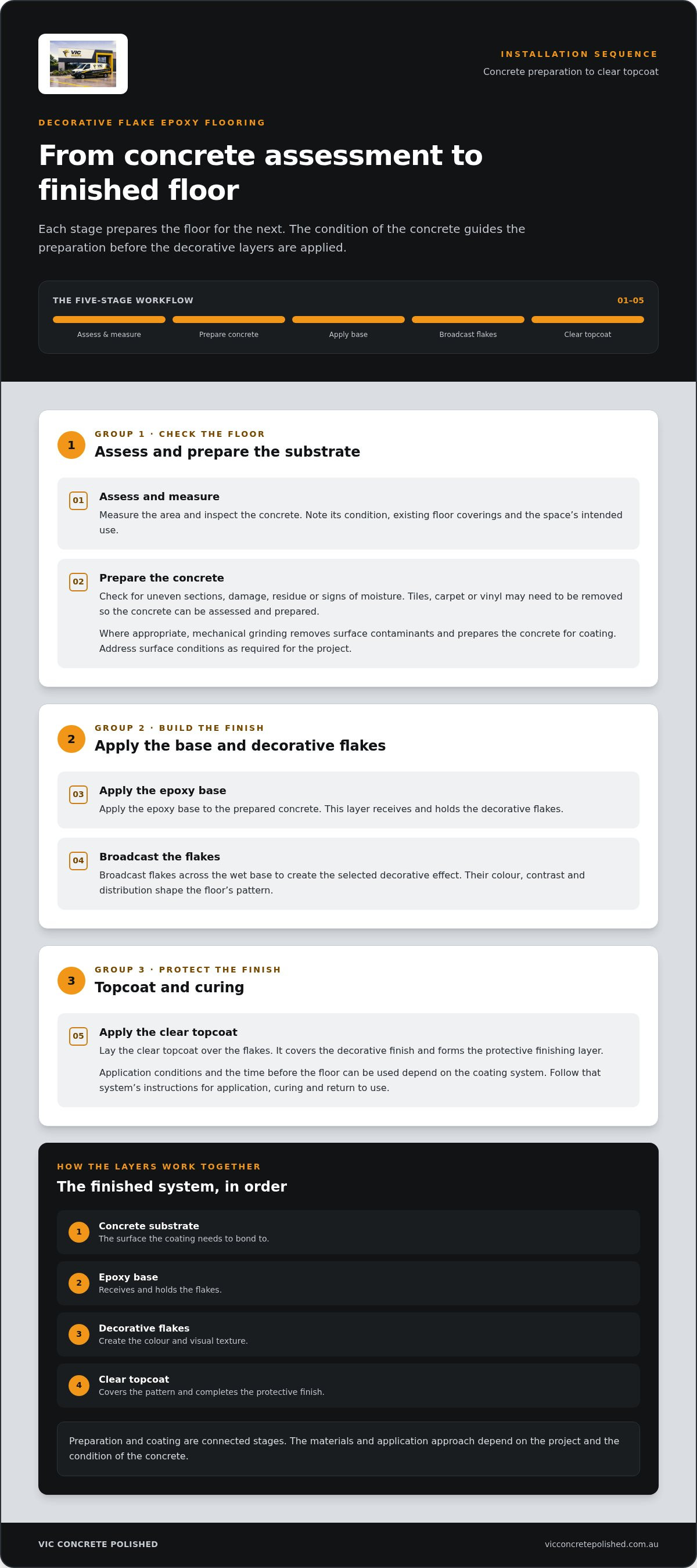
Installation follows a sequence, with each stage preparing for the next. The floor is measured and assessed, then the concrete is prepared for coating. The epoxy base is applied to the prepared surface, flakes are broadcast into it, and a clear topcoat completes the system. Treating preparation as separate from application can lead to decisions that don’t account for the condition of the actual floor.
Preparation directly affects how well a coating can adhere and how consistent the finished surface looks. The work starts with the floor itself, not with the decorative layer.
Why does concrete preparation come before the decorative layers?
Assessment establishes what the existing floor needs before coating begins. Measuring the area helps with project planning, while inspecting the concrete can reveal uneven sections, damage, residue or signs of moisture that need attention. Conditions vary from one slab to another, so preparation should be based on the surface being coated.
Where appropriate, mechanical grinding removes surface contaminants and prepares the concrete for the coating. If tiles, carpet or vinyl cover the floor, they may need to be removed before the substrate can be assessed and prepared. Uneven areas or other surface conditions may also need attention before coating proceeds. The aim is to prepare a suitable base, not simply to coat whatever is visible.
What happens during flake application and clear coating?
Once the substrate is ready, the epoxy base is applied. Flakes are broadcast across the wet base to create the chosen decorative effect. Their colour, contrast and distribution shape the pattern, so this stage turns the design choice into the appearance of the finished floor. The flakes become part of the coating system rather than sitting loose on top of a completed floor.
After the base and flakes have been applied, the clear topcoat is laid over the surface to cover the decorative finish. Application conditions and the time required before the floor can be used depend on the coating system. Follow the system’s instructions for application, curing and return to use rather than relying on a generic timeframe.
In practical terms, the workflow is:
- Assess and measure the floor, noting its condition, existing coverings and intended use.
- Prepare the substrate through suitable removal, grinding and any project-specific surface preparation.
- Apply the epoxy base to the prepared concrete.
- Broadcast the flakes into the base to create the selected visual effect.
- Apply the clear topcoat and allow the system to cure according to its instructions.
Planning the decorative flake coating system alongside concrete grinding, floor preparation and measuring keeps the groundwork connected to the intended finish.
How do flake coverage and finish choices change the final floor?
Flake coverage is one of the most visible ways to shape a decorative flake epoxy floor. With lighter coverage, more of the epoxy base colour shows through. Fuller coverage makes the flakes more prominent and creates a busier, more continuous pattern. Neither is automatically better. Consider the size and use of the space, the surrounding colours and how much visual variation you want.
Think about the floor as part of the whole room, rather than choosing a colour in isolation. Wall colour, lighting and nearby finishes can all change how a blend looks across a large surface.
What is the difference between lighter and fuller flake coverage?
A lighter spread leaves more base colour visible, so the base plays a stronger part in the design and the pattern can feel more open. Fuller coverage brings more of the flake colours into view, creating a more prominent visual texture. Distribution also affects how the surface feels, but it doesn’t establish a particular slip rating or guarantee grip.
| Coverage approach | Visual effect | Practical considerations | May suit preferences for |
|---|---|---|---|
| Lighter distribution | More base colour shows between flakes, giving the floor a more open pattern. | The base colour has a stronger influence on the overall look. | A simpler, less visually busy finish. |
| Fuller distribution | Flakes become the more prominent feature across the surface. | The blend’s colours and their contrast are more noticeable across the room. | A more pronounced, varied decorative pattern. |
These describe visual approaches, not product names or fixed package formats. The final appearance also depends on the flake colours, their contrast with the base and how they’re distributed during application.
How should colour and topcoat choices relate to the space?
Start with the finishes that will sit alongside the floor. In a garage, consider the walls, vehicles, storage and equipment. In another interior, nearby flooring and fixtures may be more relevant. Strong colour contrast makes a blend stand out, while tones that sit closer together create a more restrained look. Compare the colour direction with the finishes already in the space before deciding.
Lighting matters as well. A floor viewed in bright natural light may look different from the same surface under indoor lighting. Consider the room’s light at different times of day, and review colour samples in the space if possible rather than relying on a small image alone.
The clear topcoat is part of the finished appearance as well as the coating system. Its finish affects how the flakes and base are seen, so it should suit both the desired look and the system being applied. Vic Concrete Polished plans decorative flake coatings with colour, coverage and surface preparation considered together, connecting the design choice to the condition of the actual floor.
What should you expect from a decorative flake epoxy floor in everyday use?
A decorative flake epoxy floor creates a continuous coated appearance, with flakes adding variation across the surface. It can give a garage, workshop or suitable commercial interior a more finished look than bare concrete, without the plain appearance of a single-colour coating. Everyday results still depend on how the floor is used and how the coating was prepared and applied.
Consider the activity the space needs to support. Vehicle traffic, moving equipment, dropped tools and dragged items place different demands on a floor. Spills and loose grit matter too: grit can be walked across the coating, while some spills may mark or affect the finish if left unattended. A resin-coated floor is not immune to wear, damage or the effects of poor installation.
Which practical advantages and trade-offs should be understood?
The clear coating covers the flakes, so there are no separate loose chips to sweep up as part of normal use. Flakes add visual variation that may make small marks or everyday dust less prominent, depending on the blend, lighting and type of dirt. This doesn’t remove the need for cleaning, and no floor finish stays looking its best without reasonable care.
Texture can change how the surface feels underfoot, but appearance alone can’t tell you how much grip it provides. Grip depends on the coating system and conditions, including whether the floor is dry, wet or contaminated. If slip resistance is a key concern, include it in the project requirements rather than inferring it from a flake pattern.
How the floor performs also reflects the concrete’s condition, the preparation, the application and the demands of the space. A garage used for parking has different day-to-day activity from a workshop where equipment and materials are moved around. Be realistic about how the space will be used, and don’t treat a decorative finish as protection against every impact or spill.
What basic care helps keep the finish presentable?
Routine care helps limit the grit and residue that build up during use. Sweep or remove loose dirt regularly, then clean the surface with products compatible with the coating. Promptly attending to spills is sensible; follow the care guidance for the particular coating system if you’re unsure which cleaning product to use.
- Remove loose grit before it is tracked across the floor.
- Clean spills promptly, following the coating system’s care instructions.
- Use compatible cleaning products and avoid assuming that every household cleaner is suitable.
Planning around actual use helps set practical expectations before work begins. If you’re considering a flake coating for your space, discuss your floor and its intended use with Vic Concrete Polished.
How does Vic Concrete Polished plan a decorative flake epoxy floor project?
A well-planned project starts with the space and the floor that’s already there. Vic Concrete Polished measures the area and assesses how it is used, the existing floor covering and the condition of the concrete. This helps shape the preparation and coating approach around the actual substrate, rather than assumptions about what the floor needs.
Preparation and coating application are connected stages. The aim is to understand what the floor needs before applying the decorative layers, then align the proposed finish with the space’s intended use.
What happens when the existing floor is assessed?
Measuring establishes the area involved, while reviewing the surface helps identify what lies beneath and what preparation may be needed. Existing tiles, carpet or vinyl can be removed where they cover the concrete. Once the concrete is exposed, its condition informs the next steps, including whether grinding or attention to uneven areas is needed before coating.
The project approach is shaped around the floor and its intended use. A garage, workshop and commercial interior can have different practical demands, so planning considers both the substrate and how the space is expected to function.
- Measure the area to define the floor being prepared and coated.
- Review existing coverings and identify whether tiles, carpet or vinyl need removal.
- Assess the concrete to determine the preparation needed before applying the coating.
- Consider intended use so the project plan reflects the demands of the space.
How can a professionally prepared finish simplify the project?
Considering concrete grinding and floor preparation alongside the coating keeps the groundwork connected to the finish. Rather than treating the decorative layer as the whole job, the process accounts for the existing surface first. This provides a more considered starting point for application and a clear sequence for the work.
Vic Concrete Polished provides decorative flake coatings and substrate preparation. Its system uses decorative acrylic flakes embedded in an epoxy base and finished with a clear topcoat. The preparation plan responds to the condition of the existing floor, rather than assuming every concrete slab needs identical work.
For property owners, planning can cover more than colour and flake appearance. It can include what needs to happen to the current floor, how preparation and coating fit together, and how the space’s intended use shapes the project. This groundwork makes the process easier to understand before application begins.
If you’re considering a decorative flake epoxy floor, discuss your flooring project with Vic Concrete Polished.
Take the next step with a clear project brief
Before planning a decorative flake epoxy floor, consider how you want the space to look and function once the work is complete. Note the activities the floor needs to accommodate, the colours already in the room and the finish you prefer. A few photos of the space and its current floor can also make an initial project discussion more practical.
You don’t need to have every detail decided. Start with your main priorities, such as the room’s day-to-day use or the overall look you want, then discuss how those goals relate to the existing floor. That gives the project a useful direction while leaving room to plan around the actual conditions on site.
Discuss your decorative flake epoxy flooring project with Vic Concrete Polished to plan a finish around your space. A clear starting point makes it easier to move forward with confidence.
Frequently Asked Questions
Can a decorative flake epoxy floor be installed over existing tiles?
Usually, tiles need to be removed before coating so the concrete beneath can be assessed and prepared. Loose, cracked or uneven tiles can create an unstable base, and grout lines may affect the finished surface. The condition of the tiles and the substrate beneath them determine the preparation required. Vic Concrete Polished includes tile removal in its floor preparation work, so the concrete can be considered as part of the project.
How long does a decorative flake epoxy floor take to cure?
Curing time depends on the coating system and the conditions during application, so one timeframe won’t suit every installation. A floor may be ready for light foot traffic before it’s ready for vehicles, heavy equipment or chemical exposure. Follow the system’s instructions for each stage of use, including when to move items back onto the surface. Allowing the coating to cure as directed helps avoid disrupting the finish too early.
Can decorative flake epoxy hide cracks in a concrete floor?
Flakes may make minor surface marks less noticeable, but they don’t repair cracks or stop them moving. A crack caused by ongoing movement can show through or affect the coating after installation. The floor should be assessed before coating to understand the crack’s condition and whether repairs are appropriate. A hairline mark and a crack with changing edges, for example, may call for different preparation decisions.
Does a decorative flake epoxy floor change colour in sunlight?
It can, depending on the resin and topcoat, the amount of UV exposure and the colour of the finish. Some epoxy coatings may yellow or change appearance over time in strong sunlight. If the floor is near large windows or receives direct sun, include UV exposure when selecting the system. The topcoat and its suitability for the location can influence how the colour presents as the floor ages.
Can a decorative flake epoxy floor be repaired if it gets damaged?
Damage may be repairable, but the suitable method depends on its size, depth and cause. A small chip from an impact differs from peeling or a crack linked to movement beneath the coating. A repair can also look slightly different from the surrounding area, especially if the original flakes have aged or the exact blend is unavailable. Identifying why the damage occurred helps guide the repair approach and reduce the chance of the same issue returning.
Is a decorative flake epoxy floor suitable for an outdoor area?
It may be suitable if the coating system is designed for the outdoor conditions at that location. Sun exposure, rain, temperature changes and moisture in the concrete can all affect material selection and how the surface performs. Consider how water drains across the area and how much direct sun it receives. Texture alone doesn’t confirm slip resistance, so consider the system and surface requirements together when planning an outdoor installation.


