
The glossiest finish isn’t automatically the best choice for an outdoor space. Outdoor polished concrete can mean a lower-sheen honed surface or a more reflective polish. The right option depends on how the area is used and exposed to the weather.
A finish can look clean and refined while still needing to cope with daily use. But appearance alone won’t tell you how the surface will feel underfoot when wet, or whether a particular sealer suits the conditions. A careful choice balances appearance, practical footing and ongoing care.
This guide explains the difference between outdoor honing and indoor-style high-gloss polishing, and how mechanical polishing and grind and seal may suit different spaces. You’ll learn how exposure, use and the existing concrete can influence finish selection, why assessment and preparation matter, and what to consider when planning maintenance. The aim is to help you choose based on the conditions at your property, not just the word “polished”.
Key Takeaways
- Learn why outdoor polished concrete can describe different finishes, from a refined honed surface to a more reflective polish.
- Understand how grinding and honing shape the concrete’s appearance and texture, and where sealing fits into the process.
- Compare honed, grind and seal, and high-polish finishes by appearance, treatment and the conditions they may suit.
- Use a practical checklist to consider how you’ll use the area, its exposure to water and weather, the slab’s condition and ongoing upkeep.
- See how Vic Concrete Polished approaches grinding, polishing and surface preparation with the existing concrete and project requirements in mind.
Outdoor polished concrete: what the term means for an exterior space
Outdoor “polished” concrete usually means an exterior slab that has been mechanically ground and refined, but the phrase doesn’t identify one exact finish. It may refer to honed concrete, a grind and seal surface, or concrete with a more visibly glossy polish. These options can look and perform differently, so the label alone isn’t enough to guide your choice.
Outdoor polished concrete is a ground and refined surface selected for its appearance and intended conditions, not one finish that suits every exterior. The existing slab influences what finish can be achieved. A useful overview of the broader process and terminology is available in Polished concrete, though exterior suitability still depends on the site.
Consider the surface in context. Rain, direct sun, wind-driven moisture and everyday foot traffic can affect how a finish is experienced and maintained. Water exposure also makes footing an important part of the decision. Rather than assuming a smoother or shinier surface is automatically suitable, consider how the area will be used and how often it may become wet.
Does outdoor polished concrete mean the same as indoor polished concrete?
Not necessarily. Indoor polished concrete is often chosen for a refined, reflective appearance, while an exterior finish may be honed to a lower sheen and a more restrained look. “Honed concrete” is a common term for this kind of ground, refined exterior surface. A high-gloss polish is one possible interpretation of the search phrase, not the default for every outdoor area.
Finish terminology can overlap, so describe the result you want as well as the process. Decide whether you’re aiming for a subtle, natural-looking surface or a stronger sheen, then weigh that preference against exposure and use. Appearance, surface texture and practical requirements are connected choices.
Where can an outdoor concrete finish be used?
Alfresco areas, patios, paths, courtyards and pool surrounds are all possible settings for refined concrete, but each brings different demands. A covered alfresco may receive less direct rain than an open path. A courtyard can collect water differently from a sloping patio, while a pool surround may experience regular splashing and wet foot traffic.
These examples are starting points, not guarantees that one finish will suit every site. Consider how exposed the slab is, where water moves or pools, and how people use the space. Reviewing those conditions helps match the finish to the job and avoids choosing on appearance alone.
How grinding, honing and sealing shape an outdoor concrete finish
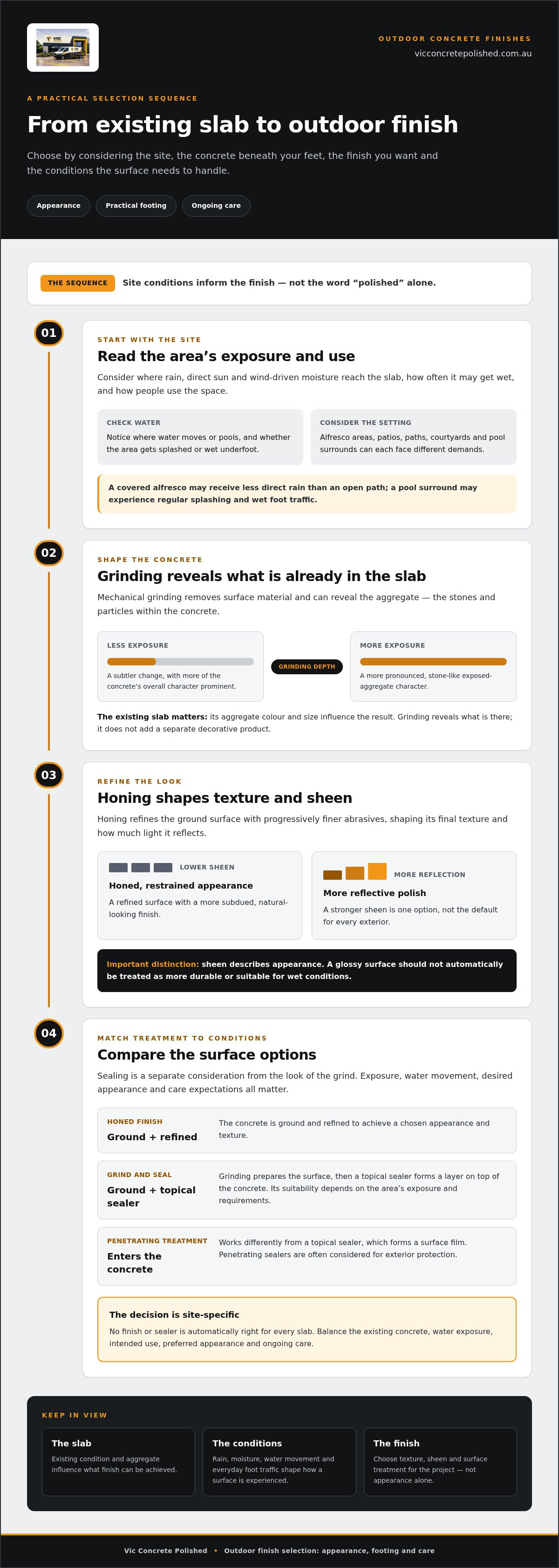
Grinding mechanically removes surface material and can reveal the concrete’s aggregate, the stones and particles within the slab. Grinding depth affects how much of that material becomes visible, from a subtle change to a more pronounced exposed-aggregate character. The result also depends on the existing concrete, so the same process won’t produce an identical appearance on every slab.
Honing refines the ground surface with progressively finer abrasives. This shapes the final texture and appearance, including how much light the surface reflects. Prepare the slab, select the finish and surface treatment, then assess them against the area’s intended use. This sequence connects appearance choices with the practical demands of an exterior space.
What do aggregate exposure and sheen change?
More visible aggregate can give a floor a stone-like, textured appearance, while less exposure keeps the concrete’s overall character more prominent. The colour and size of the aggregate already in the slab influence the result. Grinding reveals what’s there rather than adding a separate decorative product.
Sheen is another design choice, from a subdued, low-sheen look to a more reflective finish. It describes appearance, not outdoor performance. A glossy surface shouldn’t automatically be treated as more durable or suitable for wet conditions. Consider texture and intended use as well as appearance, particularly where rain or splashing is expected.
How do grind and seal and honed finishes differ outdoors?
A honed finish is created by grinding and refining the concrete to achieve a chosen appearance and texture. Grind and seal also involves grinding, but adds a topical sealer over the prepared surface. This sealer forms a layer on top of the concrete, so its suitability depends on the exposure and requirements of the area.
A penetrating sealer works differently: it enters the concrete rather than forming the same kind of surface film. Penetrating treatments are often considered for exterior protection, while a topical sealer may be selected when the project calls for a sealed surface and the conditions suit that system. Neither approach is automatically right for every slab. Exposure, water movement, desired appearance and care expectations all matter.
For a closer explanation of the process and surface treatment, see this grind and seal concrete floor guide. To compare options, describe the finish you want, then weigh it against the slab’s condition and the area’s everyday use. Vic Concrete Polished provides concrete grinding and finishing work, connecting surface preparation with the selected finish so the decision is based on the project, not sheen alone.
Compare outdoor concrete finishes by use, exposure and upkeep
The right finish depends on what the area needs to handle, not just the look you prefer. When comparing outdoor polished concrete options, consider how the surface is formed, whether it has a sealer, how often it may get wet and what kind of traffic it will receive. The table is a starting point, not a guarantee of suitability. The slab and site conditions still matter.
| Finish | Appearance and treatment | Exposure and upkeep considerations | Useful questions for the project |
|---|---|---|---|
| Honed | A ground and refined surface, commonly with a lower sheen than a high polish. A topical sealer isn’t inherent in the term. | Consider how the chosen texture and surface treatment will suit exposure to rain, water and regular foot traffic. Cleaning needs depend on the surface and its use. | What level of aggregate exposure and texture is wanted? How will water move across the area? |
| Grind and seal | The concrete is ground, then treated with a topical sealer that forms a layer over the surface. | Suitability depends on the sealer system and the conditions it will face. Care and future upkeep should account for the surface treatment. | Does the selected sealer suit this exposure? What care will help maintain the finish? |
| High polish | A more reflective appearance created through further mechanical refinement. | Sheen alone doesn’t establish wet-footing performance or exterior suitability. Assess the intended use and exposure rather than choosing on gloss alone. | Will the appearance work for the setting, including periods when the surface is wet? |
Which finish considerations matter around wet areas?
Water changes how a surface is used and how it feels underfoot. Around pool surrounds, consider splashing, wet feet, drainage and how frequently the area is occupied. Neither a matte appearance nor a visibly textured surface is, by itself, proof of slip resistance. Verify applicable slip-resistance requirements and relevant test information for the specific installation before selecting a finish.
Which finish suits a patio, path or driveway?
A patio may prioritise comfort, cleaning and time spent outdoors; a path may need consideration of regular foot traffic and rain; a driveway also faces vehicle use. Treat traffic, exposure and cleaning as separate factors, then weigh them against the desired appearance. A finish that suits a sheltered patio isn’t automatically right for a wet path or vehicle area. A honed and polished concrete comparison can help clarify the visual distinction while you assess the practical demands of your space.
Choose outdoor polished concrete with a project assessment checklist
A sound finish plan starts with the area’s requirements and the concrete already in place. Before selecting outdoor polished concrete, consider how the space is used, where water goes, the slab’s condition and how you’ll care for the finished surface. These points help shape the project scope and preparation needed, rather than leaving groundwork until after you’ve chosen a finish.
- Intended use: Note whether the area is an alfresco space, path, courtyard or another setting, and consider the people, furniture or vehicles using it. Use affects the practical demands placed on the surface.
- Water and weather exposure: Identify whether the slab is covered or open to rain, and where water tends to run or collect. Regular wetting can influence finish and surface-treatment choices.
- Slab condition: Look for visible cracks or damage, old coatings, uneven areas and residues. These can affect preparation and the consistency of the result.
- Finish expectations: Describe the desired aggregate exposure, texture and sheen. If you’re picturing an indoor-style reflective polish, the mechanical polished concrete finish guide explains how that finish is created and what to expect.
- Upkeep: Consider how the area will be cleaned and what ongoing care you can reasonably manage. Requirements depend on the chosen finish and any sealer system.
What should be assessed before finishing an existing slab?
Visible marks are useful clues, but consider the surface as a whole. Coatings or residues may affect preparation, while uneven areas and damage can influence how much grinding is needed. The slab’s existing characteristics also shape what aggregate is revealed and how uniform the finished appearance can be.
Preparation and project scope should be assessed together. Grinding isn’t a one-size-fits-all step, and two slabs won’t necessarily produce the same finish, even when a similar look is requested. A careful assessment helps set realistic expectations before work begins.
How should you plan for long-term care?
Plan care around the completed surface, not a generic maintenance schedule. Cleaning methods and ongoing maintenance depend on the selected finish and sealer system, as well as how the area is used. Follow the specific care guidance for your finished surface, and don’t assume every sealed or honed floor should be maintained in the same way.
Vic Concrete Polished provides concrete grinding, mechanical polishing and grind and seal, with preparation considered alongside the intended result. Discuss your outdoor concrete finishing project to plan the surface assessment and finish around the slab and its use.
How Vic Concrete Polished approaches outdoor concrete finishing
Choosing an exterior concrete finish involves more than selecting a preferred sheen. Vic Concrete Polished considers the existing surface, how the area will be used and the finish requirements together. The company provides concrete grinding, grind and seal, mechanical polishing and surface preparation, but no single method suits every outdoor slab or exposure condition.
For an alfresco area, planning may centre on the slab’s current state and the desired look. An open path or another frequently used space brings different practical considerations. The aim is to understand these needs before settling on a process, so preparation and finishing are planned for the specific project rather than treated as separate decisions.
Why does preparation matter to the finished surface?
Grinding and substrate preparation address the concrete surface before finishing, helping create a more consistent base for the selected treatment. The work required depends on what’s already there. Visible damage, uneven areas, residues or previous coatings can all affect the assessment and preparation plan.
Where existing floor coverings are present, removing them may also form part of the preparation. The type of covering and the condition of the concrete beneath it help determine the work involved. Careful groundwork gives the finish a more suitable surface, but it can’t make every slab look identical or guarantee a particular lifespan or performance.
What can you expect when planning a concrete finish project?
Planning starts with a practical conversation about the area, the existing concrete and how you want the space to look and feel. Describe how the area is used, whether it’s exposed to rain or regular moisture, and what kind of sheen or aggregate visibility you prefer. Those details connect the finish choice to the conditions it will face.
Vic Concrete Polished has over 18 years of experience in concrete grinding, mechanical polishing, grind and seal and substrate preparation. This work supports a considered approach to outdoor polished concrete. The selected finish still depends on the slab and the project requirements, so the process begins with assessment rather than assuming every option is appropriate outdoors.
From there, the scope can account for preparation as well as the finish itself. This helps set clear expectations about the existing surface and the work needed to prepare it. Discuss your concrete finishing project to talk through the area, the concrete and the finish you have in mind.
Take the next step towards a finish that fits
Before planning your outdoor polished concrete project, picture how you want the space to work in everyday life, not just how it should look in a finished photo. Note what matters most, such as a particular level of sheen, a natural view of the aggregate or straightforward cleaning. Those priorities give the project discussion a useful starting point and keep decisions focused on your property.
It can also help to note when the surface gets wet, how people move through the area and any existing marks or coatings you’ve noticed. You don’t need to reach a technical conclusion yourself. A clear picture of the space and your preferences is enough to begin a considered conversation about preparation and finish options.
Vic Concrete Polished can help shape that conversation around the concrete and your intended use. Discuss your outdoor concrete finishing project and take the next step towards a finish planned for your space.
Frequently Asked Questions
Can outdoor polished concrete be installed over an existing concrete slab?
Yes, an existing slab can often be ground and finished if its condition is suitable. Assessment should account for loose or damaged areas, old coatings, contamination and unevenness, as these can affect preparation and the achievable result. For example, a coating that remains bonded may need a different approach from bare concrete. The finished appearance will depend partly on the slab beneath it, so expect its existing character to influence the outcome.
Does outdoor concrete sealer change the look of the surface?
Yes, a sealer can change the surface’s appearance, depending on its type and finish. A topical sealer may add sheen or deepen the concrete’s colour, while a penetrating sealer is generally less visible because it doesn’t form the same surface film. The result varies with the concrete and chosen system. If appearance matters, discuss the expected look before work begins and follow the care instructions for the selected sealer.
Can outdoor polished concrete be repaired if it becomes damaged?
Damage can sometimes be repaired, but how well a repair blends depends on its size, depth and location, as well as the original concrete and finish. A local patch may differ in colour, aggregate exposure or sheen from the surrounding area, particularly if the slab has weathered. For a chip or crack, have the affected surface assessed before choosing a repair approach. The aim is to address the damage while setting realistic expectations for the visual match.
How long does an outdoor concrete finish take to cure before use?
There isn’t one safe waiting period for every outdoor finish. The time before foot traffic or furniture is allowed depends on the finishing system, sealer, site conditions and the product’s curing instructions. Dry to the touch doesn’t necessarily mean ready for normal use. Follow the specific guidance provided for the completed surface, including any staged instructions for light use and heavier loads, to avoid marking or disturbing the finish while it cures.
Will outdoor polished concrete fade or change colour in the sun?
Its appearance can change over time, but the degree depends on the concrete, any colour treatment or sealer, and exposure. Direct sun and weather may affect a surface treatment differently from the concrete itself. Ask about the expected appearance of the selected system under exterior conditions, particularly if colour consistency matters across adjoining indoor and outdoor areas. A sample or test area can help you understand the finish, though it may not represent every part of the slab.
Is outdoor polished concrete suitable for a sloping area?
It can be considered for a sloping area, but the gradient, drainage and intended traffic need to be assessed together. Water movement may differ from a flat surface, and people need secure footing as they move across the slope. Don’t use sheen or visual texture alone to judge slip resistance. Where a performance requirement applies, rely on relevant test information for the proposed surface and conditions rather than assuming the finish is suitable.
Can outdoor concrete be finished in a way that matches an indoor floor?
A related look can often be planned, but an exact match isn’t assured. Indoor and outdoor slabs may differ in aggregate, colour, condition and exposure, and the exterior finish may need different treatment for its setting. Share the indoor floor’s appearance as a reference, then compare it with the outdoor concrete and intended use. Matching broad features such as sheen or aggregate visibility may be more achievable than reproducing every shade variation.


