
A rougher garage floor isn’t automatically a safer one. A slip resistant garage floor coating needs to provide useful grip when water, dust or other contaminants are present, while still being practical to clean. Too little texture may leave you uneasy underfoot; too much can make routine sweeping and washing harder.
It’s reasonable to want a finish that helps reduce slipping without turning the garage into a dirt trap. The key is to consider the whole coating system, not rely on a product label or appearance alone. Compare texture, cleaning needs and the way you use the space before choosing between decorative flakes, added grit and other finish options.
The condition of the concrete and the quality of its preparation also affect how consistently a coating can be applied. Vic Concrete Polished provides concrete grinding and preparation, epoxy resin flooring and decorative flake coating systems. The right choice depends on your surface, how you use the garage and how you prefer to clean it.
Key Takeaways
- A slip resistant garage floor coating can improve grip, but water, dust, oil and other contaminants can still affect footing.
- Compare decorative flakes and single-colour resin by texture, appearance and how easily you can clean the surface.
- Choose a finish by considering what enters your garage, how you use the space and how often you clean it.
- Professional concrete grinding and preparation help support coating adhesion and a more consistent finish.
- Assessing the existing floor before coating helps match the preparation and finish to the concrete’s condition.
What makes a garage floor coating slip resistant?
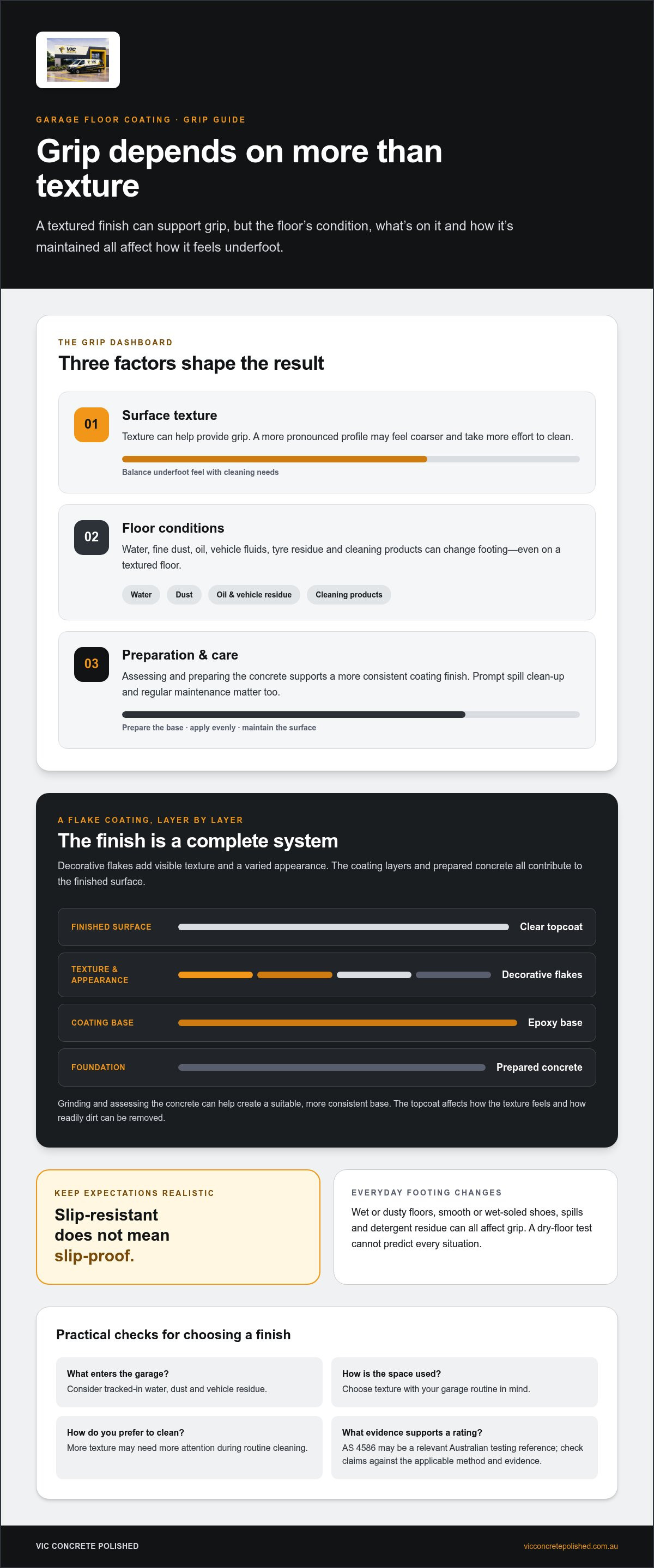
A coating’s slip resistance comes partly from its surface texture. Texture can help provide grip, but it works alongside other factors, including footwear, floor contamination and maintenance. A surface that feels secure in one situation may behave differently when wet or dirty.
A slip-resistant garage coating uses surface texture to support grip under suitable conditions. It may reduce the likelihood of slipping in appropriate conditions, but it can’t remove every risk. The phrase describes a surface property, not a promise that people won’t fall.
How does a coated garage floor become slippery?
Moisture can spread across a garage floor in a thin film, including water tracked in from outdoors or carried in on a vehicle. Fine dust may settle on top of that film and reduce the traction available from the surface texture. This is why a textured floor can still feel slippery after rain or while dust is being moved around.
Vehicle fluids, tyre residue and household cleaning products can also change how the floor feels underfoot. A small fluid spill may be difficult to see, while detergent left behind after washing can leave a film. Clean spills promptly using a method suitable for the substance and coating, then rinse or dry the area as appropriate. Follow the coating’s care guidance rather than using an untested cleaner.
A dry-floor test isn’t enough to predict footing in every situation. Shoes with smooth or wet soles, a dusty surface and a recently washed floor each change the conditions. Texture is one part of the equation; sensible footwear, prompt clean-up and regular maintenance matter too.
Does slip resistant mean slip proof?
No coating should be presented as a guarantee against slips or falls. The grip a person experiences can vary with the test method, the condition of the floor and what is on its surface. A result from a particular test describes performance under defined conditions, not every combination of rainwater, dust, vehicle residue, footwear and cleaning products found in a working garage.
For a useful overview of how different tests assess flooring, see Floor slip resistance testing methods and standards. In Australia, AS 4586 may be a relevant testing reference, but any claim about compliance, a test result or a classification should be checked against the applicable method and supporting evidence. Don’t assume a rating applies to every installed finish or real-world condition.
When considering a slip resistant garage floor coating, look beyond the label. Find out what creates the texture, how the surface is intended to be used and how it should be kept clean. That practical context helps set realistic expectations before you compare finishes.
How slip resistance is built into a garage floor coating
Grip is designed into the surface, rather than guaranteed by the coating name alone. A system may use decorative flakes or suitable anti-slip material to create texture, while concrete preparation and the coating layers help form a consistent finished surface. The right balance depends on how the garage is used: pronounced texture may feel different underfoot and take more effort to clean than a smoother finish.
An even surface profile, supported by appropriate preparation, helps create a more consistent coating finish. Consistency matters because pronounced variation across the floor can affect both its feel and appearance. Consider texture alongside the way you’ll clean and use the space.
What do flakes and anti-slip media contribute?
In a decorative flake system, flakes are embedded in an epoxy base and covered with a clear topcoat. The flakes create visible texture across the coated area as well as a varied appearance. Anti-slip media is a general term for materials used to add texture to a coating, but the material, application method and resulting performance depend on the particular system.
No single texture suits every garage. A finish that offers useful grip for one routine may feel unnecessarily coarse or be harder to clean for another. For background on slip-resistance guidance, the National Floor Safety Institute (NFSI) information on slip resistance is a useful reference, but it doesn’t replace evidence about a particular installed coating.
Why do preparation and coating layers matter?
Before applying a coating, the concrete needs to be assessed and prepared so the system has a suitable base. Grinding can help prepare the surface, while measuring and levelling help identify floor conditions that may affect the finished result. Coating over unresolved surface issues or an uneven base can make the final appearance less consistent.
In a flake system, the epoxy base is the layer in which decorative flakes are embedded. A clear topcoat covers the flakes and forms the finished surface. Each part contributes to the overall result, so careful, even application matters. The topcoat also affects how the texture feels and how readily dirt can be removed; a more heavily textured surface may need more attention during routine cleaning.
There’s no need to choose texture by appearance alone. Consider the balance between underfoot feel, everyday cleaning and the look you want, then think about how the coating layers work together. Vic Concrete Polished provides concrete grinding and coating preparation to create a more consistent base for a garage finish suited to the floor.
Comparing slip-resistant garage coating options
A useful comparison looks beyond the coating name. Consider the surface texture, the look you prefer and how the floor will handle routine cleaning and garage use. A textured finish may support grip, but the result depends on the complete coating system and conditions on the floor. Added anti-slip media can be considered as part of a system, not as a universal specification or guaranteed outcome.
The options below are broad comparisons. Actual texture and care requirements vary with the system and its application.
| Finish | Texture and appearance | Cleaning considerations | Potential garage fit |
|---|---|---|---|
| Decorative flake epoxy | Visible flakes create a varied, textured appearance. | Texture may need attention when sweeping or washing. | Owners wanting a decorative finish for practical garage use. |
| Single-colour resin coating | More uniform colour; texture depends on the chosen system. | A smoother finish may be simpler to wipe, while added texture can affect cleaning. | Owners preferring a consistent colour and a finish tailored to the floor’s use. |
| Concrete finish, such as grind and seal or mechanical polishing | Appearance and surface feel differ from coated flake systems. | Care depends on the finish and the floor’s condition. | Spaces where a separate assessment finds the concrete finish suitable. |
When might a decorative flake epoxy coating suit a garage?
This option may suit owners who want visible variation as well as a textured surface for everyday garage use. The system combines an epoxy base, flakes embedded in that base and a clear topcoat. The flakes contribute to the surface texture and appearance, but the finished feel depends on how the system is applied. For a closer look at the layers and process, see the decorative flake epoxy floor system guide.
Weigh texture against upkeep. A garage used for parking and storage has different demands from one used regularly as a work area. Dust, vehicle residue and other spills can settle around textured areas, so consider whether the finish suits your cleaning routine as well as your preferred appearance. No flake or added-media option is right for every garage.
How do other concrete finishes compare?
Grind and seal and mechanical polished concrete are alternatives to a resin coating, not interchangeable versions of the same finish. Their suitability depends on the intended use, the existing concrete and your maintenance preferences. A grind and seal concrete floor guide explains that finish separately, while the mechanical polished concrete guide offers another finish overview.
Before selecting a slip resistant garage floor coating, compare how each option balances texture, appearance and cleaning in your own space. The floor’s condition matters too, so a finish comparison is a starting point, not a substitute for assessing the concrete.
How to choose the right texture for your garage
Start with the way the floor is used, then consider what regularly reaches it. A household parking space may mainly see damp tyres, dust and occasional spills. A workshop can have more foot traffic and recurring vehicle-fluid or product spills. Those patterns matter more than choosing the roughest-looking finish by default.
Use this sequence to narrow down a slip resistant garage floor coating that fits the space:
- Describe the main use. Note whether the garage is mostly for parking and storage, or also serves as a work area with people moving across it throughout the day.
- List what reaches the floor. Consider rainwater tracked in, wet tyres, dust, vehicle fluids and other products used in the space.
- Separate occasional moisture from recurring contamination. A floor that gets wet now and then has different demands from one regularly exposed to spills or tracked-in debris.
- Decide how much texture suits your routine. Consider the grip you want alongside the appearance and the effort needed to sweep and wash the floor.
- Match the finish to the actual concrete. The existing surface and its condition affect preparation and finish selection, so don’t assume one texture level will suit every garage.
Use, contaminants, texture and maintenance are the four factors to weigh before choosing a garage floor finish. A decision based on all four is more useful than selecting by colour or texture alone.
Match surface texture to how the garage is used
A household parking space may need to accommodate occasional rainwater and regular vehicle movement without making routine cleaning awkward. A workshop may have more frequent foot traffic and recurring exposure to fluids or debris, which changes the practical balance. Think about what happens across the whole floor, including entry points and work areas, rather than judging texture on one dry-day impression.
There’s no single texture level to prescribe without considering the concrete, use and coating system. If conditions are recurring, account for them when choosing the finish instead of assuming an occasional splash is the only concern.
Plan for cleaning and day-to-day upkeep
More pronounced texture can take extra attention when dust and debris settle into the surface. Think through your real routine: will you sweep regularly, wash the floor or need to deal with spills as they occur? A finish that looks suitable on installation day still needs to work with the upkeep you’re prepared to do.
Clean spills promptly using a method suitable for the coating, and follow its care guidance. Before settling on a texture, consider how easily you can remove ordinary garage dirt without compromising the finish.
Choosing a finish is a balance, not a race towards maximum roughness. Vic Concrete Polished can match concrete preparation and coating options to your garage. Discuss your garage floor coating needs with Vic Concrete Polished.
What to expect from professional slip-resistant garage floor coating
A considered installation starts with the existing floor, not the coating colour or texture. Concrete condition, any existing floor covering and the way the garage is used all influence preparation and finish selection. A professional process connects those decisions in sequence, helping the selected system suit the substrate and supporting a more consistent result.
The preparation and coating approach is tailored to the project. A useful overview is:
- Assess the floor. Review the concrete’s condition and identify existing coverings that may need removal before coating.
- Prepare the substrate. Select relevant preparation work, such as grinding, measuring or levelling, to address the floor before the coating is applied.
- Apply the selected system. Follow the application sequence for the chosen coating, including its texture and finish layers where relevant.
- Allow for curing and inspect. Curing depends on the selected system. Before handover, inspect the completed surface for finish consistency and alignment with the project requirements.
How is an existing garage floor prepared?
Preparation begins by looking at the concrete and any existing tiles, carpet or vinyl. These coverings may need to be removed before the underlying surface can be assessed and prepared. Vic Concrete Polished provides floor-covering removal alongside measuring, levelling and concrete grinding, with the relevant work shaped around the floor’s condition and the selected coating.
Grinding and other suitable preparation address the substrate before application. This groundwork supports coating adhesion and helps create a more even base for the finish. Preparation isn’t a one-size-fits-all step: the work required depends on what’s already on the floor and its condition. Don’t assume every slab needs the same treatment or that a coating will resolve every underlying issue.
What happens during coating application and handover?
Once preparation is complete, the chosen coating system is applied in its intended sequence. For a decorative flake finish, this involves an epoxy base, embedded flakes and a clear topcoat. Other systems can use different layers. Application and curing requirements depend on the system, so don’t assume a fixed timeframe for every garage.
At inspection, the focus is on whether the finish appears consistent and meets the agreed project requirements. Consider the completed surface in light of its intended use and care routine. A slip resistant garage floor coating can support grip through its texture, but the finished floor still needs suitable maintenance and sensible use.
Careful preparation and considered finish selection help set the project up for a sound result. Explore Vic Concrete Polished’s concrete coating services to find a finish suited to your garage.
Make your next garage-floor decision with confidence
Before settling on a finish, picture the ordinary week in your garage: how you move through it, what gets tracked in and how much time you want to spend cleaning. That practical picture can guide a more useful conversation about texture than appearance alone. Consider a slip resistant garage floor coating in relation to the space and its actual conditions, not as a standalone promise. Think, too, about whether the garage has one main use or needs to serve several purposes.
Next, connect those priorities with the concrete itself. Assessing the floor helps shape the preparation and coating approach around its condition, so the finished surface is suited to its intended use and upkeep. A clear understanding of what matters most makes it easier to compare options and choose a finish you can live with day to day.
Explore Vic Concrete Polished’s concrete coating services to take the next step towards a garage floor finish tailored to your space. With thoughtful planning, you can move forward with confidence.
Frequently Asked Questions
Is a slip-resistant garage floor coating completely slip proof?
No, a slip-resistant finish can’t guarantee that nobody will slip. Water tracked in on shoes, fine dust or a spill can change footing, even if the coating has texture. A slip resistant garage floor coating can help manage risk when the surface is used and maintained appropriately, but it isn’t a substitute for sensible care. For example, clean a spill promptly and take extra care when walking across a wet entry area.
Can epoxy coating make a garage floor less slippery?
Epoxy alone doesn’t determine how much texture the finished floor has. The overall system, any suitable texture component and the way the coating is applied all influence the surface. A smooth-looking epoxy finish may feel different from a textured one, but appearance alone can’t establish how it will perform in every condition. Consider how the garage is used and what reaches the floor before settling on a finish.
Which is better for a garage: flake epoxy or anti-slip coating?
Neither is automatically better, and the options aren’t always separate: flakes can create texture within an epoxy system. Flake epoxy adds visible variation, while anti-slip media refers generally to material incorporated into a coating to add texture. The finished look and cleaning needs depend on the selected system. Choose with your garage’s actual conditions in mind, such as whether it’s mainly used for parking or regular hands-on work.
Does a rougher garage floor coating make it harder to clean?
It can. More pronounced texture may hold dust and small debris, so sweeping can take more attention than on a smoother surface. Ease of cleaning also depends on the coating’s finish and the routine you can maintain. Before choosing a rougher feel, consider whether you’ll sweep regularly and how you’ll wash the floor. More texture isn’t automatically the best choice if upkeep becomes impractical.
How do I maintain a slip-resistant garage floor coating?
Remove loose dust and debris regularly, and attend to spills promptly so they don’t remain underfoot. Use cleaning methods suited to the installed coating, following its care instructions rather than assuming every floor responds the same way. For example, routine sweeping can help clear grit before washing, while a fresh spill may need immediate attention. Maintenance supports a clean, usable surface, but it can’t guarantee grip in every condition.
Does a garage concrete slab need grinding before an epoxy coating?
Not necessarily; preparation depends on the concrete’s existing condition and the finish being applied. Grinding is one professional method for preparing the surface, but don’t assume every slab needs identical treatment. Existing coatings or floor coverings can also affect the work required. Assessing the concrete first helps determine an appropriate preparation approach, rather than applying a standard process regardless of the floor’s condition.
Is a slip-resistance test the same as a guarantee against falls?
No. A test result describes performance under the conditions and method used for that test, not every situation in a garage. Water, dust, spills, footwear and ongoing care can all affect footing after installation. Treat test information as one part of understanding a coating, not as a promise that falls can’t happen. Keep the floor clean, address contamination promptly and use the surface with care.


