

A dull or marked floor doesn’t automatically need resealing. There’s no universal resealing interval for polished concrete: renewal depends on the installed system and its condition. This polished concrete maintenance guide explains how to distinguish routine care from wear that needs closer assessment.
It’s understandable to want a clear schedule, especially when you want to protect the finish without doing unnecessary work. Start with everyday cleaning and preventing avoidable damage, then monitor how the floor performs over time.
Learn how to protect polished concrete during a move, what to record about the floor and its care, and when burnishing may be appropriate. You’ll also find out why persistent dullness, staining or wear should be assessed before choosing mechanical re-refinement or restoration. The practical goal is to match the care to the floor’s condition, rather than assume every surface needs the same treatment.
Key Takeaways
- During a move, protect the surface from grit and impacts, and distinguish acid etching from staining caused by an absorbed substance.
- Keep a simple record of cleaning methods, spills, damage and changes in appearance to help track how the floor is performing.
- Judge appearance against the floor’s intended finish and normal wear, rather than expecting every polished concrete surface to look identical.
- Burnishing may suit some surface wear, but persistent dullness, staining or wear should be assessed before choosing re-refinement or restoration.
How can you protect the floor during moves?
Before a move, identify whether the floor is mechanically polished or grind-and-seal. Mechanical polishing refines the concrete itself, while grind-and-seal uses a surface-applied coating. According to Cement Concrete & Aggregates Australia, section 7 of its Guide to Concrete Flatwork Finishes distinguishes penetrating sealers from surface-forming sealers, which need different care. Check handover notes or maintenance records, and photograph the surface in consistent lighting before furniture arrives. Record visible marks, sheen and existing chips as your baseline.
Polished concrete and grind-and-seal finishes have different maintenance needs and wear characteristics. Mechanical polishing refines the concrete itself, while grind-and-seal uses an applied coating that can wear and may need renewal. For either finish, care depends on the installed system and its condition. There’s no universal resealing interval for polished concrete.
During a move, remove loose grit with a clean microfibre dust mop before equipment or furniture crosses the floor. Grit caught beneath a trolley wheel or furniture leg can scratch the surface. Lift heavy items instead of dragging them, and put clean protective material beneath feet or wheels. Keep protective boards free of grit and remove them promptly to inspect the floor. Check busy entrances and commercial traffic lanes daily for grit; lightly used rooms may need less frequent attention.
Distinguish staining from etching before treating a mark. An absorbed substance can stain concrete, while acid can etch its surface. Both may look like discolouration, but they affect the floor differently. Blot fresh spills with a clean absorbent cloth, then follow the approved cleaning instructions for the installed finish. Control grit at entrances and avoid dragging furniture to reduce scratches and wear. Don’t assume a steam mop is safe for polished concrete: use one only if the finish’s care instructions approve it. Heat and moisture can affect some applied coatings, so check the finish details first.
What belongs in your maintenance record?
A polished concrete maintenance guide is most useful when it reflects the installed finish and the floor’s actual use. Keep a concise record of cleaning, spills, damage and changes in appearance. This makes it easier to compare conditions before deciding whether the floor needs further assessment.
Recording Cleaning and Damage
A maintenance record is a dated account of cleaning, spills, damage and changes in appearance. Note the area, likely cause, product used and result, including whether a mark remained after cleaning. Add photographs taken from a consistent angle and describe how the room is used, such as a kitchen entrance or hallway. These details can help distinguish gradual wear from a new incident.
Standards and Warranty Requirements
Maintenance requirements depend on the installed finish and its care instructions, rather than a universal resealing interval. Cement Concrete & Aggregates Australia’s Guide to Concrete Flatwork Finishes, section 7, distinguishes penetrating and surface-forming sealers and their maintenance. Keep finish details, handover notes and warranty documents together, so the relevant cleaning directions and conditions are easy to review.
For an assessment, gather dated photos, cleaning records and a simple floor plan marking affected areas. Note when the change appeared, whether it followed a spill or furniture move, and which cleaning method you used. Acid can etch concrete, while an absorbed substance can stain it. Describe the mark’s location and appearance rather than assuming its cause.
Keep separate notes for kitchens, bathrooms and outdoor areas, where use and exposure differ. Record the cleaner used and whether the surface was wet, exposed to food spills or affected by tracked-in grit. Remove loose grit before washing, use a neutral-pH cleaner approved for the finish, and avoid vinegar as a routine cleaner. Blot spills promptly with a clean absorbent cloth, then follow the approved instructions.
Use this polished concrete maintenance guide alongside accurate floor details when preparing for an assessment. Floor preparation and measuring can help frame an informed evaluation.
Appearance standards
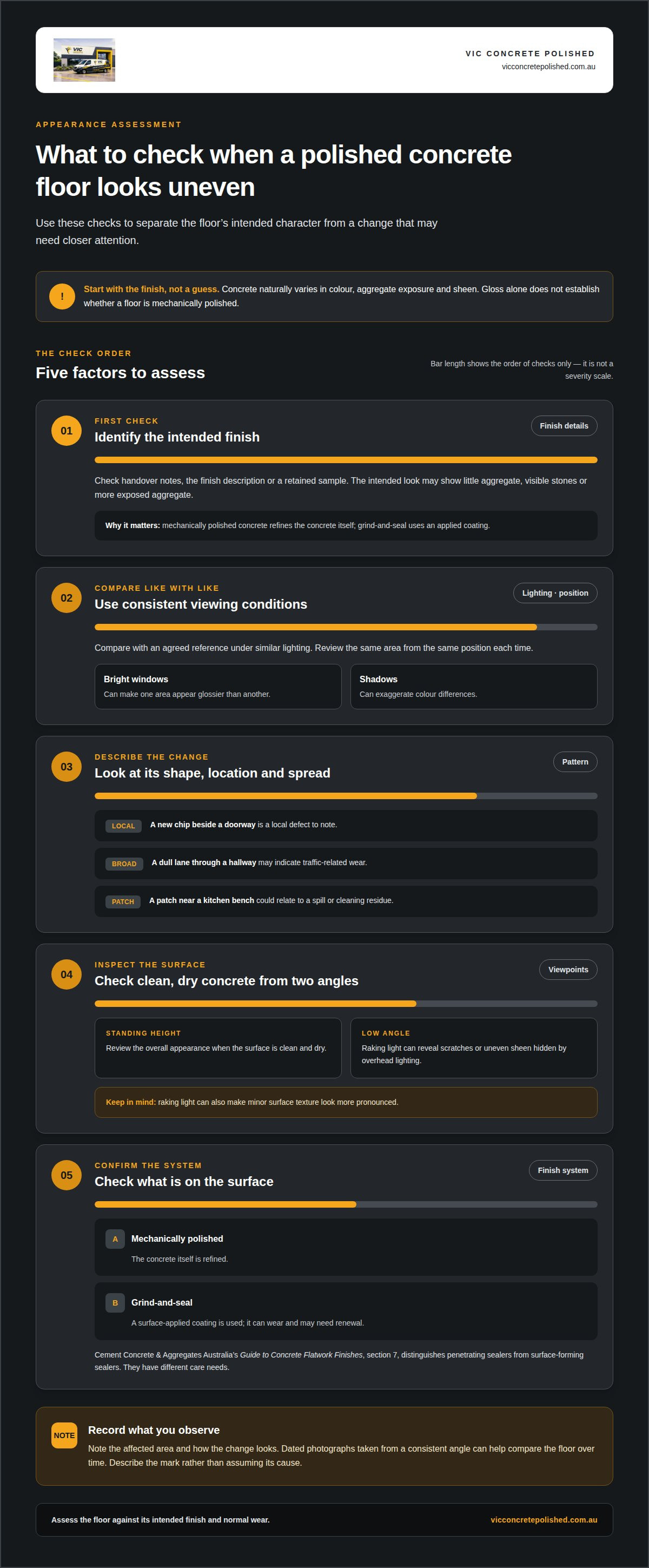
Assess a polished concrete floor against its intended finish, not an assumption of perfect uniformity. Concrete varies naturally, so colour, aggregate exposure and sheen can differ across a room.
Start with the finish description or handover details. They can clarify whether the intended look shows little aggregate, visible stones or more exposed aggregate. Compare the floor with any retained sample or agreed reference under similar lighting. A bright window can make one area look glossier than another, while shadows can exaggerate colour differences.
Separate expected character from changes that deserve attention. Consistent aggregate exposure may reflect the chosen finish; a new chip beside a doorway is a local defect. A broad dull lane through a hallway may indicate traffic-related wear, while a patch near a kitchen bench could be related to a spill or cleaning residue. Describe a change by its shape, location and spread.
Inspect the surface when it’s clean and dry, then view it from standing height and a low angle. Raking light can reveal scratches or uneven sheen hidden by overhead lighting, but it can also make minor surface texture look more pronounced. Compare like with like: use the same room lighting and viewing position each time you review an area.
Appearance expectations should also reflect the finish system. Cement Concrete & Aggregates Australia’s Guide to Concrete Flatwork Finishes, section 7, distinguishes penetrating sealers from surface-forming sealers. That distinction matters because a coating can create a different surface appearance from concrete polished mechanically. Gloss alone doesn’t establish whether a floor is performing well.
For a useful visual assessment, describe the affected area, the change and how it contrasts with nearby concrete. “A dull strip from the entry to the hallway” is clearer than “the floor looks wrong”. Note whether the mark remains after approved routine cleaning and compare it with less-used areas. This helps distinguish an appearance preference from a physical change that may need assessment.
Burnishing, mechanical re-refinement, and restoration
Burnishing, re-refinement and restoration address different levels of surface wear. Have persistent dullness, staining or wear assessed before choosing a treatment.
Burnishing and Mechanical Re-refinement
Burnishing uses a machine and suitable pad to refresh the floor’s appearance. Mechanical re-refinement renews the concrete through grinding and polishing. The distinction matters: a traffic lane with a tired sheen may need a different response from scratches or unevenness that remain after cleaning. The finish system and the depth and spread of wear help determine which approach is suitable.
Restoring Polished Concrete
Restoration addresses more extensive deterioration, such as persistent dullness across a room, deeper scratches or staining that routine care hasn’t resolved. An assessment should consider the affected area, the installed finish and the surrounding concrete. A localised mark may need a targeted response, while widespread wear can call for broader mechanical work. The aim is to address the cause and restore a consistent surface, not simply add gloss.
Removing Stains, Scuffs and Scratches
Identify the mark before applying an aggressive treatment. Blot a fresh spill with a clean absorbent cloth, then follow the approved cleaning instructions for the installed finish. A removable scuff may respond to suitable cleaning, but a scratch that remains afterwards can indicate surface damage. Acid can etch concrete, while an absorbed substance can stain it. The marks may look similar, but need different assessment.
Avoid vinegar as a routine cleaner because its acidity can affect the concrete surface. Don’t use abrasive pads or unapproved chemicals to chase a mark, since they can alter the finish around it. Record the mark’s location and appearance, then compare it after approved cleaning. If dullness, staining or wear persists, arrange an assessment of your concrete floor to determine whether burnishing, re-refinement or restoration is appropriate.
Vic Concrete Polished: Mechanical Polished Concrete
Vic Concrete Polished provides Mechanical Polished Concrete for projects where a mechanically refined concrete surface suits the space and finish goals. If an existing floor has persistent dullness, staining or wear, an assessment can help determine whether floor grinding and a new finish are more appropriate than routine care alone.
Finish choice matters. Vic Concrete Polished also offers Grind and Seal, Decorative Flakes Coating System and Epoxy - Resin, each suited to different project requirements. The right option depends on the concrete’s condition, the intended appearance and how the space will be used. Clear photos and your maintenance record can help explain what has changed and the result you want.
Contact Vic Concrete Polished to discuss your concrete flooring project.
Make your next floor-care decision with confidence
Let the floor’s condition guide its next step. A consistent record of changes can help you recognise when routine care remains suitable and when the surface needs a closer look. Keep this polished concrete maintenance guide handy, then follow the care that suits your floor and its intended use.
If the surface shows persistent wear or you’re planning a new concrete floor finish, Vic Concrete Polished can discuss the project and suitable options. The aim is a considered choice based on the floor, not a treatment applied by default.
Contact Vic Concrete Polished to discuss your concrete flooring needs. A clear next step can help you plan for a surface that works well in your space.
Frequently Asked Questions
Does every polished concrete floor need to be resealed?
No, not every polished concrete floor needs resealing. Mechanical polishing and grind-and-seal finishes use different surface systems, so their renewal needs differ. The installed finish, traffic and visible condition all matter. A floor that performs as intended doesn’t need resealing just because time has passed. Identify the finish first, then follow its care and renewal requirements.
Does polished concrete require maintenance?
Yes, polished concrete needs regular care to manage everyday soil and preserve its appearance. A polished concrete maintenance guide should reflect how each space is used, rather than prescribe one routine for every room. For example, a home workshop may collect different debris from a quiet living room. Inspect areas around doorways, workbenches and furniture for changes that ordinary cleaning may not resolve.
Can exposed polished concrete be used in areas with predictable chemical exposure?
Exposed polished concrete may not suit predictable chemical exposure, as some substances can etch or stain the concrete. Identify the chemicals and likely contact conditions before choosing a floor system. Vic Concrete Polished offers Epoxy - Resin flooring, described as engineered for chemical resistance. The suitable system depends on the substances involved and the demands of the space.
Is a dull patch dirt, a stain or surface wear?
A dull patch may be residue, staining or wear; its appearance alone can’t identify the cause. Compare it with nearby concrete after approved cleaning and drying. Residue may lessen, while a stain can remain in the concrete and wear can alter the surface’s sheen or texture. Record the patch’s location and shape, then compare it under similar lighting.
Is burnishing the same as routine cleaning?
No, burnishing isn’t routine cleaning. Cleaning removes loose grit and surface soil; burnishing uses mechanical action to refresh the appearance. If a floor still looks dull after normal cleaning, assess its condition before considering burnishing. Burnishing isn’t a substitute for removing grit or treating spills promptly, and it won’t resolve every stain or scratch.
What is the difference between burnishing, mechanical re-refinement, and broader restoration?
Burnishing refreshes the surface appearance, mechanical re-refinement renews the concrete through grinding and polishing, and broader restoration addresses more extensive deterioration. A polished concrete maintenance guide can help you distinguish these options by the area affected and the depth of wear. A localised dull area, widespread scratches and persistent wear across a room are different conditions, not automatic reasons for the same treatment.


