

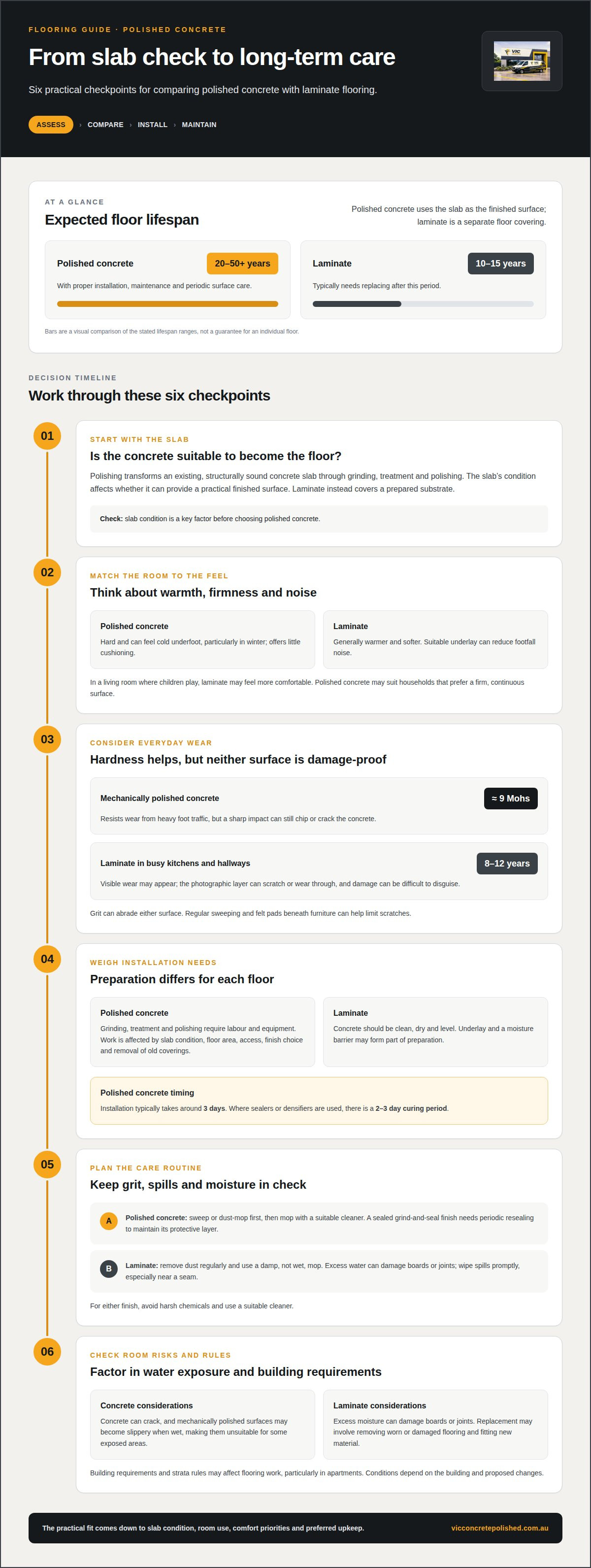
The longer-life option is usually polished concrete: with proper installation, maintenance and periodic surface care, it can last 20 to 50 years or more, while laminate typically needs replacing after 10 to 15 years. In a polished concrete vs laminate flooring comparison, laminate is a floor covering laid over the subfloor, while polished concrete uses a structurally sound concrete slab as the finished surface. The right fit depends on the condition of the slab, how much wear the floor will take and the upkeep you prefer.
It’s understandable to focus on the initial outlay, especially when both options can give a room a clean, finished look. But purchase price is only part of the decision: expected lifespan, scratch resistance and the upkeep needed to keep each surface looking presentable matter too.
This comparison covers durability, everyday care and the factors that affect flooring costs in Australia. You’ll see when laminate may suit your plans and when polished concrete’s long service life and straightforward cleaning routine may be a better fit for your home.
Key Takeaways
- Start by assessing whether your home has a suitable concrete slab; its condition affects whether polishing can create a practical finished floor.
- Compare how each surface handles daily wear and scratches, then consider how visible damage may affect repairs over time.
- Match the care routine to your household: regular dust removal and suitable cleaning help keep concrete presentable, while laminate needs protection from excess moisture.
- When weighing Australian flooring costs, consider the finish, floor preparation and installation needs alongside the upfront price.
Polished Concrete Flooring: Is It Right for Your Home?
Polished concrete uses an existing concrete slab as the finished floor, while laminate covers a prepared substrate. Your slab’s condition, how you use the room and your comfort preferences all help determine which option suits your home.
Polished concrete installation and upkeep
Mechanical polished concrete transforms a structurally sound slab through grinding, treatment and polishing. The slab remains the finished surface, unlike laminate, which is installed over it. For routine care, sweep or dust-mop away grit, then mop with a suitable cleaner. A sealed grind-and-seal finish needs periodic resealing to maintain its protective layer.
Installation costs and timelines
Polished concrete may cost more to install because preparation and successive grinding stages require labour and equipment. Slab condition, floor area, access, finish choice and old-covering removal affect the work. Installation typically takes around 3 days, with a 2-3 day curing period where sealers or densifiers are used. Laminate can go over concrete after the slab is clean, dry and level; underlay and a moisture barrier may form part of preparation. Replacement costs involve removing damaged or worn flooring and fitting new material.
Comfort, warmth and noise
Concrete can feel cold underfoot, particularly in winter, and its hard surface offers little cushioning. Laminate generally feels warmer and softer, while suitable underlay can reduce footfall noise. In a living room where children play, laminate may feel more comfortable; polished concrete suits households that prefer a firm, continuous surface. These differences matter most in rooms where people stand, sit or play on the floor.
Installation rules and flooring risks
Building requirements and strata rules may affect flooring work, particularly in apartments. Applicable conditions depend on the building and proposed changes. Polished concrete can crack, and a mechanically polished surface may become slippery when wet, making it unsuitable for some exposed areas. Laminate avoids those concrete-specific concerns, but excess moisture can damage its boards or joints. Consider room use, slab condition and water exposure before deciding.
| Flooring | Warmth and noise | Installation and care |
|---|---|---|
| Polished concrete | Harder and colder | Grind, treat and polish the slab; dust-mop and clean |
| Laminate | Generally warmer; underlay can soften sound | Prepare the slab; protect boards and joints from moisture |
Choose based on your slab’s condition, comfort priorities and preferred upkeep.
Durability and scratch resistance
When comparing polished concrete vs laminate flooring, consider daily traffic, dropped objects and surface wear. Each floor responds differently to scratches and impact.
Scratch and impact resistance
Mechanically polished concrete has a hard surface, with an approximate hardness of 9 Mohs. It resists wear from heavy foot traffic, but a sharp impact can still chip or crack concrete. Laminate’s photographic layer can scratch or wear through, particularly in busy kitchens and hallways, where visible wear may appear after 8-12 years. Scratches in laminate can be difficult to disguise because the image layer forms part of the plank.
Grit tracked through an entryway can abrade either surface, so regular sweeping helps limit wear. Felt pads beneath furniture can also reduce scratches when chairs or tables move across the floor. Concrete’s hardness doesn’t make it immune to damage, while laminate damage may require replacing affected planks rather than restoring the surface.
Floor lifespan and durability
With proper installation, maintenance and periodic surface care, polished concrete can last 20-50 years or more. Laminate typically needs replacing after 10-15 years. For homeowners weighing polished concrete vs laminate flooring, that difference matters over a long-term renovation: concrete keeps the slab as the finished floor, while laminate is a separate covering that may need replacement as its wear layer ages.
Using an existing slab also means polished concrete needs fewer additional flooring materials. That can reduce material use compared with adding a separate floor covering, though environmental impact depends on the materials and project. Polished concrete is reported to increase property values by 2-5%, which may contribute to buyer appeal but doesn’t guarantee a particular resale outcome.
For a concrete surface showing wear, concrete floor grinding can prepare it for a polished finish. Consider the slab’s condition, the room’s traffic and whether you value a restorable surface or replaceable planks. These practical differences help clarify which floor fits your plans.
Maintenance requirements and costs
A polished concrete vs laminate flooring comparison should include cleaning routines as well as finishes. Concrete has no separate planks or joints; laminate needs careful moisture control around board joins.
Cleaning and ongoing maintenance
For polished concrete, sweep or dust-mop first to remove grit, then mop with a suitable cleaner. This helps limit surface abrasion and preserve the finish. Laminate also benefits from regular dust removal, but use a damp, not wet, mop. Excess water can reach plank joints and cause damage.
Clean household spills promptly on either surface. For example, wipe a drink from laminate rather than letting it sit near a seam. Avoid harsh chemicals on both finishes, as unsuitable products can dull or affect the surface. A suitable cleaner and regular dust removal keep cleaning practical without adding unnecessary steps.
Maintenance and resealing
Maintenance depends partly on the concrete finish. A grind-and-seal floor should be resealed every 1-3 years to maintain protection and appearance. This is separate from everyday sweeping and mopping. Mechanically polished concrete may benefit from burnishing or renewed protective treatment over time, especially in high-traffic areas. The benefit is preserving the surface without replacing a complete floor covering.
Laminate doesn’t require resealing, but damaged planks can add to its upkeep. These costs are separate from routine household cleaning.
When weighing polished concrete vs laminate flooring, consider long-term care alongside the initial installation. Concrete needs little daily attention, but sealed finishes need periodic renewal. Laminate avoids resealing, yet damage can mean replacing planks or repairing moisture damage.
Polished concrete costs in Australia
Initial cost is only one part of comparing floors.
The cost of polished concrete depends on the project. Slab condition, preparation, floor area, access and chosen finish all shape the quote. An intact slab may need less preparation than one requiring extensive grinding or removal of existing flooring. The selected finish also affects the work stages and materials involved.
Polished concrete can cost more initially because the process involves preparing and mechanically working the slab. Laminate has its own installation and replacement costs, and the substrate still needs suitable preparation. Compare the full scope of each option, including removal, underlay and any moisture barrier needed for laminate, rather than comparing surface materials alone.
Service life changes the longer-term calculation. Properly installed and cared-for polished concrete can last 20-50 years or more, while laminate typically needs replacement after 10-15 years. For a homeowner planning to stay for decades, fewer replacement cycles may offset some of concrete’s higher initial outlay. A shorter ownership horizon may place more weight on the upfront installation cost.
Insulation and energy use depend on the home’s conditions. Concrete can absorb heat during the day and release it slowly, which may help regulate indoor temperatures in some homes. It can also feel cold in winter. Laminate and its underlay provide a different surface feel, but there is no general energy-efficiency winner for every Australian home.
Industrial floors and residential rooms have different demands, so a price comparison should reflect the intended use and preparation involved. List the floor area, slab condition, chosen finish and removal needs before comparing estimates. This makes it easier to weigh initial expense against maintenance, replacement cycles and the floor’s intended lifespan.
Vic Concrete Polished: Mechanical Polished Concrete
Vic Concrete Polished provides Mechanical Polished Concrete for homeowners who want an existing concrete slab to become the finished floor. Floor preparation, measuring and concrete floor grinding help prepare the surface for the selected finish. If another look or surface system better suits the space, options include Grind and Seal, a Decorative Flakes Coating System and Epoxy - Resin.
If you’re comparing polished concrete with laminate, start by considering your slab’s condition and the finish you want. This gives the project a practical starting point and helps align floor preparation with the intended result.
To discuss your flooring project, contact Vic Concrete Polished.
Choose a floor that fits the way you live
Before choosing between polished concrete vs laminate flooring, consider how each room is used and what you want from its surface over time. Think about underfoot comfort, expected traffic, the existing slab and how much ongoing care suits your household. A clear list of priorities can turn a broad comparison into a practical flooring decision.
For concrete finishes, Vic Concrete Polished offers Mechanical Polished Concrete, Grind and Seal, and a Decorative Flakes Coating System. Each creates a different look and surface, so your preferred finish and the substrate’s condition are useful starting points for a project conversation.
If you’re ready to discuss your flooring plans, contact Vic Concrete Polished. A considered choice can help your floor work well for the home you have and the way you use it.
Frequently Asked Questions
Which Flooring Is the Better Long-Term Option?
Polished concrete can suit a long-term home when the existing slab is sound and you want it to remain the finished surface. Laminate may be preferable if you value a softer feel or want a floor covering that can be changed without reworking the concrete. Consider how you use each room and whether keeping the slab exposed fits your renovation plans.
How much does polished concrete flooring cost per square metre in Australia?
The cost depends on the chosen finish, concrete condition, floor area and preparation required, so a per-square-metre rate may not reflect the full project scope. Vic Concrete Polished provides free, no-obligation quotes after an initial consultation. Include details about existing floor coverings, access and your intended finish to help define the work involved.
How do polished concrete and laminate compare for maintenance and cleaning?
Both floors benefit from regular dust removal, but the cleaning method matters. Use a soft dust mop or broom before wet cleaning, so grit isn’t dragged across the surface. For laminate, keep the mop damp rather than wet and wipe spills near plank joins promptly. On concrete, use a suitable cleaner to avoid dulling the finish with harsh products.
Are polished concrete or laminate floors suitable for kitchens, bathrooms and pets?
Either floor can work in kitchens, though spills should be cleaned promptly. In bathrooms, moisture needs particular attention: laminate can be damaged if water reaches its joins, while polished concrete may become slippery when wet. Both surfaces need regular cleaning in homes with pets. Grit tracked by paws can mark floors, and claws may scratch laminate. Use mats near entrances and water bowls.
What are the installation steps and timeframes for polished concrete and laminate flooring?
Polished concrete work starts with assessing and preparing the slab, then grinding, treating and polishing it. Allow for curing where sealers or densifiers are used. Laminate installation involves preparing the substrate, laying underlay where needed, fitting boards and finishing edges. Removing old flooring, room access and floor condition affect the schedule. Keep the area clear until installation and curing requirements are complete.
Which flooring has the lower environmental impact and better resale appeal in Australia?
Polished concrete uses the existing slab, reducing the need for additional flooring materials, though environmental impact depends on the materials and project. The article reports a potential 2-5% increase in property value, but this does not guarantee a particular resale outcome.


