

Heavy furniture and kitchen appliances can sit on polished concrete. Pads beneath their feet help spread the weight and protect the surface. A polished concrete living room, such as those found in modern Melbourne homes, can flow into the kitchen, creating a continuous finish that makes the shared space feel more open. Start by considering the existing slab, the finish you want and how you'll use the floor.
It's natural to wonder whether a hard, polished surface will be practical for everyday living. Concrete is durable, but spills, wet patches and furniture still call for sensible care. This guide covers how polished concrete can suit contemporary living rooms, what to consider when extending the finish into a kitchen, and how to protect and maintain it. The slab's natural character also shapes the finished look, helping you make a considered choice for your home.
Key Takeaways
- Use furniture pads beneath heavy items, sweep or mop routinely, and clean spills promptly to help protect the finish.
- Choose a finish with the existing slab in mind, as grinding reveals the concrete’s natural aggregate, colour variation and character.
- Extending the same floor into the kitchen can make an open-plan space feel more connected; plan for spills and wet patches in this busy area.
- Consider how sunlight, winter comfort, sound and soft furnishings will work together before deciding whether polished concrete suits your home.
What are the recommended maintenance practices for polished concrete floors?
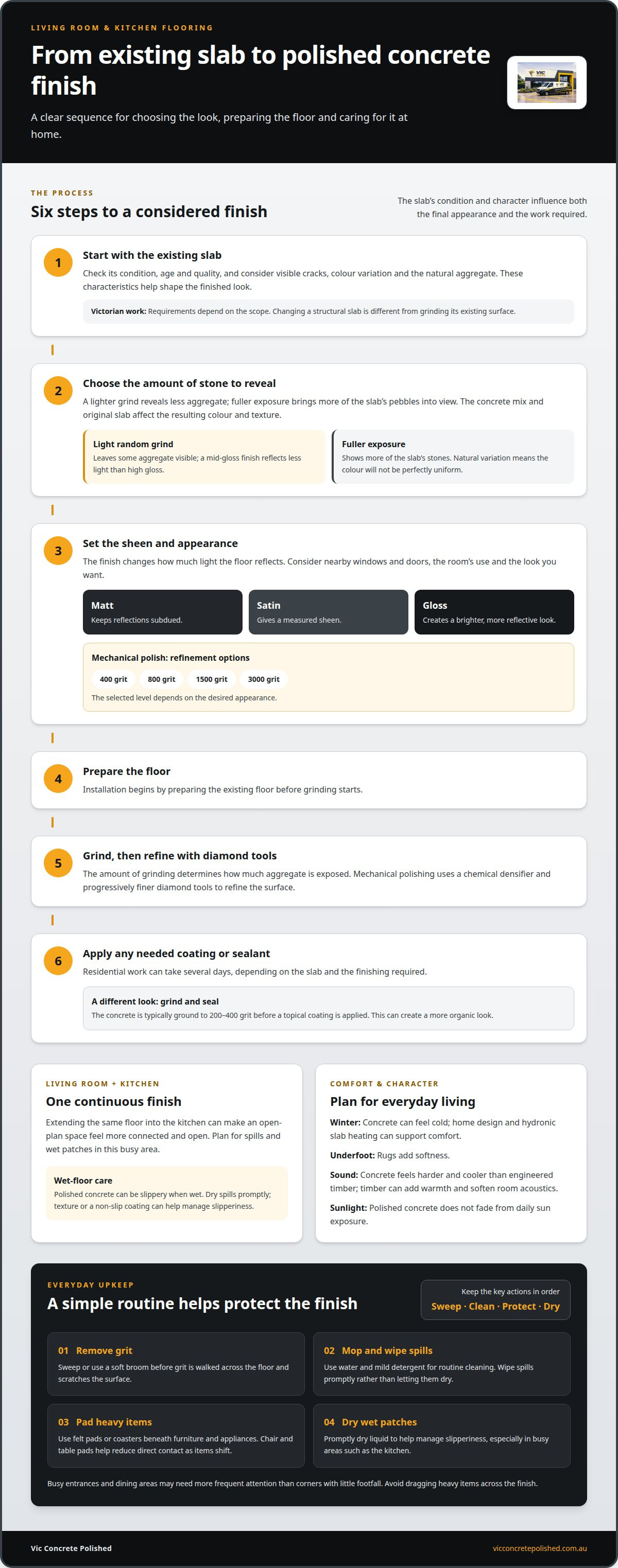
Sweep or use a soft broom to remove grit before it scratches a residential polished concrete floor. Mop with water and mild detergent, and wipe spills promptly rather than letting them dry. Place felt pads or coasters under heavy furniture and appliances. Dining chairs and a kitchen fridge can otherwise scrape the finish or concentrate weight on it.
Mechanical polishing uses a chemical densifier and progressively finer diamond tools. The amount of grinding determines how much aggregate is exposed, so the slab’s stones and colour affect the final appearance. Matt, satin and gloss finishes reflect light differently, while greater aggregate exposure can make natural variations more noticeable. Concrete can also develop cracks and colour variation, so consider these characteristics before choosing a finish for your living room.
Compared with engineered timber, polished concrete feels harder and cooler. Timber can add warmth and soften room acoustics. Tiles create a different surface and joint pattern, while concrete-look flooring imitates the appearance without using a polished concrete slab.
For a Victorian home, permit and Australian Standards considerations depend on the work’s scope. Changing a structural slab is different from grinding its existing surface. The slab, proposed finish and type of building work inform the relevant requirements.
Installation follows a sequence: prepare the existing floor, grind the concrete, refine it with progressively finer diamond tools, then apply any needed coating or sealant. Residential work can take several days, depending on the slab and the finishing required.
Polished concrete can be slippery when wet, so dry spills promptly and consider how the finish will perform in busy areas. Texture or a non-slip coating can help manage slipperiness. Concrete may feel cold during Melbourne winters. Suitable home design and hydronic slab heating can support comfort, while rugs add softness underfoot.
For commercial, industrial and retail floors, maintenance starts with removing grit and cleaning spills promptly. The floor’s traffic, furniture and equipment help determine a suitable finish and day-to-day care routine.
Why is interior polished concrete flooring an optimal choice for homes and businesses?
In Melbourne homes, the existing slab helps determine whether polished concrete will deliver the colour and texture you want. A light random grind with a mid-gloss finish leaves some aggregate visible and reflects less light than a high-gloss surface. The concrete mix, aggregate and nearby windows or doors all influence the finished appearance. Expect natural variation rather than a perfectly uniform colour.
Grinding progressively refines the surface, and the chosen finish controls how much light it reflects. A matt finish keeps reflections subdued; satin gives a measured sheen; gloss creates a brighter, more reflective look. Mechanical polishing can be finished at 400, 800, 1500 or 3000 grit, depending on the desired appearance. These options let a living room feel calm or create a stunning focal point without concealing the slab’s character.
Aggregate exposure is another design choice. A lighter grind reveals less stone, while fuller exposure brings more of the slab’s pebbles into view. In Montmorency, a full-exposure floor paired light stones with a mid-tone concrete base; in Beaconsfield, sandy tones contrasted with black pebbles. These examples show how the original slab shapes the final palette.
Grind and seal offers a different look: the concrete is typically ground to 200-400 grit before a topical coating is applied. The result can feel more organic and suit a warehouse-inspired commercial space. Custom appearance therefore comes from selecting the grinding level and coating, while the slab’s age, quality and original pour influence the outcome.
Price depends on the slab’s condition, preparation required, aggregate exposure and chosen finish, and is provided after a quote request. For a considered finish, explore polished concrete flooring options for residential and commercial spaces.
Benefits and maintenance of polished concrete
Polished concrete combines a hard-wearing surface with straightforward care, while its thermal behaviour depends on the home’s design. Weigh daily upkeep, foot traffic, winter comfort and the existing slab against other flooring options.
- Remove loose grit with a broom before it is walked across the floor.
- Mop with mild detergent and address spills promptly to keep the surface clean.
- Use furniture pads beneath heavy pieces to help protect the finish.
- Dry wet patches, as polished concrete can become slippery when liquid is present.
Cleaning and Maintenance
Regular sweeping or mopping suits polished concrete in living areas, where dust and grit collect around furniture and doorways. Use mild detergent for routine cleaning and wipe drink spills promptly to limit residue. The room’s traffic matters: busy entrances and dining areas may need more frequent attention than corners with little footfall.
Concrete is durable under heavy furniture and appliances, but dragging items can mark the finish. Pads beneath chair and table legs help reduce direct contact as furniture shifts during everyday use.
Durability and Energy Efficiency
Polished concrete is a durable flooring choice that can bear the weight of household furniture and appliances. It also doesn’t fade from daily sun exposure, which may matter in a sunlit living room. Its low ongoing maintenance can suit owners seeking a hard surface without frequent intensive care.
A concrete slab absorbs and releases heat slowly, so the floor can take time to warm during Melbourne winters. North-facing orientation, winter sun on the slab, insulation and suitable heating can help the floor work with a home’s passive-solar design. It isn’t an automatic energy-saving measure: comfort depends on how the room receives and retains heat.
Consider sound as well as warmth. Concrete reflects sound, which may make a furnished living room feel echoey without soft finishes such as rugs, curtains or upholstered seating. These additions can soften the room’s acoustics while leaving the floor visible. Wipe wet patches promptly, particularly where children or pets move between living spaces.
Extending polished concrete through living and kitchen areas
Running one polished concrete surface from the living room into the kitchen can make an open-plan space feel larger and more connected. A continuous floor avoids a visual break between rooms, leaving furniture, cabinetry and lighting to define each area. Plan both spaces together, even though their daily uses differ.
Start with the existing concrete slab. Its condition, colour and aggregate influence how the floor looks across both rooms, while the amount of grinding determines how much stone is exposed. A single continuous finish can still show natural variation, so the kitchen and living area won’t necessarily look perfectly uniform. That character comes with using the same concrete material throughout.
Plan for kitchen use as well as the living-room finish. Cooking brings spills and splashes, so wipe them promptly and don’t let wet patches become a slipping hazard. Furniture pads can protect the floor beneath dining chairs and heavy appliances. These details help the shared surface work for quiet evenings, food preparation and everyday movement between spaces.
Before choosing a finish, consider how light falls across the combined area. Windows, doors and the slab’s aggregate affect colour and reflectivity; for example, a mid-gloss finish reflects light differently from a matt one. Also consider sound and comfort. Concrete reflects sound, so rugs, curtains and upholstered furniture can soften the acoustics without dividing the floor visually.
A continuous floor won’t suit every home automatically. The slab’s condition, desired aggregate exposure and the way each space is used all shape the result. A considered plan balances visual continuity with practical care, giving the kitchen and living room a shared surface that supports both functions. For help planning the floor across both spaces, discuss your living and kitchen flooring project.
Vic Concrete Polished
Vic Concrete Polished helps homeowners plan a concrete floor finish for living rooms, kitchens and connected spaces. The right approach depends on the existing slab, your preferred aggregate exposure and how you use the rooms. Discuss these details with the team to determine whether Mechanical Polished Concrete or Grind and Seal better suits your desired appearance and practical needs.
For a different surface treatment, Vic Concrete Polished also offers a Decorative Flakes Coating System and Epoxy - Resin. These options provide alternatives when polished concrete isn’t the look you want. Floor preparation and the condition of the existing concrete remain important to the project.
If you’re planning a concrete floor for your Melbourne home, contact Vic Concrete Polished to discuss your project.
Plan the next step for your floor
Before settling on a finish, picture how you want the connected rooms to feel and function over time. The look of a polished concrete living room in Melbourne depends on the existing slab as well as the finish you choose. Discuss the surface and your preferred result with Vic Concrete Polished to help shape a practical direction for your home.
Vic Concrete Polished offers Mechanical Polished Concrete, Grind and Seal, and a Decorative Flakes Coating System. Each gives you a different approach to finishing concrete, so consider what suits the project rather than choosing on appearance alone. The right fit depends on your floor and the result you have in mind.
Contact Vic Concrete Polished to talk through your flooring plans. A clear starting point can make it easier to move towards a finish that feels right for your home.
Frequently Asked Questions
Can polished concrete floors be damaged by heavy furniture or appliances?
Like other hard surfaces, polished concrete may be vulnerable to damage from impact or abrasion. Heavy furniture and appliances are generally suitable, but lift items when moving them instead of sliding them across the floor. Use protective feet beneath furniture and avoid dropping tools or cookware. Plan carefully when a fridge is delivered or repositioned to reduce abrasion.
Why Choose Polished Concrete for Living Areas?
Polished concrete suits living areas where you want a durable floor that connects visually with adjoining rooms. It can also work around large windows, where sunlight highlights the slab’s natural character. Think about daily comfort, too: rugs and upholstered furniture can soften the room, while curtains and bookshelves help reduce the hard, reflective feel of a sparsely furnished space.
How can I choose the right floor finish for my premises?
Choose a finish to suit the room’s use, your desired appearance and the existing slab. A busy entry or shared dining area may call for a practical surface that’s simple to clean, while a formal lounge might prioritise a particular sheen. For a polished concrete living room in Melbourne, consider how daylight changes across the floor and whether the kitchen shares the same visual space.
Is polished concrete suitable for both new and old buildings?
Yes, polished concrete can suit new and older buildings if there’s a suitable concrete slab to finish. In an established home, old coverings may need to be removed, and the slab’s condition can affect preparation and appearance. In a new build, coordinate the intended floor finish with the slab design and construction sequence. Polished concrete relies on the concrete itself as the visible flooring surface.
What are the popular flooring options available for polished concrete in Melbourne?
Common concrete finish choices include mechanically polished surfaces and grind and seal, with variations in sheen and aggregate exposure. Matt, satin and gloss describe different levels of reflectivity, while the amount of grinding affects how much stone shows. These are ways to finish concrete, not separate flooring materials. The slab’s original colour and aggregate influence the final look.
What should I consider before opting for polished concrete in my home or commercial space?
Consider how the floor will feel and function throughout the year, not just how it looks in a sample. Melbourne winters can make concrete feel cold, and a minimally furnished room may sound echoey. In a commercial space, consider foot traffic, furniture movement and wet entrances. Understanding these conditions helps you set suitable finish and furnishing priorities.


