

A commercial floor needs to suit the work happening on it, not just look clean on opening day. A seamless epoxy floor for commercial premises can provide a durable, easy-to-clean surface. The right system depends on foot traffic, spills, moisture and the condition of the concrete beneath it.
It’s reasonable to want a floor that holds up without creating unnecessary disruption. Epoxy flooring most commonly lasts between 10 and 20 years, and many commercial installations are completed within a few days, depending on the project and preparation required. This guide explains what to consider when choosing a finish, how to maintain it with routine cleaning, and how installation can be planned around trading hours. You’ll also learn why thorough floor preparation matters, how the intended use affects the surface, and what helps keep the finished floor practical for day-to-day business.
Key Takeaways
- Match the floor finish to the work area’s traffic, spills, moisture and cleaning needs.
- Plan installation in stages around access requirements, surface preparation and coating cure time.
- Use routine cleaning suited to the floor, and address spills and wear before they build up.
- Understand how the existing concrete, removal work and chosen coating system affect the project quote.
Commercial floor lifespan and maintenance
Commercial epoxy flooring typically lasts at least five years, with most floors lasting between 10 and 20 years. Surface use, cleaning routines and exposure to chemicals all affect durability in a commercial space.
Epoxy Floor Lifespan
The typical 10-to-20-year lifespan gives businesses a useful planning range, not a fixed service life. For example, a busy warehouse and a quieter office place different demands on the same flooring system. Consider foot traffic, spills and the work carried out in each area when assessing the finish. In healthcare and laboratory environments, coved edges can remove joints where contaminants may collect.
Check regularly for worn areas or damage, and address issues before they spread. A consistent cleaning routine also helps preserve the surface over time.
Low-Maintenance Cleaning
For routine cleaning, mop commercial epoxy floors with water. A seamless, non-porous surface, such as one used in a commercial kitchen, is easier to clean and helps limit dirt and grime build-up. Remove loose debris first, then mop to lift everyday grime. This simple sequence keeps the floor presentable without adding complicated steps to daily cleaning.
Choose cleaning practices to suit the work area and its exposure to chemicals, grease or spills. In an office, routine dust and dirt removal may be the main task. In a kitchen, the cleaning routine also needs to account for food-related mess.
Cost-Effectiveness Over Time
Maintenance affects a floor’s long-term value. A durable surface can mean fewer repairs and replacements, while fewer flooring interventions can reduce operational downtime. Consider lifespan and upkeep alongside installation, rather than judging the floor by appearance alone.
Build a practical maintenance routine around the space: mop regularly, clean spills promptly and note visible wear during routine checks. This helps identify areas needing attention early. A well-maintained epoxy floor can support day-to-day use in offices, healthcare settings and other commercial environments, while its colour and finish contribute to the overall look of the space.
Installation staging around business trading hours
Staging lets businesses plan floor works around access, trading and operational needs. Sound surface preparation, moisture management and allowing each coating layer to cure before use help reduce the risk of peeling, bubbles and cracking.
Site Assessment and Planning
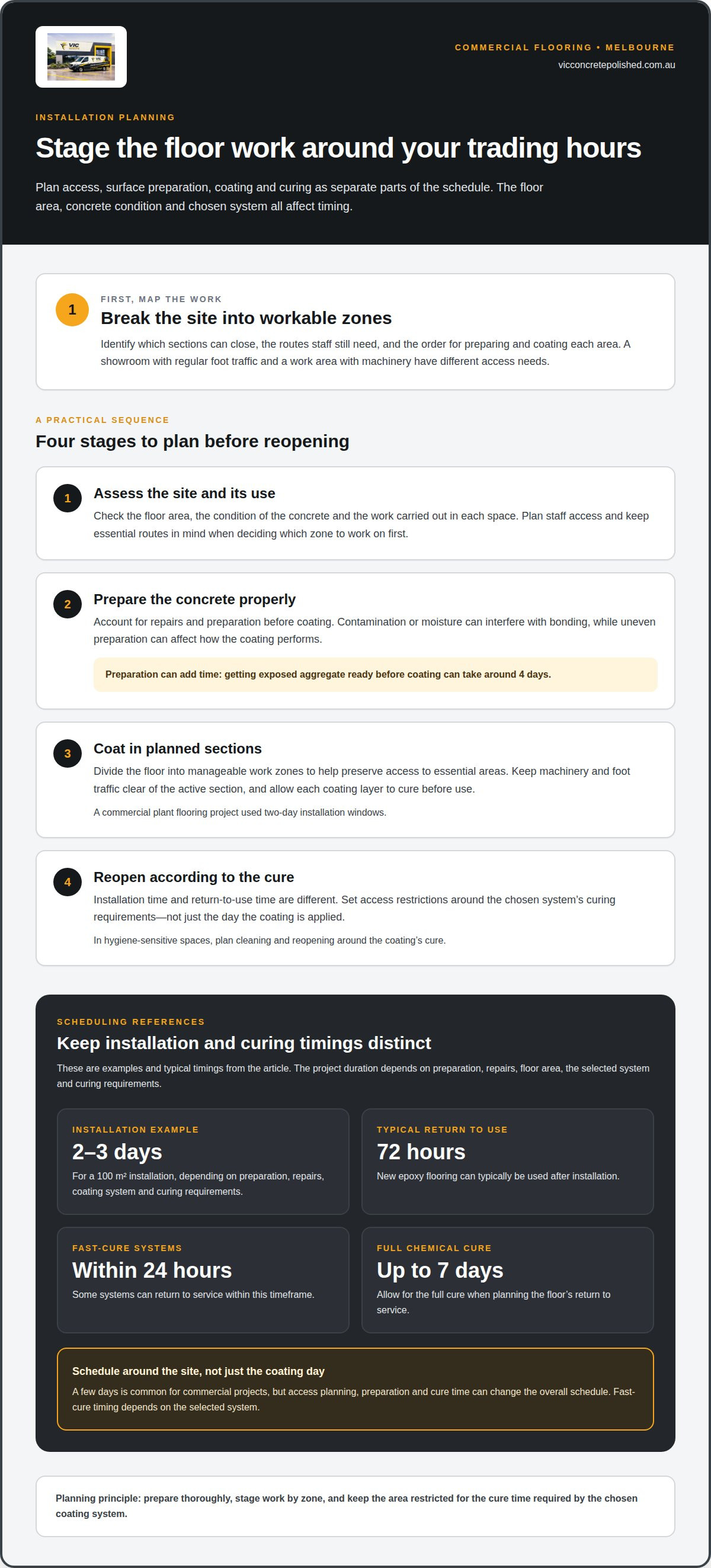
Plan around the area’s size, the concrete’s condition and the space’s intended use. A showroom with regular foot traffic has different access needs from a work area with machinery. Map which sections can be closed, the routes staff need to keep using and the order for preparing and coating each zone. This helps organise work around trading hours without treating the whole site as one uninterrupted work area.
Surface preparation matters. Contamination or moisture can interfere with bonding, while uneven preparation can affect how the coating performs. Assess these factors when planning a durable finish for everyday use.
Installation Duration Factors
Commercial projects are commonly completed within a few days, although the duration depends on floor area, surface condition and the selected system. A 100 m² installation typically takes 2-3 days, depending on preparation, repairs, coating system and curing requirements. A staged plan can divide the floor into workable sections, helping preserve access to essential areas while other sections are prepared.
Preparation can add time: getting exposed aggregate ready before coating can take around 4 days. For example, a busy site can schedule each work zone separately, with machinery and foot traffic kept clear of the active area.
Drying and Curing Times
Installation time and return-to-use time are separate parts of the schedule. New epoxy flooring can typically be used 72 hours after installation, while full chemical curing can take up to 7 days. Fast-cure systems can return to service within 24 hours. The required timing depends on the system and its curing needs, so staging must account for restricted access after application.
In hygiene-sensitive spaces, plan cleaning and reopening around the coating’s cure, not just the final application. A commercial plant flooring project used two-day installation windows.
Planning surface preparation and measuring early helps shape a practical work sequence. Floor preparation and measuring can inform the staging plan for commercial flooring.
Commercial epoxy flooring in Melbourne
When delivering projects like commercial epoxy flooring in Melbourne, we know that floors face different demands across warehouses, offices, factories and retail spaces. Epoxy can resist wear, impact and chemicals, making it a practical option for areas with frequent movement or regular spills. Its non-porous surface helps stop dirt, dust and liquids penetrating the floor. The useful takeaway: choose the system for the work performed, not appearance alone.
In industrial settings, consider abrasion, oils, chemicals and dropped tools. A warehouse may need a surface that withstands regular movement and spills, while a workshop can face fuel and heavy-tool impacts. Commercial kitchens have different demands, including heat, moisture, grease and cleaning chemicals. Matching the coating to these conditions helps it perform in its intended environment.
Surface texture matters wherever moisture or frequent foot traffic is present. Additives can create a textured finish for added traction in areas prone to moisture. Factories can also use slip-resistant finishes and line marking to distinguish walkways from work zones. These features support clearer movement through the space while keeping the surface suited to daily use.
Appearance can be tailored, too. Commercial epoxy flooring is available in different colours, designs and textures to suit a business’s image, with a smooth, glossy finish among the options. A showroom may favour a consistent, polished appearance, while an industrial work area may prioritise practical texture and visible zone markings. The right balance depends on how staff and visitors use each area.
Before an upgrade, consider the concrete’s condition, expected traffic, likely spills and cleaning routine. These factors guide preparation and help determine which flooring system suits the site. Planning work zones can also help manage downtime when a business needs to retain access during installation. A well-matched floor brings together durability, appearance and everyday function, rather than relying on one feature to meet every commercial need.
What factors affect the price of commercial epoxy floor installation in Melbourne?
The price of a commercial epoxy floor depends on the project. A quote considers the floor area, concrete condition, preparation required and selected coating system. A clear scope shows how each part of the work contributes to the overall cost.
Floor size is one factor, but it does not tell the whole story. A large, clean slab may need less preparation per area than a smaller floor with damaged concrete or old coverings. The amount of grinding, repairs and removal work affects labour and materials. Existing tiles, carpet, glue or coatings can add steps before the new system is applied.
Preparation is essential to the finished result. The concrete must be assessed and prepared so the coating can bond to the substrate. Uneven surfaces, contamination and areas needing repair can change the work required. A site with vinyl and adhesive residue, for example, needs different preparation from an exposed concrete floor that is ready for coating.
The intended use also informs the system choice. A warehouse with regular vehicle movement has different demands from a customer-facing showroom. The selected coating, finish, colour and decorative details can affect materials and application steps. A tailored system may need different products or additional preparation compared with a straightforward finish.
Access and staging can shape the project scope, too. If a business needs some sections to remain open, the work may need to be organised in stages, affecting how the installation is planned. The condition of each area and the time needed for preparation and curing also influence the schedule and scope.
Price depends on the project and is provided after a quote request; floor area, substrate condition, removal work and coating selection are key cost factors. A detailed assessment helps define these requirements before work begins. For a commercial floor quote, request an epoxy flooring quote based on your site and its intended use.
Vic Concrete Polished: Epoxy - Resin
Vic Concrete Polished provides Epoxy - Resin flooring for commercial spaces that need a seamless, practical surface. It can suit a site where the floor’s use, condition and cleaning demands point towards a resin coating. Careful floor preparation and concrete grinding help prepare the substrate before application.
The right finish depends on the space and the result you want. Epoxy - Resin suits businesses considering a coated floor, while Mechanical Polished Concrete and Grind and Seal offer different concrete finishes. A Decorative Flakes Coating System is another option when a flaked appearance is preferred. Discussing the intended use and existing floor helps shape the approach.
Planning a commercial flooring project? Contact Vic Concrete Polished to discuss your floor and the finish you have in mind.
Plan a floor that fits your next stage
Make your flooring decision support how the business will operate, not just how the space looks today. Consider planned changes to traffic, work zones or presentation, then decide how the surface should serve those needs. A seamless epoxy floor for commercial premises can be part of the plan when a coated surface suits the space.
Vic Concrete Polished also offers Mechanical Polished Concrete, Grind and Seal, and a Decorative Flakes Coating System. These options provide different finishes for commercial floors. Start by considering your site, how it is used and the result you want.
Share your project requirements with Vic Concrete Polished to discuss a suitable flooring approach. Contact Vic Concrete Polished to take the next step and plan your commercial floor with care.
Frequently Asked Questions
Why should you hire a professional installer?
A professional installer can match the coating and preparation method to the concrete and the space’s use. A workshop floor exposed to machinery, for example, needs different planning from a customer-facing retail area. Professional installation brings the preparation and coating stages together, helping avoid rushed work between them. Ask for a scope that explains the surface work, selected finish and how the site will be handled.
What types of seamless epoxy flooring are suitable for commercial spaces in Melbourne?
Epoxy resin flooring and decorative flakes coatings are options for Melbourne commercial spaces. A resin finish can suit workshops and industrial areas where a hard-wearing, chemical-resistant surface is needed. A flakes system adds embedded decorative flakes and a clear topcoat, creating a textured finish. The choice depends on the work area, the appearance desired and whether texture is useful for the way staff and customers move through it.
How much does commercial epoxy flooring cost per square metre in Melbourne?
The project price depends on the floor area, concrete condition, preparation and chosen coating system. A quote can account for existing coverings that need removal, repairs and finish details. To clarify the scope, provide the approximate area, describe how the space is used and note existing floor coverings. Vic Concrete Polished provides free, no-obligation quotes after an initial consultation, giving you an opportunity to discuss the project requirements.
How long does commercial epoxy floor installation take, including preparation and curing?
Timing depends on the project scope, including surface preparation, repairs, coating application and curing. As examples, Vic Concrete Polished completed a double garage project in 3 days and a large warehouse epoxy flooring project in 5 days. These examples show why project type matters: a commercial site’s work sequence and access requirements shape its schedule. Include preparation and the period before the area can return to use in planning.
What floor preparation is required before applying commercial epoxy flooring?
Preparation can include measuring, removing existing floor coverings and grinding the concrete. Tiles, carpet or vinyl, for example, may need to be removed before the substrate is ready for coating. Grinding helps prepare the concrete surface, while measuring and assessing the floor helps define the work required. The preparation needed depends on the existing floor, its coverings, any uneven areas and its condition throughout the space.
How durable is seamless epoxy flooring under heavy traffic, chemicals and machinery?
Commercial epoxy flooring is designed to resist wear, impact and chemicals, but the system should suit the site’s actual demands. Consider what machinery moves across the floor, whether tools may be dropped and which substances could spill. In a workshop, these details help identify areas needing particular attention. Let frequently used routes and work zones guide the finish selection, rather than assuming every part of the floor faces identical conditions.


