
A polished floor is only as good as the concrete beneath it. The polished concrete pros and cons depend on the slab and finish: mechanical polishing uses a chemical densifier and diamond abrasives, while grind-and-seal applies a topical sealant over ground concrete. An existing slab can suit polishing when it’s thick and structurally sound; project cost depends on its condition, repairs, area and desired appearance.
A seamless, durable finish can be appealing, but polished concrete is not the right fit for every floor or use. The slab’s condition, the level of sheen you want and how the surface will be used all matter when choosing a finish.
This guide explains what polished concrete is, how mechanical polishing differs from grind-and-seal, and what to consider before retrofitting an existing floor. You’ll also learn how finish levels change the look, which factors shape installation costs, and where polished concrete’s practical strengths come with trade-offs.
Key Takeaways
- Learn how diamond grinding and a chemical densifier create a polished surface, and what routine care helps protect its appearance.
- Understand which slab conditions affect retrofit suitability and how repairs, floor area and the finish influence project cost.
- Match the finish and surface treatment to the space, taking wet-floor slip risks and exposure to chemicals into account.
- See how mechanical polishing differs from grind-and-seal so you can choose the finish approach that better suits your priorities.
What is polished concrete?
Polished concrete is an existing concrete slab refined into a smooth, durable floor. The slab contains cement, water, sand and aggregates. Mechanical polishing uses diamond abrasives to grind, hone and polish the surface, while a chemical densifier helps harden the concrete. The finished surface is the slab itself, not a separate decorative flooring layer.
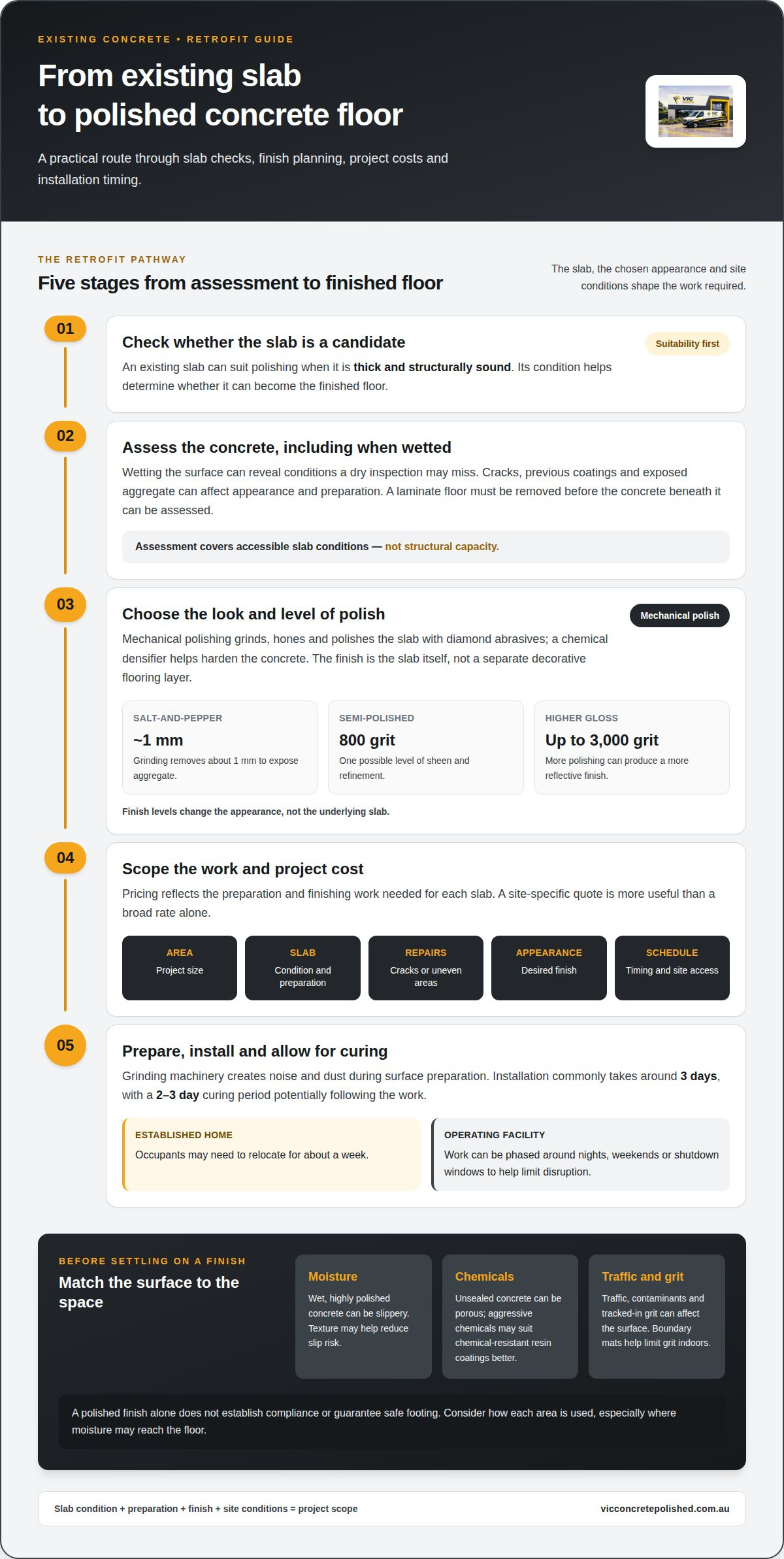
The finish depends on how far the surface is ground and polished. A salt-and-pepper look begins by removing about 1 mm to expose aggregate. Polished concrete can be finished to different levels of sheen, from matte to more reflective. Semi-polished concrete can reach 800 grit, while polishing can extend to 3,000 grit for a higher gloss. These levels change the appearance, not the underlying slab.
Care is straightforward, but it still matters. Dry-mop polished concrete regularly and damp-mop with a pH-neutral cleaner. Clean spills promptly, especially acidic or alkaline substances, which can mark the surface. A penetrating stain guard can reduce staining risk, but it does not make concrete impervious. Grit can scratch the finish, so boundary mats at exterior doors help limit what gets tracked indoors.
Living areas and kitchens can suit polished concrete, though rugs and mats add comfort and protect busy areas. Heavy furniture can scratch the surface if dragged, so lift it when rearranging a room. With proper installation, maintenance and periodic surface care, polished concrete can last 20-50 years or more. Maintenance may include inspection, burnishing, repairs or stain-guard refresh, guided by the floor’s condition.
Unlike tiles, timber and vinyl, polished concrete uses the existing slab rather than adding a separate flooring material. Epoxy is a coating system, so it creates a different type of surface. Tiles or other constructed floors may suit spaces where you prefer a distinct material layer; polished concrete keeps the slab’s natural character visible.
Retrofit suitability and installation cost
An existing concrete slab can be polished if it’s thick and structurally sound. Its condition, the finish and site access influence the installation plan and project cost.
Retrofit suitability
Retrofit suitability means assessing whether the existing slab can become the finished floor. The surface should be assessed after it’s wetted, which can reveal conditions that a dry inspection may miss. This assessment covers accessible slab conditions, not structural capacity. Cracks, previous coatings and exposed aggregate can affect the appearance and preparation required. A laminate floor, for example, must be removed before the concrete beneath it can be assessed.
Installation costs and pricing
Installation pricing reflects the work needed to prepare and finish each slab. Project size, slab condition, repairs, desired appearance and schedule all affect the scope. A floor with cracks or uneven areas may need more preparation than a sound, consistent surface. The price depends on the project and is provided after a quote request; area, repairs, slab condition, finish and scheduling shape the quote. This makes a site-specific assessment more useful than comparing a broad rate alone.
Long-term value also depends on the condition of the finished floor and the care it receives. A properly installed, maintained polished concrete floor can last 20-50 years or more. That lifespan doesn’t remove the need for periodic surface care, but it helps explain why installation quality and groundwork matter.
Installation time, noise and dust
Installation commonly takes around 3 days, with a 2-3 day curing period potentially following the work. Grinding uses machinery, so expect noise and dust during surface preparation. In an established Australian home, occupants may need to relocate for about a week. For an operating facility, work can be phased around nights, weekends or shutdown windows, helping limit disruption to daily operations.
Because grinding is central to the process, the preparation method affects both the site and the result. A concrete floor grinding assessment can help establish the slab’s condition and the work required before polishing.
Slip, chemical and thermal resistance
Surface performance depends on the finish, moisture and substances that contact the floor. Australian building requirements and relevant slip-resistance standards can apply, depending on the building and how its floors are used. A polished finish alone does not establish compliance or guarantee safe footing.
Indoor and outdoor slip resistance
Slip resistance describes how well a floor provides grip under expected conditions. Wet, highly polished concrete can become slippery, so water near an entry or wash area changes the risk. Texture incorporated into the finish can help reduce it. The right finish matters in kitchens, bathrooms and outdoor paths, where moisture may reach the surface. Consider how each space is used rather than choosing gloss for appearance alone.
Durability does not mean immunity to scratches. Grit tracked indoors and heavy furniture dragged across polished concrete can mark the surface. Boundary mats can catch dirt at exterior doors, and lifting furniture during room changes helps protect the finish. In industrial areas, the traffic and contaminants the floor encounters are key factors in choosing a suitable surface.
Chemical and thermal resistance
Chemical resistance describes a floor’s ability to withstand contact with substances without damage or loss of protection. Polished concrete is not a chemical-containment system, and unsealed concrete can be porous. Areas exposed to aggressive chemicals may be better suited to chemical-resistant resin coatings. Clean spills promptly, particularly acidic or alkaline liquids, which can stain or affect the surface.
Thermal comfort depends on the slab and room, not just the polished finish. Radiant heating cables embedded in concrete can reduce heat loss, though this is generally planned as part of floor construction. A polished surface should not be treated as insulation or as a fire-rated assembly.
Polished concrete is not completely waterproof, even with densifiers and sealants. Floodwater can expose weaknesses in the wider floor assembly, while moisture may pass through porous concrete. Treat flood planning and fire performance as building-design questions, not benefits guaranteed by polishing. For wet or chemical-prone areas, surface texture and protective treatment are practical choices that affect long-term use.
How mechanical polishing and grind-and-seal differ
Both methods use diamond grinding to prepare a slab, but they finish and protect it differently. Mechanical polishing works the concrete itself: diamond abrasives progressively grind, hone and polish the surface, while a chemical densifier helps harden it. No separate topical coating creates the visible finish. The result depends on the existing slab, including its aggregate and condition.
Grind and seal also starts with grinding, but a protective sealer is applied over the prepared surface. This coating forms the visible finish and helps protect against staining. It can suit a slab that would benefit from a sealed surface, while mechanical polishing keeps the concrete’s own character more prominent. Neither method hides every variation in the underlying slab.
Maintenance is a key difference. Mechanically polished concrete has no topical seal to reapply, though it still needs cleaning and periodic surface care. Grind-and-seal relies on its sealant for protection and appearance, so the coating may need attention as it wears. Grind-and-seal floors should have their sealant reapplied every 1-3 years to maintain protection and appearance. Staining and traffic can affect how the surface looks over time.
The practical choice comes down to the slab and the finish you want. Mechanical polishing suits readers who want the concrete itself refined, with sheen determined by the polishing level. Grind-and-seal adds a protective layer and gives the floor a sealed appearance, but includes ongoing sealant upkeep. Existing concrete with repairs, uneven areas or varied aggregate may influence how either finish appears. For a finish matched to your slab, book a concrete floor assessment and discuss mechanical polishing or grind-and-seal.
Vic Concrete Polished: Mechanical Polished Concrete
Vic Concrete Polished provides Mechanical Polished Concrete for property owners considering a refined finish on an existing slab. Floor preparation and concrete grinding help establish the surface for the chosen finish, while the slab’s condition and the desired appearance guide the approach.
If you prefer a sealed surface, Grind and Seal offers a different finishing method. For spaces better suited to a coating, options include a Decorative Flakes Coating System or Epoxy - Resin. The right choice depends on the floor and how you intend to use it.
Contact Vic Concrete Polished to discuss your floor and the finish you’re considering.
Choose a floor around how the space works
Weighing the polished concrete pros and cons is less about choosing a finish in isolation and more about deciding what the floor needs to do every day. Consider how the room is used, whether that use may change and whether the concrete’s natural character suits your interior. These priorities are a useful starting point before settling on a finish.
Consider appearance, practical use and ongoing care when making your decision. A focused discussion can connect these priorities with a suitable flooring approach and the preparation involved. Explain what matters most, whether that is a particular look, a hardworking surface or a balance of both. The best direction fits the space, not simply the most striking sample.
Ready to discuss your flooring project? Contact Vic Concrete Polished to take the next step with a clear sense of what you want from your floor.
Frequently Asked Questions
Does it get slippery?
Yes, polished concrete can be slippery when wet, especially with a highly polished finish. Water tracked in from outside or splashed around a kitchen can change how the floor feels underfoot. Texture incorporated into the finish can help reduce this risk. For an entryway, kitchen or outdoor area, consider how often the floor gets wet when choosing its finish.
Does it work with underfloor heating?
Yes, polished concrete can work with underfloor heating when heating cables are embedded in the concrete floor. The heating system and slab need to be considered together, because the concrete sits above the heating elements. This is most straightforward when planned as part of floor construction. In an existing home, the slab and renovation scope affect what is practical.
How much does it cost?
The total cost depends on the project and is provided after a quote request. The finish you choose and the preparation your floor needs shape the work involved. For example, a slab needing repairs requires a different scope from one that’s ready for finishing. Share the area, intended use and finish preferences so the project can be assessed as a whole.
What are the main pros and cons of polished concrete floors?
Weighing the polished concrete pros and cons means balancing a durable, seamless surface against its practical limits. There are no separate boards or grout lines to clean, but the finish can scratch and may feel hard underfoot. A dining chair dragged across the floor, for example, can mark it. Rugs can soften a living area, while careful furniture handling helps protect the surface.
How much does polished concrete flooring cost per square metre in Australia?
There is no single per-square-metre figure that applies to every floor. A rate alone can be misleading because the slab’s condition and selected finish affect the work required. The project scope depends on the specific floor, so a site-specific assessment is more useful than a generic rate.
What factors affect the cost of polished concrete floors in Australia?
Project size, slab condition, repairs, the desired appearance and scheduling all affect the cost. The amount of preparation required is especially relevant: cracks or surface irregularities can add work before polishing begins. Finish expectations also influence the process, since different appearance levels require different surface treatment. These details help establish the project scope and the price provided after a quote request.


