

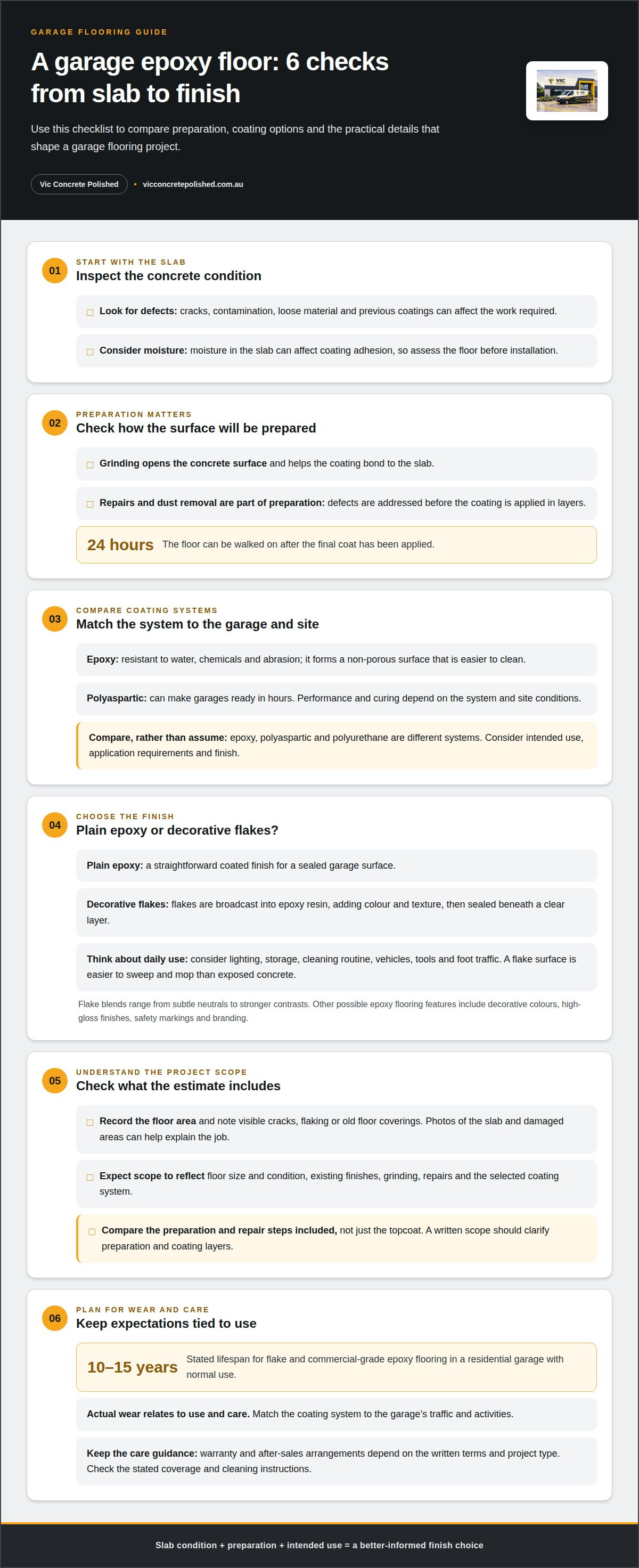
An epoxy coating can protect existing garage concrete from water, chemicals and abrasion. It’s applied after grinding opens the concrete surface, and the floor can be walked on 24 hours after the final coat. The quality of the preparation matters because it helps the coating bond to the slab.
A bare garage floor can collect dust and dirt, while daily use brings spills and wear. For homeowners in Melbourne, Vic Concrete Polished can create a sealed surface that’s easier to clean, though the right finish depends on the concrete’s condition and how you use the space.
This guide explains how epoxy and decorative flake coatings protect garage floors, what affects their durability, and how to maintain the finished surface. You’ll also learn what to consider when arranging the work and whether service is available in your area.
Key Takeaways
- Good surface preparation helps a coating bond to the concrete, so the slab’s condition and preparation process matter.
- Compare a plain epoxy finish with decorative flakes to see which better suits your garage’s look and day-to-day use.
- Understand how the project scope and floor condition shape an estimate, and what to consider when arranging service in Melbourne.
- Learn practical care habits that help keep a coated floor clean and in good condition over time.
Is an epoxy coating the best way to protect my garage’s concrete floor?
Epoxy can protect existing concrete from water, chemicals and abrasion when the slab is prepared properly. The right flooring option depends on the concrete’s condition, moisture and how the garage is used.
Concrete Preparation and Installation
Installation starts with inspecting the concrete for cracks, contamination, loose material and previous coatings. A concrete grinder opens the surface, helping the floor coating bond; repairs address defects before the coating is applied in layers. Look for a process that includes thorough grinding and dust removal, not simply covering the slab. Once the final coat is applied, the floor can be walked on after 24 hours.
Sealing and Moisture Protection
Concrete is porous, so moisture can move through it and dust can collect on the surface. A suitable sealer helps protect concrete from moisture and reduce dust, while an epoxy coating forms a non-porous surface that’s easier to clean. Moisture in the slab can affect adhesion, so assessing the floor before installation is an important preparation step.
For an existing slab receiving a coating, whether a permit is relevant depends on the scope of work. Structural changes or altered drainage involve different building considerations from surface finishing.
Coating Type Comparisons
Epoxy, polyaspartic and polyurethane are different coating systems. Compare their intended use, application requirements and finish rather than assuming they perform alike. Epoxy is resistant to water, chemicals and abrasion, while polyaspartic coatings can make garages ready in hours. Performance and curing depend on the system and site conditions. A striking finish should still suit the demands of your garage.
Concrete Condition and Preparation Costs
Cracks, old coatings, contamination and uneven areas can require extra grinding, repairs or removal before installation. These steps affect the work and the final quote. Key factors include floor size and condition, existing finishes and the selected coating system. Compare quotes by checking which preparation and repair steps are included, rather than judging only the topcoat.
Residential garage epoxy and flake flooring
A residential garage can have a plain epoxy finish or a decorative flake system, depending on your preferred look and everyday needs. Flakes are embedded in epoxy resin during installation, adding colour and texture to the surface. Measuring the floor helps establish the project’s scale and material requirements, especially if the garage includes a separate storage or work area.
Flake finishes offer a wide range of colour blends, from subtle neutrals to stronger contrasts. The flakes are broadcast into the resin, then sealed beneath a clear layer. This creates a continuous surface that’s easier to sweep and mop than exposed concrete. You might choose colours that complement your home, while a workshop area could benefit from a finish that disguises everyday dust.
Consider how vehicles, tools and foot traffic use the garage. A decorative surface can suit a home workspace as well as parking, while a warehouse floor faces different demands. Compare how the flakes are distributed, which finish is included and whether the surface suits your intended use. Other possible epoxy flooring features include decorative colours, high-gloss finishes, safety markings and branding.
Flake and commercial-grade epoxy flooring in a residential garage are stated to last 10 to 15 years with normal use. Actual wear relates to use and care, so match the coating system to the garage’s traffic and activities. Project scope depends on floor area, concrete condition, preparation and chosen finish. These factors shape the estimate, rather than appearance alone.
To compare the look and practical role of a decorative flakes coating system with a plain epoxy coating, consider the room’s lighting, storage and cleaning routine. The right choice should work as well under a parked car as it does beside a workbench, while fitting the way you use the space day to day.
Melbourne service area and free estimates
For a garage project, an estimate should describe the floor area, preparation and selected finish. Service is available nationally, so the project discussion can focus on the property’s location and concrete condition. A clear scope helps distinguish coating work from separate preparation, removal or repair tasks.
Before requesting a quote, record the garage dimensions and note visible cracks, flaking or old floor coverings. Photos of the whole slab and any damaged areas can help explain the job. For example, a home workshop with an existing coating may need different preparation from an empty garage with bare concrete.
Vic Concrete Polished provides free, no-obligation quotes after an initial consultation. The project scope depends on the floor area, slab condition, grinding requirements and selected finish. A written quote should clarify which preparation steps and coating layers are included, so you understand the work before it begins.
A careful flooring project starts with inspecting the surface, measuring the work area, preparing the concrete and applying the selected system. An epoxy floor coating needs suitable preparation to bond correctly. A decorative finish may also involve choosing colours and flakes, while a garage used for chemical storage or workshop tasks has practical demands beyond appearance.
Warranty and after-sales arrangements depend on the written terms and project type. Read what the warranty covers and any care conditions before approving the work. Keep the final scope and maintenance instructions together, then follow the stated cleaning guidance. These documents give you a useful reference if a concern arises after installation.
Garage floors can differ in condition and use, even within the same neighbourhood. A measured scope, clear finish selection and documented aftercare make it easier to understand what the installation includes and how to maintain the completed floor.
Epoxy flooring durability and maintenance
Epoxy creates a continuous surface over concrete that helps resist heavy loads, oil and chemical spills. Its durability depends on preparation, application and how the garage is used.
Floor Durability and Care
For routine care, sweep away grit before it can be dragged across the coating. Mop spills and tracked-in dirt with water and a suitable cleaner, following the product’s care instructions. A sealed, non-porous surface is easier to clean than bare concrete. In a home workshop, promptly wiping up oil helps keep the floor tidy and maintain its appearance.
Industrial use can involve heavier traffic and more frequent chemical exposure than residential parking. Match the coating system to the space’s demands, not aesthetics alone. A seamless finish reduces dirt-catching joints across the floor, but still needs regular sweeping and mopping. Use the recommended cleaning method to avoid damaging the surface.
Peeling, Moisture and Slip Risks
Peeling can occur if a coating fails to bond properly, including when concrete is poorly prepared or moisture interferes with adhesion. Moisture beneath a coating can therefore affect its performance. A smooth epoxy surface can also become slippery when wet, so take care with rainwater, wash-downs and spills. A textured or flake finish may change how the surface feels, but it does not guarantee slip resistance.
Good care starts with removing grit and cleaning spills, not harsh scrubbing. Avoid dragging sharp-edged tools or heavy equipment across the floor, and use protective pads where items could scrape the coating. For example, place a mat beneath a workbench where you handle metal parts, and clear standing water after washing the garage. These habits help preserve the finish and its protective role.
For a garage exposed to frequent traffic, oil or chemicals, highly recommend discussing the use conditions before selecting a system. The coating choice and preparation should suit the actual floor, not just the desired appearance. Discuss epoxy floor preparation for a garage where durability and upkeep are priorities.
Vic Concrete Polished: Mechanical Polished Concrete
Vic Concrete Polished can help you choose a concrete finish suited to your garage’s condition and use. For a coated surface, its Epoxy - Resin and Decorative Flakes Coating System offer options for protection and appearance. If your concrete may suit a different finish, consider Grind and Seal or Mechanical Polished Concrete.
Talk with Vic Concrete Polished when you’re weighing these options or planning floor preparation. The right approach depends on the existing slab, your preferred finish and how you use the garage. Discussing these details can clarify the work involved and the practical differences between coatings and polished concrete.
To discuss your garage floor, contact Vic Concrete Polished.
Plan a floor that suits the way you live
Before settling on an epoxy garage floor in Melbourne, consider how you want the space to work after installation. Parking, storage, hobbies and household projects can all shape what feels practical. Think about which items will stay on the floor, how often you’ll clean it and whether you want the finished garage to feel like a workshop or an extension of your home. These choices give your project a clear purpose beyond appearance.
Use that purpose to guide a conversation about your concrete and preferred finish. Photos, measurements and notes about how you use the space can make the discussion more specific. The goal is a considered choice that suits your home, not a coating selected on appearance alone.
When you’re ready to discuss an estimate, contact Vic Concrete Polished. A clear starting point can make planning your garage floor feel straightforward.
Frequently Asked Questions
How much does epoxy flooring cost in Victoria?
Epoxy flooring is quoted for each project rather than at one fixed statewide price. The scope depends on floor area, concrete condition, grinding or repairs, removal of existing coverings and the selected finish. Vic Concrete Polished provides free, no-obligation quotes, so you can review the proposed work before deciding.
Is it expensive to apply an epoxy floor?
Whether an epoxy floor is expensive depends on the work your concrete needs and the finish you choose. A straightforward slab and a decorative flake finish involve different scopes. Consider the preparation, floor area and coating system together, rather than judging only by the visible topcoat. A free, no-obligation quote sets out the project-specific scope without requiring you to commit.
Which areas do you service?
Vic Concrete Polished serves customers across Australia. The company’s work covers residential, commercial and industrial flooring projects, including garages, workshops and warehouses. For a residential garage, have the property location and approximate floor dimensions ready when requesting a quote. This helps frame the project scope and the concrete finishing work required for the space.
What is the average cost of epoxy garage flooring in Melbourne per square metre?
There isn’t one per-square-metre rate that applies to every Melbourne garage. The project scope depends on floor area, slab condition, preparation needs, removal of existing coverings and the selected epoxy or flake finish. A quote can clarify which of these factors apply to your garage.
How long does epoxy garage floor installation take, including curing time?
Installation and curing are separate parts of the timeline. A double-garage project has been completed in 3 days; vehicle parking on a newly installed floor is safe after 72 hours, and full chemical cure is reached at 7 days. Plan access around those curing milestones, especially if the garage is your only place to park or store equipment.
How should a concrete garage floor be prepared before epoxy coating?
Start by clearing vehicles, stored items and loose debris from the garage so the whole slab can be assessed. Preparation involves inspecting and grinding the concrete, then addressing cracks, contamination or old coatings that could interfere with adhesion. Existing tiles, carpet or vinyl may need removal. The slab’s condition and selected coating system determine the preparation required before application.


