

The easiest concrete floor to maintain isn’t necessarily the glossiest. The right finish depends on how the space is used, so start there when choosing low maintenance concrete floors that can stay presentable through everyday foot traffic.
Grit, spills, stains and wear are common concerns, especially when the differences between polished, sealed and resin-coated concrete aren’t clear. Each finish has different care considerations. A finish that suits a living area may not be the best fit for a garage or busy commercial space.
This guide compares mechanical polished concrete, grind and seal, and resin coatings, then explains how to match a finish to your space. You’ll also find practical steps for managing dust and spills, and learn how floor preparation can help address issues before finishing begins. With a suitable finish and a straightforward cleaning routine, concrete can be a practical flooring choice for everyday use.
Key Takeaways
- Low maintenance concrete floors still need routine care, but the right finish and cleaning habits can keep upkeep manageable.
- Mechanical polished concrete, grind and seal, epoxy resin and decorative flake systems offer different finish options for different spaces.
- Base your choice on how the room is used, the traffic it gets and the messes you’re likely to clean up.
- Use a practical cleaning sequence and choose products and tools that suit the installed finish.
- Floor assessment, measuring and preparation, including grinding or removing old floor coverings, help inform the finishing approach.
What makes concrete floors low maintenance in everyday use?
Low-maintenance concrete means a floor that’s straightforward to clean and care for, not one that never needs attention. Any occupied floor collects dust and grit, and spills or everyday wear can affect its appearance. The finish, the condition of the concrete beneath it, how the room is used and the cleaning habits in place all influence how much care is needed.
Routine upkeep usually starts with visible dirt: remove loose grit before it’s walked across the floor, then clean using a method suited to the installed finish. This everyday work is different from periodic, finish-specific care, which may be needed to maintain a protective layer or address changes in the surface. Polished, sealed and resin-coated floors don’t all have the same requirements, so let the finish guide your care routine.
Which everyday factors affect floor maintenance?
Start by considering traffic. More people moving through a space can mean more tracked-in grit, making regular removal important. The activity in the room matters too. A kitchen may see food and drink spills, while a garage can collect dust and dirt from outside. A living area may have less heavy soiling, but furniture movement can still affect the floor.
Dust, spills and abrasion can affect different finishes in different ways. A spill left sitting may be harder to deal with than one wiped up promptly. Dragging furniture can mark or scuff some surfaces. The concrete’s condition also matters: unevenness, residual contaminants or wear can influence the finished floor’s appearance and how straightforward it is to clean.
For polished concrete, the polishing process and chosen finish shape both appearance and care. Polished concrete is known for its low maintenance and durability. That doesn’t make it the automatic choice for every room. The space’s activity and the surface’s needs still count.
Does low maintenance mean maintenance-free?
No. All occupied floors need appropriate cleaning, and sensible prevention can help limit avoidable mess and wear. A mat near an entrance can catch some tracked-in dirt, while wiping up spills promptly can make them easier to clean. Moving furniture carefully can also help prevent scuffs and scratches.
Care should suit the finish. A cleaning product or tool that’s suitable for one surface may not be right for another, so don’t assume every concrete floor can be treated alike. Follow the care guidance for the installed finish and use a method that removes dirt without damaging or dulling the surface.
In practice, low maintenance concrete floors make everyday cleaning manageable through a suitable finish and consistent, finish-appropriate care. They still need attention, and the right routine helps preserve their appearance and surface performance without promising a maintenance-free result.
How concrete floor finishes change the care they need
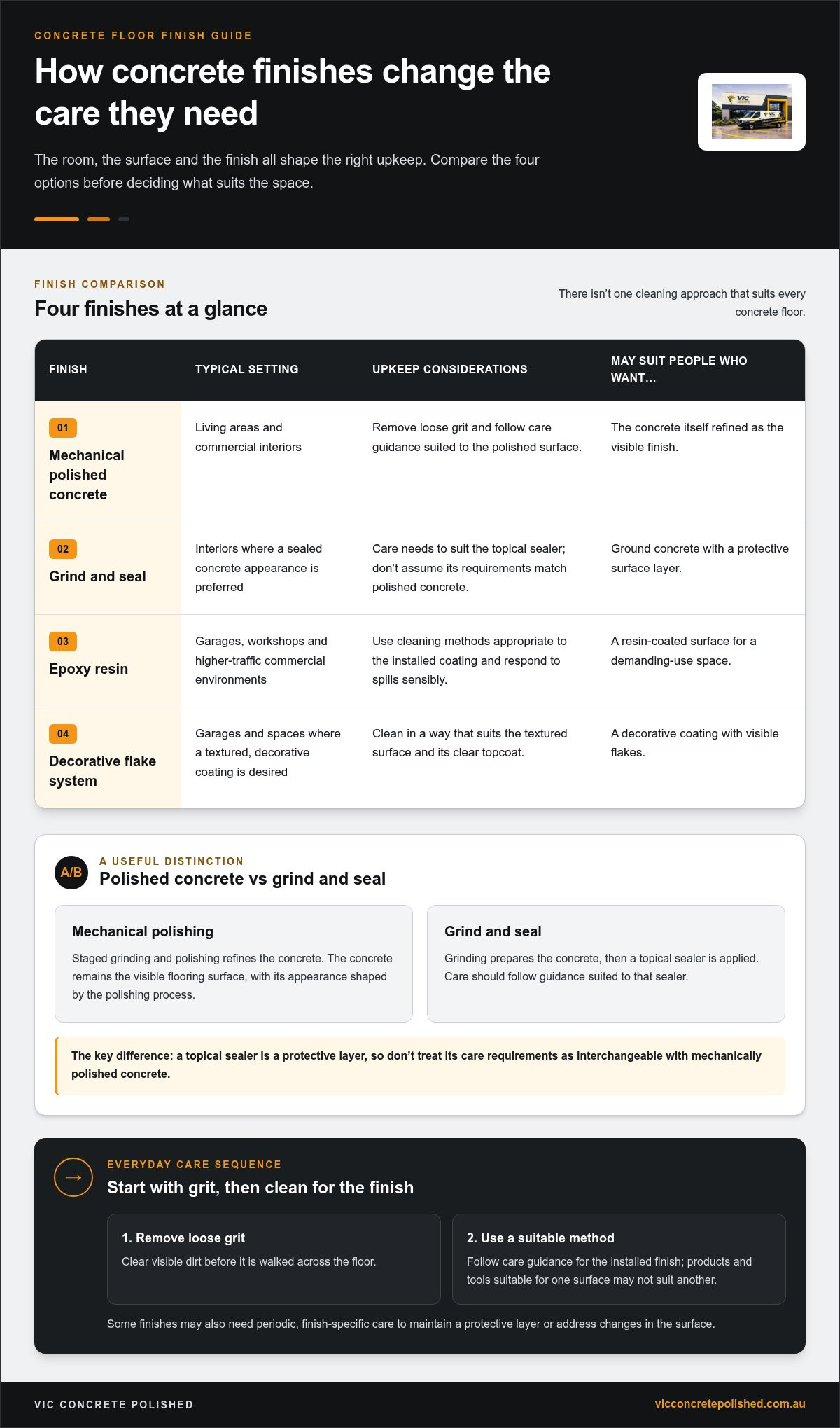
The finish affects what you see underfoot, how the surface responds to daily use and which care instructions apply. Mechanical polished concrete, grind and seal, epoxy resin and decorative flake systems each create a different surface, so there isn’t one cleaning approach that suits them all. Use the table as a starting point, then consider the existing concrete and the room’s demands.
| Finish | Typical setting | Upkeep considerations | Reader fit |
|---|---|---|---|
| Mechanical polished concrete | Living areas and commercial interiors | Remove loose grit and follow care guidance suited to the polished surface. | Those who want the concrete itself refined as the visible finish. |
| Grind and seal | Interiors where a sealed concrete appearance is preferred | Care needs to suit the topical sealer; avoid assuming its requirements match polished concrete. | Those looking for ground concrete with a protective surface layer. |
| Epoxy resin | Garages, workshops and higher-traffic commercial environments | Use cleaning methods appropriate to the installed coating and respond to spills sensibly. | Those seeking a resin-coated surface for a demanding-use space. |
| Decorative flake system | Garages and other spaces where a textured, decorative coating is desired | Clean in a way that suits the textured surface and its clear topcoat. | Those who want a decorative coating with visible flakes. |
How do polished concrete and grind and seal differ?
Mechanical polishing refines the concrete surface through staged grinding and polishing. The concrete remains the visible flooring surface, with its appearance shaped by the polishing process. For more detail on how the finish is made, explore this mechanical polished concrete guide.
Grind and seal also begins with grinding, but a topical sealer is applied to the prepared concrete. That protective layer makes it a different finish from mechanically polished concrete, and its care should follow guidance suited to the sealer. Keep this distinction in mind when choosing cleaning products or planning periodic finish-specific care.
When might epoxy or decorative flakes suit the space?
Epoxy resin flooring may suit garages, workshops and higher-traffic commercial environments where a coated floor is desired. The coating, surface preparation and intended use all influence the finished system and its care. This broader guide to epoxy resin flooring explains what to consider.
A decorative flake system combines a coating with flakes and a clear topcoat to create a textured appearance. Texture can affect how dirt settles and how the floor is cleaned, so include it in your decision. See how the layers work in this guide to decorative flake epoxy flooring.
The best match for low maintenance concrete floors depends on the room, the look you want and the care suited to the chosen finish. If you’re weighing up options for an existing floor, professional floor preparation and finishing can help connect the surface condition with a practical finish choice.
How to choose low maintenance concrete floors for your space
Start with the demands of the room, then compare finishes against the appearance and level of care you want. A finish that suits a quiet living area may not be the best fit for a garage or workshop. The best low-maintenance finish depends on both how the space is used and the condition of its concrete substrate.
- List the room’s main uses. Consider who uses the space and what happens there. A living area may call for a refined, seamless look, while a garage or workshop needs to account for vehicles, tools and work activity.
- Think about traffic and likely mess. Note where grit may be tracked in, whether spills are routine and whether equipment or furniture will move across the floor. These details help define the practical demands on the finish.
- Set your appearance priorities. Decide whether you prefer the concrete itself as the visible surface, a sealed look or a coated finish with colour and decorative flakes. Your preferred appearance can narrow the options.
- Consider texture and cleaning expectations. Think about how the surface will feel underfoot and whether its texture could affect how you remove dust or debris. Be realistic about the cleaning habits you’re prepared to maintain.
- Assess the existing concrete. The slab’s condition affects the preparation required and the finish that can be achieved. Consider this separately from how well a finish suits the room’s use.
Match the finish to traffic, spills and room function
Living areas often prioritise appearance and straightforward day-to-day care. Garages may face vehicle traffic and dirt brought in from outside, while workshops can see tools and work materials moved across the floor. Commercial spaces vary according to the level and type of traffic. Mechanical polished concrete, grind and seal, epoxy resin and decorative flake coatings each offer different finish characteristics, but none is automatically right for every property. Match the option to the activity in the space and the care you’re comfortable providing.
Assess the existing concrete before choosing a finish
A finish choice can’t be separated from the floor beneath it. Existing coverings, surface condition and the results you want all inform preparation. Measuring helps assess the area, while grinding can prepare concrete for finishing. Tiles, carpet or vinyl may also need removal from an existing floor. These steps help establish what the substrate needs before a finishing system is selected. Consider both the room’s use and the concrete’s condition to make a more informed choice.
For low maintenance concrete floors, a clear decision process helps balance appearance, everyday use and realistic care needs. Professional floor preparation and finishing can help align the existing surface with a suitable finish.
How to keep a concrete floor easy to maintain
A manageable routine is built around the finish on the floor, not a one-size-fits-all cleaner. Start by removing loose grit, then clean with suitable tools and products, deal with spills promptly and follow the care instructions for the completed surface. This keeps everyday upkeep practical without treating a low-maintenance floor as maintenance-free.
Build a straightforward routine for everyday cleaning
Loose grit can be abrasive under shoes or moving objects, so remove it before it gets walked across the surface. A soft broom or a vacuum suitable for hard floors can help lift dry debris. Choose a tool that won’t scratch or damage the installed finish, and take particular care around furniture legs and thresholds where grit can collect.
For routine cleaning, use a method and product suited to the specific finish. Polished concrete, grind and seal, resin coatings and decorative flake systems aren’t identical surfaces. A product that is appropriate for one may not suit another. Avoid guessing based on the word “concrete” alone. Follow the instructions provided for the completed floor, including any guidance on cleaning tools, products and how to use them.
A simple sequence helps keep the job consistent:
- Remove loose dust, grit and other dry debris.
- Clean the surface using tools and products suited to its finish.
- Wipe up spills promptly, using the method recommended for that floor.
- Refer to the finish-specific care guidance if you’re unsure how to handle a mark or residue.
Remove grit, clean with finish-suitable tools and products, deal with spills promptly, and follow the care instructions for the floor. There’s no need to impose a fixed cleaning schedule. The amount of attention a room needs depends on its use and the mess it gathers.
Reduce avoidable marks and surface wear
Prevention can make routine cleaning easier, although it can’t rule out every scratch, stain or change in appearance. Use mats where outdoor debris is commonly brought inside, and keep entry points clear of loose dirt where practical. In a garage or workshop, consider how soil, dust and materials are carried across the floor so you can remove debris before it spreads.
Move furniture carefully rather than dragging it. Lifting where practical, or protecting the floor while shifting heavier items, can reduce unnecessary abrasion. If a spill occurs, deal with it promptly using the care method for the installed finish. Leaving a substance on the surface may make it harder to remove, while a suitable response can help limit the chance of a visible mark.
Consistent, finish-appropriate care is the useful aim, not a promise that the floor will never change. For advice on a suitable finish and its upkeep, discuss your concrete flooring project with Vic Concrete Polished.
How professional floor preparation supports easier upkeep
A finish can only be chosen well when the existing floor is understood. Assessment and preparation help identify what the concrete needs and which options suit the room’s use and the appearance you want. They also help set realistic expectations: preparation supports a sound basis for finishing, but it doesn’t make any floor maintenance-free.
For low maintenance concrete floors, the groundwork matters because the finished surface and its ongoing care depend partly on what is underneath. An existing floor may have old coverings to remove or need grinding before a finishing system can be applied. Measuring the area and considering the concrete’s condition help shape the project approach.
What happens before a concrete floor finish is applied?
The first step is to assess the existing surface and identify relevant preparation needs. Vic Concrete Polished provides floor measuring and preparation, concrete floor grinding, and removal of tiles, carpet and vinyl. Grinding can prepare existing concrete for a finish, while removing old coverings can expose the surface that needs assessment. This work prepares and finishes existing floors.
Preparation isn’t a one-size-fits-all stage. The requirements depend on the floor as it stands and the system being considered. Understanding the surface helps inform a suitable next step, rather than treating the chosen finish as if it can simply be applied to any existing floor. Careful groundwork supports a more considered transition from the current surface to the completed floor.
Choose a finish around the project, not a generic promise
The room’s activity, likely traffic and desired appearance should guide the choice alongside the condition of the concrete. Mechanical polishing refines the concrete itself; grind and seal adds a topical sealer to ground concrete; epoxy and resin create a coated finish; decorative flakes provide a distinct coating option. Each is a different approach, not a universal answer for every property.
Vic Concrete Polished provides these finishing systems alongside floor preparation, including measuring, grinding and floor-covering removal. Considering preparation and finish together can help align the project with the existing surface and how the space is used. No finish removes the need for suitable cleaning, but a well-considered choice can make everyday care more manageable.
With over 18 years of industry experience, Vic Concrete Polished can help you consider the existing floor and available finishing approaches as part of your project. Discuss your concrete flooring project to take the next step.
Take the next step towards a floor that fits
Think about how you want the room to look and function, as well as the level of everyday care that feels realistic. That gives you a useful starting point for choosing low maintenance concrete floors: not a finish that promises to look after itself, but one that suits the space and has a practical care routine.
Apply those priorities to your existing floor. Consider how the area is used, the appearance you prefer and the condition of the concrete. Together, these details can help shape a suitable direction for the project.
Vic Concrete Polished brings over 18 years of industry experience to concrete floor preparation and finishing, including mechanical polishing, grind and seal, epoxy resin and decorative flake systems. To talk through your options, discuss your concrete flooring project.
A well-matched finish can make everyday upkeep more straightforward. Start with the needs of your space and take the project one considered step at a time.
Frequently Asked Questions
Are concrete floors low maintenance?
Concrete floors can be straightforward to care for, but the level of upkeep depends on the finish, the room and how the floor is used. A home entryway that collects outdoor grit has different demands from a lightly used spare room. Low maintenance doesn’t mean maintenance-free: cleaning and sensible care are still needed. Choose a finish with the space’s everyday activity in mind, then follow its care instructions.
What is the easiest concrete floor to keep clean?
There isn’t one easiest option for every space. A smooth, continuous surface may make loose dirt easier to remove, while a textured coating can need more attention in its surface detail. Also consider what you’ll clean up: kitchen spills, garage dust and workshop residue are different challenges. The practical choice is a finish whose appearance and care suit the room.
Do polished concrete floors need sealing?
Mechanical polished concrete and grind and seal are different systems. Mechanical polishing refines the concrete surface, while grind and seal adds a topical sealer. So polished concrete shouldn’t automatically be treated as a sealed floor. The care or treatment required depends on the installed system and its specifications. If you’re unsure what finish is present, identify it before applying a sealer or changing the cleaning routine.
Can concrete floors stain or scratch?
Yes. Concrete and its finish can develop marks or surface changes, depending on the material, exposure and activity in the room. For instance, grit caught beneath a chair leg may contribute to abrasion, while a spill left on the surface could leave a mark. A coating or sealer changes the surface, but it doesn’t mean damage is impossible. Use care suited to the finish and deal with spills sensibly.
How do you clean concrete floors without damaging the finish?
Identify the finish first, then use cleaning tools and products intended for that surface. Avoid assuming that a product safe for one concrete system will suit another. For example, care for a topical sealer may differ from care for mechanically polished concrete or a resin coating. Follow the instructions supplied for the completed floor, and test an unfamiliar method in an inconspicuous area only if the finish guidance allows it.
Are epoxy floors easier to maintain than polished concrete?
Not automatically. Epoxy resin and mechanical polished concrete have different surface characteristics, so the more manageable choice depends on the space and the type of cleaning it needs. A garage or workshop may favour a coated system, while a living area may prioritise the appearance of polished concrete. Compare the likely mess, traffic, desired look and finish-specific care before deciding, rather than judging by the material name alone.
How can I make an existing concrete floor easier to maintain?
Start by identifying the floor’s current condition and finish, then consider whether it suits the room’s use. Existing coverings such as tiles, carpet or vinyl may need removal before the concrete can be assessed. Depending on the surface and chosen finish, preparation may include measuring and grinding. Mechanical polishing, grind and seal, epoxy resin and decorative flakes are options for finishing existing concrete.


