

A coating is only as dependable as the concrete beneath it. Even a carefully applied finish can struggle to bond if the floor is dusty, contaminated, damp or damaged, which is why concrete floor prep before coating starts with more than a quick sweep. The right preparation depends on the slab’s condition and the coating system being applied.
It’s understandable to wonder whether a floor is ready or needs grinding, repairs or another preparation method. This guide explains how to assess concrete, choose a suitable preparation approach and check that the surface is ready for coating. You’ll also learn how removing old coverings, grinding the concrete and assessing cracks or moisture fit into the process. These steps help prepare the surface for the selected finish, rather than relying on the coating to hide problems underneath.
Key Takeaways
- Good concrete floor prep before coating starts with assessing the slab, not assuming every floor needs the same treatment.
- Look for weak or damaged concrete, old coverings and residues that could affect how the coating bonds.
- Grinding and acid etching prepare the surface differently, so the concrete’s condition and coating-system instructions matter.
- Follow an orderly preparation sequence, then check the surface is clean and ready before coating begins.
- Measuring, floor-covering removal and concrete grinding help shape preparation around the existing floor and intended finish.
Why concrete floor prep before coating determines the result
A floor coating doesn’t simply cover concrete. It needs a suitable surface to bond to. Concrete floor prep before coating means assessing and conditioning the slab so the chosen system can be applied appropriately. The coating provides the finish, such as colour or decorative flakes, while preparation addresses the condition of the concrete underneath. Dust, contamination, weak material or a surface that is too smooth for the system can compromise the bond.
A coating cannot replace sound substrate preparation. That principle applies across coating types, not only epoxy. The same attention to the concrete surface is part of the groundwork described in Polished Concrete Preparation, even though polishing and coating are different finishes. Preparation still needs to suit both the intended system and the actual floor.
What does concrete floor preparation involve?
The substrate is the concrete surface that will receive the coating. Preparing it involves more than cleaning: the floor is inspected, materials that could interfere are removed, and the surface is conditioned for the selected system. Where concrete is damaged or unsound, repairs may be needed. The surface is then checked before work moves to the next stage.
The inspection determines the order and extent of the work. A floor with old adhesive or another covering needs different attention from bare concrete, and the coating system’s instructions also shape the preparation plan. Measuring and assessing the surface help connect its current condition with the work required, rather than applying one method to every floor.
What can go wrong when preparation is inadequate?
Preparation issues can affect both how a coating bonds and how it looks. They don’t all lead to the same outcome, and not every coating problem has the same cause. Common risks include:
- Dust left behind can sit between the concrete and coating, interfering with contact and potentially contributing to poor adhesion.
- Oil, grease or adhesive residue can leave contaminated patches that affect how evenly the coating bonds or appears.
- Weak or damaged concrete may not provide a stable base. If that material breaks away, a coating applied over it can be affected.
- Unsuitable surface texture may not match the coating system’s requirements, leaving the floor less suited to receive that finish.
These issues can appear as areas that lift, an uneven finish or premature coating failure. They are possibilities, not certainties, and preparation alone cannot explain every failure. The practical step is to identify visible concerns before coating begins, rather than expecting the finish to hide or correct them. A careful assessment helps establish what the concrete needs and how preparation can support the intended finish.
How to assess concrete before preparing it for a coating
Before choosing a preparation method, take stock of the floor as it is. A slab may look sound from a distance but still have loose patches, old adhesive or stains that affect the next steps. Make the assessment practical: identify what needs to be removed, repaired, cleaned or measured before applying the selected coating system.
For concrete floor prep before coating, use this simple summary: check soundness, cleanliness, moisture and surface profile. These checks help build a plan around the actual substrate instead of treating every floor the same way.
How do you check concrete condition and contamination?
Start with a close visual inspection. Look for cracks, chipped or flaking areas, spalling, patches that appear weak and uneven sections. Note where the damage occurs and whether old tiles, carpet or vinyl remain. Removing a covering may reveal adhesive or sections of concrete that need further attention.
Then consider possible contamination. Oil and grease can leave marks or penetrate the surface, while adhesive residue and dust can remain after coverings are removed. A stain is a clue, not a diagnosis. The right cleaning or removal approach depends on what the residue is and how firmly it remains on the concrete. Choosing a method without assessing it can leave material behind or affect the surface unnecessarily.
Existing coatings need attention too. Check whether they appear intact or are loose, blistered, peeling or otherwise failing. Loose material may need to be removed as part of preparation, while the condition of sound existing coatings still needs to be considered against the intended system. The Concrete Surface Preparation Standards from AMPP cover assessment areas such as cleanliness, surface profile, moisture and tensile strength. They illustrate why a surface review involves more than appearance alone.
Why do moisture and surface profile matter?
Concrete can contain moisture that isn’t obvious during a visual inspection. Moisture levels may affect whether a coating system is suitable or when application should proceed. There isn’t one moisture limit or testing approach for every coating. The relevant product instructions set the requirements, including any specified test method and acceptance criteria. Follow those directions rather than relying on a surface that merely feels dry.
Surface profile means the texture of the prepared concrete. Some coating systems call for a particular texture to support application and bonding. A surface that is too smooth, or otherwise has an unsuitable profile, may not meet those requirements. Preparation should create the profile specified for the chosen system, not a generic finish.
Recording the visible condition, coverings, residues and any required moisture results gives the preparation plan a clear starting point. Vic Concrete Polished’s floor preparation and measuring connects assessment of the existing concrete with the work needed to support the intended finish.
Grinding or acid etching: how concrete preparation methods differ
Grinding and acid etching both change the concrete surface, but they work in different ways. Grinding is a mechanical process: equipment abrades the surface and can remove material, including some existing coatings or residue, depending on what is present and how the work is carried out. Acid etching is a chemical surface treatment that reacts with exposed concrete to alter its texture. Neither method is the right default for every floor.
For concrete floor prep before coating, choose the method after assessing what needs to be removed, the slab’s condition and the selected coating system’s requirements. A method that textures bare concrete may not deal with old coatings, grease or adhesive. The aim is to produce a suitable surface, not simply to use the most familiar technique.
What does mechanical grinding achieve?
Grinding uses abrasive tooling to work the concrete surface. It can remove surface material and address areas where an old coating, residue or inconsistent texture needs attention. The amount of material affected depends on the floor and the preparation approach, so grinding shouldn’t be assumed to create one particular profile or finish.
Grinding may be appropriate where material needs mechanical removal or the surface condition calls for abrasion. The state of the concrete matters: grinding can expose weak or damaged areas that were hidden by a covering, but it doesn’t make unsound concrete sound. Once coverings or coatings are removed, assess the floor again before choosing the next preparation step.
When is acid etching considered, and what are its limits?
Acid etching is a chemical treatment, not a shortcut for general cleaning. It acts on exposed concrete, so contaminants such as oil or grease, and layers of existing coating, can prevent it from treating the surface evenly. It won’t repair cracks or strengthen weak concrete either. The result depends on the concrete and on whether the resulting texture suits the intended system.
That’s why the coating instructions matter. They set out the required preparation and whether a particular surface treatment is suitable. Follow those directions and the relevant safety requirements for any chemical treatment. Don’t rely on an improvised recipe or assume etching will replace other preparation work.
A practical comparison is to ask what each method can address on the floor. Grinding may be relevant where material needs mechanical removal or the surface calls for abrasion. Etching may be considered where the concrete is exposed and the system instructions support chemical treatment. In some cases, neither method alone addresses every issue, and additional cleaning or repairs may form part of the plan.
The method also needs to suit the finish. An epoxy resin flooring system has its own preparation requirements, so assess the concrete against those instructions rather than relying on a general rule about grinding or etching. Matching the method to the substrate makes preparation purposeful and keeps the selected finish in view.
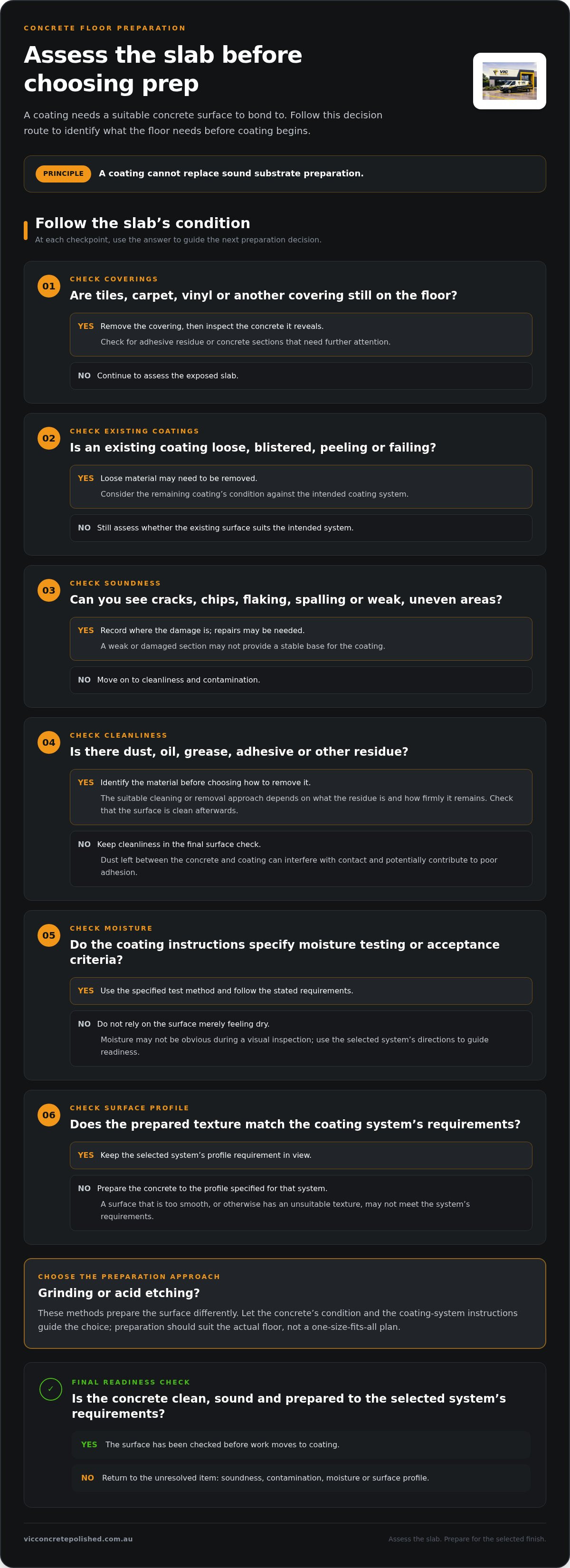
The concrete floor preparation sequence before coating
A clear sequence keeps each stage connected: assess the existing floor, remove anything that could interfere, prepare the exposed concrete, carry out suitable repairs, clean thoroughly, then check readiness against the coating system’s instructions. The order can vary with the substrate and products specified for the job, but one stage should not be treated as an automatic substitute for another.
Inspect, remove, prepare, repair, clean and check: each step readies the concrete for the next.
From inspection to prepared surface
Begin by measuring the floor and recording visible conditions, including cracks, uneven sections, old coatings and areas covered by tiles, carpet or vinyl. This gives the preparation plan a practical starting point and highlights where removing a covering may reveal adhesive, damage or other work beneath it. If tiles are present, tile removal and concrete preparation are connected stages: assess the exposed surface before choosing the next method.
- Inspect and measure. Note the floor’s condition and the areas needing attention before work begins.
- Remove interfering materials. Take up unsuitable floor coverings and address adhesive, loose coating or other residues that could remain between the concrete and the finish.
- Prepare the exposed concrete. Use the method suited to the substrate and coating-system requirements. Preparation may involve mechanical grinding, but the approach should respond to what the inspection reveals.
Repairs, cleaning and the final readiness check
Once the surface has been prepared, assess it for defects that need attention before coating. Repairs should suit the particular surface issue and be compatible with the intended coating system. There isn’t one repair product or sequence for every slab, so follow the relevant instructions and allow repairs to reach the required condition before continuing.
- Repair suitable defects. Address identified surface damage as required by the substrate and system instructions.
- Clean the floor thoroughly. Remove dust created during grinding, along with any remaining contaminants. Dust removal follows grinding because preparation can leave fine particles on the surface. Clear them before coating rather than trapping them underneath.
- Check readiness. Compare the prepared floor with the coating system’s requirements, including any specified cleanliness, surface condition and moisture checks.
That final check is a decision point, not a formality. A floor that looks tidy may still need further cleaning, repairs or assessment before it meets the system requirements. The instructions for the selected coating guide the acceptance criteria, including any moisture limits or testing method, so avoid relying on a universal threshold.
Vic Concrete Polished provides floor preparation, measuring, concrete grinding and removal of tiles, carpet and vinyl to prepare floors for their intended finish. Arrange concrete floor preparation to have the existing surface assessed and the groundwork planned around its condition.
How Vic Concrete Polished prepares floors for coating
Preparation is part of the floor-finishing process, not a promise that a particular coating will perform in a specific way. Vic Concrete Polished assesses the existing floor and connects its condition with the work needed for the selected finish. Measuring, concrete grinding and removing tiles, carpet or vinyl are practical parts of that groundwork. They help establish what lies beneath and what preparation is required.
The approach isn’t identical for every job. A bare concrete floor presents different considerations from one with old coverings, adhesive or existing surface treatments. The intended coating system matters too, because preparation needs to suit both the substrate and the finish. That’s the purpose of careful concrete floor prep before coating: plan the work around the actual floor rather than assume one process fits all.
Matching preparation to the floor and intended finish
Assessment gives the preparation work a clear starting point. Measuring helps establish the floor area, while inspecting the surface helps identify existing coverings and visible conditions that may shape the next steps. If tiles, carpet or vinyl need to be removed, assess the concrete revealed beneath as part of the preparation plan. Grinding may also be relevant, depending on the surface and the selected system’s requirements.
The chosen finish guides those decisions. Vic Concrete Polished offers epoxy resin and decorative flake coating systems, so preparation can be considered in relation to the intended coating rather than as an isolated task. A decorative flake epoxy floor system, for example, should be planned with the concrete surface and the system’s preparation instructions in mind. The aim is to carry the right groundwork through to the finish without assuming every floor needs the same treatment.
What to expect from a prepared-floor project
A project may involve measuring, assessing the current surface, removing existing floor coverings where needed and preparing the exposed concrete. The amount and type of work depend on what is found. Removing vinyl may reveal adhesive; lifting tiles may expose uneven patches or areas that need further assessment. These findings can influence the preparation plan, so the work is tailored to the floor’s condition and the intended coating.
Preparation supports the coating process, but it doesn’t remove the need to follow the selected system’s instructions or guarantee a particular outcome. It provides a considered starting point: assess the surface, address relevant materials and plan preparation to suit the project. Vic Concrete Polished brings floor preparation, measuring, grinding and covering removal together with its coating work, keeping the existing substrate and chosen finish in view throughout the process.
If you’re planning a coating or need to prepare an existing concrete floor, discuss your concrete floor project with Vic Concrete Polished.
Plan the next step for your concrete floor
Before settling on a finish, consider what you need the floor to do and how the existing surface fits into that plan. A clear discussion about the space, its current condition and your preferred coating can help shape a practical way forward. Good concrete floor prep before coating is specific to the project, so bring those details together instead of assuming a standard approach will suit every slab.
Vic Concrete Polished can help you explore floor preparation alongside epoxy resin and decorative flake coating options. Whether you’re planning a new finish or working out what an existing floor needs, start with the surface to keep the next steps grounded in the actual project.
Discuss your concrete floor project and take the next step towards a finish planned around your floor.
Frequently Asked Questions
Can you coat concrete that has already been painted?
Sometimes, but assess the paint before applying a coating. Check whether it’s firmly bonded, deteriorating or incompatible with the intended system. A surface that looks intact doesn’t prove the paint will provide a suitable base. Concrete floor prep before coating may involve removing the paint or preparing it another way, depending on what’s present and the system’s instructions. Don’t assume coating over paint will work.
Is acid etching enough to prepare every concrete floor for coating?
No. Acid etching isn’t a universal preparation method and may not suit the concrete, existing materials or coating system. It treats exposed concrete, but it doesn’t remove every old coating or contaminant, such as adhesive or oil. Mechanical preparation may be more appropriate where material needs to be removed or the surface needs different treatment. Use the method specified for the particular floor and coating system.
Can a concrete coating hide cracks or uneven areas?
A coating shouldn’t be relied on to hide cracks or uneven concrete. Defects can remain visible or affect the finished appearance, so assess them when planning the work. A crack and a chipped or spalled patch, for example, may need different consideration. Any repair needs to suit the defect and coating system. Not every crack can be repaired in the same way, and a coating won’t necessarily conceal an uneven floor.
How long should new concrete cure before it is coated?
There’s no single curing period for every concrete floor and coating system. New concrete needs to meet the selected system’s curing and moisture requirements before application. A slab that seems dry on the surface may still need assessment against those requirements. Follow the relevant product instructions for the specific coating, including any stated testing method, rather than treating a general timeframe as a guarantee that the floor is ready.
What happens if concrete is still damp when a coating is applied?
Excess moisture can affect whether a coating system is suitable and how it performs, so don’t judge readiness by appearance alone. Concrete may look dry while still failing the moisture requirements for the intended product. The appropriate assessment method and acceptable limits depend on the coating instructions and the substrate. If readings don’t meet those requirements, application may need to wait or the preparation plan may need to be reviewed.
What does surface profile mean when preparing concrete for a coating?
Surface profile is the texture of the concrete after preparation. It describes more than whether the floor looks rough: the prepared texture needs to suit the coating system being applied. A profile that looks adequate may not meet the product’s stated requirements. Follow the system instructions for the required surface condition, and avoid using a generic profile rating when the coating manufacturer specifies its own criteria.


