
Could the concrete finish you like best be the wrong choice for your floor? The right concrete flooring contractor matches the finish to the existing slab and how you’ll use the space, not just its appearance. Existing tiles, carpet or vinyl, surface wear and slab condition all affect the preparation and finish the project needs.
Before arranging flooring work, it helps to understand which finish suits your space and what the project involves. This checklist compares mechanical polished concrete, grind and seal, epoxy and resin, and decorative flake coatings. It also explains what to share when requesting a quote and how preparation fits into the job.
Vic Concrete Polished works across concrete finishes, floor-covering removal and preparation, drawing on more than 18 years of industry experience. Read on to see how the finish is matched to the slab and intended use, which project details are useful when requesting a quote, and how preparation contributes to the finished floor.
Key Takeaways
- Understand where concrete floor preparation and finishing begin, and how they differ from pouring a new slab.
- Choose a finish by considering the existing concrete, how the space is used and the upkeep you prefer.
- When describing your project to a concrete flooring contractor, note the floor area, current covering, room use and finish you have in mind.
- Allow for assessment, measuring and any required covering removal or grinding as part of the flooring process.
- Vic Concrete Polished brings more than 18 years of industry experience to matching finishes and preparation to project needs.
What a concrete flooring contractor does, and where the scope starts
A concrete flooring contractor prepares and finishes existing concrete surfaces; a concreter pours and constructs the slab. This distinction helps define the project scope. A flooring specialist assesses and prepares the floor that is already in place, then applies or creates a suitable finish. Pouring a new concrete base is a separate stage of construction.
The right scope depends on the existing floor, how the space will be used and the finish you choose. A room with carpet over concrete needs different preparation from an exposed slab being mechanically polished. The priorities for a floor used regularly may also differ from those for a space where a coated finish is preferred. Start by identifying what is underfoot and what the finished surface needs to do.
When planning the work, discuss the whole flooring job rather than naming a finish alone. Measurements, existing coverings, visible surface condition and intended use all help shape the scope. Connecting these details to the preparation and finishing steps keeps the plan grounded in the floor itself.
Which parts of a concrete flooring project can a contractor handle?
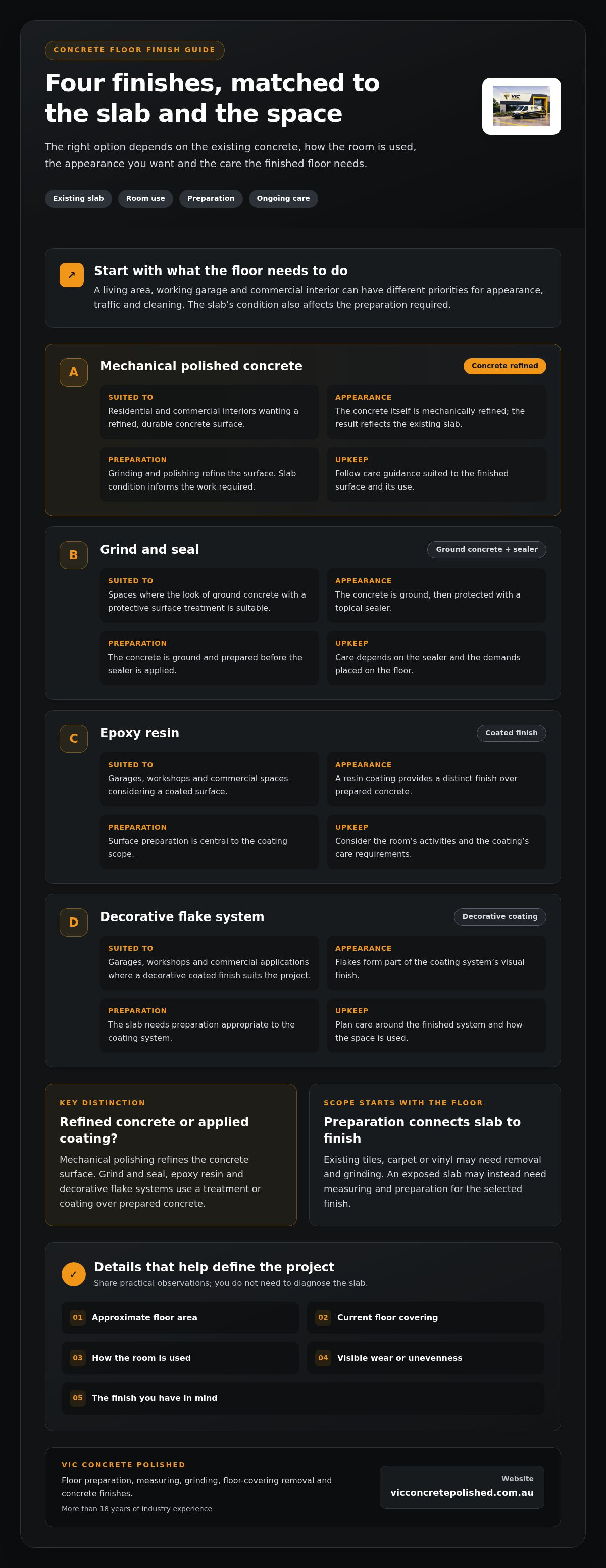
Vic Concrete Polished provides floor preparation and measuring, concrete grinding, and removal of tiles, carpet and vinyl. The selected finish can be mechanical polished concrete, grind and seal, epoxy resin or a decorative flakes coating system. Each option needs a scope suited to the existing surface and how the space will be used.
Preparation and finishing can form one connected flooring project. If tiles cover the slab, for example, removal and grinding may be needed before the chosen finish can be applied. If the concrete is already exposed, the work may focus on measuring and preparing it for the selected treatment. Polished concrete is created by mechanically refining the concrete surface, which distinguishes it from applying a coating.
When is a flooring specialist different from a concreter?
A concreter’s work can include pouring a new slab, while a flooring specialist prepares and finishes an existing concrete floor. These are different stages of construction, with different tasks and scopes. Vic Concrete Polished focuses on flooring preparation and surface finishes, including grinding, floor-covering removal and coating systems.
That distinction matters when you’re planning a project. If the slab is already in place, describe its condition and any coverings so the flooring work can be scoped around the actual surface. If the job requires a new slab, that is concrete construction rather than surface finishing. Keeping these stages clear helps you understand what the flooring project involves and how preparation connects to the finish.
Before requesting a quote, note the room’s approximate area, what currently covers the floor and how the space is used. Include visible wear or unevenness and the finish you’re considering. You don’t need to diagnose the slab yourself. These practical details give Vic Concrete Polished a useful starting point for assessing the flooring work and discussing a finish suited to the project.
Match the concrete flooring contractor and finish to your space
The finish should suit both the concrete beneath it and the demands of the room. A residential living area, working garage and commercial interior can have different priorities for appearance, traffic and cleaning. A concrete flooring contractor can consider the slab’s condition alongside the space’s intended use, rather than treating one finish as right for every project.
Choose for the slab and the way the space is used. The existing surface influences the preparation required, while the room’s use helps define the finish’s practical role. The options below offer different combinations of appearance, preparation and ongoing care.
Mechanical polished concrete
Use: Residential and commercial interiors where a refined, durable concrete surface is wanted.
Appearance: The concrete itself is mechanically refined, so the result reflects the existing slab.
Preparation: Grinding and polishing refine the surface; the slab’s condition informs the work required.
Upkeep: Follow care guidance suited to the finished surface and its use.
Grind and seal
Use: Spaces where retaining the look of ground concrete with a protective surface treatment is suitable.
Appearance: The concrete is ground, then protected with a topical sealer.
Preparation: The concrete is ground and prepared before the sealer is applied.
Upkeep: Care depends on the sealer and the demands placed on the floor.
Epoxy resin
Use: Garages, workshops and commercial spaces where a coated surface is being considered.
Appearance: A resin coating provides a distinct finish over prepared concrete.
Preparation: Surface preparation is central to the coating scope.
Upkeep: Consider the room’s activities and the coating’s care requirements.
Decorative flake system
Use: Garages, workshops and commercial applications where a decorative coated finish suits the project.
Appearance: Flakes form part of the coating system’s visual finish.
Preparation: The slab needs preparation appropriate to the coating system.
Upkeep: Plan care around the finished system and how the space is used.
Which finish suits the way the space will be used?
Consider the floor’s everyday demands as well as its appearance. Mechanical polished concrete may suit an interior where the concrete surface is part of the design. Grind and seal retains the look of ground concrete beneath a topical sealer. For a garage or workshop, epoxy resin or decorative flakes may better suit a preference for a coated finish. No option is right for every floor; the choice depends on the slab and the project’s priorities.
What project details help define the right scope?
Start with the setting: a residential room, commercial space, garage or workshop. Note whether tiles, carpet or vinyl are present, describe visible wear or other surface concerns, and explain the appearance you want. These details help frame preparation and finish selection. For more detail on coatings, the epoxy resin flooring guide explains how they work and where they may suit.
Finish selection should account for both the slab you have and the work the floor needs to do. Vic Concrete Polished considers these project details when discussing its concrete finishes. If you’re weighing up options, explore Vic Concrete Polished’s flooring services as you define your project scope.
Concrete flooring contractor checklist: clarify the project before work begins
A useful flooring enquiry gives a clear picture of the space and the floor as it stands. You don’t need to diagnose the concrete or settle on a finish before getting in touch. Start with practical details. They help Vic Concrete Polished understand the project, consider the preparation involved and discuss a finish suited to the floor’s intended use.
What information should you prepare about the floor?
Before contacting a concrete flooring contractor, gather the details you can readily provide. Approximate measurements and clear photos can help describe the room and visible surface, although they don’t replace assessment of the floor itself. Include:
- Approximate floor area: Estimate the length and width, or share a plan if you have one. Note whether the work covers one room or several connected areas.
- Room and day-to-day use: Say whether it’s a home interior, commercial space, garage or workshop. Describe the usual foot traffic, equipment or activities that affect how the floor is used.
- Current floor covering: Identify any tiles, carpet or vinyl that may need removal before the concrete can be prepared.
- Visible surface concerns: Mention cracks, worn patches, stains, uneven areas or previous coatings. Describe what you can see without guessing at the cause.
- Preferred appearance: Explain whether you’re considering exposed polished concrete, a sealed ground surface, epoxy resin or a decorative flake finish. Your preferred look is a starting point; its suitability depends on the slab and project requirements.
These details help define the work because the surface condition and preparation required can affect the scope. Removing an existing covering and preparing the exposed concrete, for example, is different from finishing a floor that is already bare. The epoxy floor coating cost factors guide explains why project details shape a quote; it doesn’t provide a price for your particular floor.
How should a project scope describe the finished result?
A clear scope separates the stages of work so you can understand what the flooring project involves. Describe floor-covering removal, concrete preparation and the selected finish as distinct parts. This shows how the existing surface connects to the proposed result without assuming every floor needs the same steps.
Then describe the outcome in practical terms. Note the look you’re after, how the floor needs to perform in everyday use and how much ongoing care you’re comfortable with. If you’re planning a workshop floor, the guide to choosing an epoxy floor system can help you identify relevant project priorities.
Vic Concrete Polished provides measuring, floor preparation, floor-covering removal and concrete finishes, with the scope shaped around the existing surface and intended use. Keep your notes together, including measurements, photos and finish preferences. These details give the project discussion a practical starting point, while the floor’s actual condition informs the preparation and final finish.
How a concrete flooring contractor prepares and completes the floor
A well-planned flooring project moves from understanding the existing concrete to preparing it for the selected finish. The sequence varies with the slab, any covering that needs removal and the system being installed. Knowing the stages shows how assessment, preparation and finishing fit together, rather than treating grinding as a stand-alone task.
Surface preparation matters because the selected flooring system needs a suitable concrete surface to create the intended finish. The method depends on the condition of the floor and what will be applied to it. A concrete flooring contractor can plan the work in stages, tailoring the scope to the floor and chosen system.
- Assess and measure the floor. The project begins by considering the floor area, current surface and intended use. Measuring helps define the work area, while assessing the concrete identifies visible conditions that may affect preparation or finish selection. Existing coverings and the preferred flooring system also inform the scope. This gives the work a practical starting point instead of assuming every slab needs the same treatment.
- Remove floor coverings where the scope includes it. If tiles, carpet or vinyl are present, their removal may form part of the flooring project. Once the covering is removed, the concrete underneath can be assessed as the surface for the next stage. The exposed slab, rather than the old flooring’s appearance, informs the preparation needed for the new finish.
- Prepare the concrete. Concrete grinding can prepare the floor for its selected finish. The amount and type of preparation depend on the slab and the system being applied. This stage supports the work that follows, whether the plan is to mechanically polish the concrete or prepare it for a coating. Vic Concrete Polished provides floor preparation, measuring, floor-covering removal and concrete grinding as part of its flooring work.
- Apply or create the selected finish. Mechanical polishing refines the concrete surface itself. Grind and seal combines ground concrete with a topical sealer, while epoxy resin and decorative flake systems create a coating over prepared concrete. The chosen system determines the finishing stages and whether a protective sealer or coating forms part of the result.
- Review the completed surface. Consider the finished floor against the agreed scope and intended use. Keep any care guidance provided for the selected finish so routine upkeep suits the surface. The work sequence and readiness for use depend on the system and project, so don’t assume the same timeframe applies to every flooring job.
Preparation isn’t separate from the finish; it connects the existing slab to the flooring system selected for the project. Vic Concrete Polished brings more than 18 years of industry experience to concrete preparation and finishes. Discuss your concrete flooring project with Vic Concrete Polished to explore a scope that fits your floor.
Work with Vic Concrete Polished on your concrete flooring project
A flooring project is easier to plan when preparation and finish are considered together. Vic Concrete Polished is an independently operated Australian flooring specialist with more than 18 years of industry experience across concrete finishes, coatings and floor preparation. The approach starts with understanding the existing floor and how the space will be used, then shaping the flooring scope around those details.
The work focuses on preparing and finishing concrete surfaces, not pouring a new slab. Keeping that distinction clear sets expectations from the outset. If your floor is already in place, the project may involve removing a current covering, preparing the exposed concrete and applying or creating a suitable finish.
How Vic Concrete Polished brings preparation and finishes together
Vic Concrete Polished provides floor-covering removal for tiles, carpet and vinyl, along with measuring, floor preparation and concrete grinding. These steps connect with the selected surface finish, so preparation is included in planning the flooring project rather than treated as an afterthought.
Finish options include mechanical polished concrete, grind and seal, epoxy and resin flooring, and decorative flake coatings. Each suits different project requirements. Mechanical polishing refines the concrete itself, while grind and seal pairs a ground surface with a topical sealer. Epoxy and resin flooring and decorative flake systems create coated finishes. The existing floor and the space’s intended use help guide the choice.
A room with carpet over concrete, for example, has a different starting point from a bare slab. A garage, workshop or interior living area may also have different priorities for appearance and everyday use. A considered scope connects these conditions to the preparation required and the finish being discussed, without assuming one system is right for every floor.
What to include when you enquire about your floor
A concrete flooring contractor can understand a project more clearly when your enquiry describes the space as well as the preferred finish. You don’t need specialist terms. A concise description and a few practical details are a helpful starting point:
- Space: Identify whether the floor is in a home, commercial setting, garage or workshop, and explain how it’s used day to day.
- Current covering: Note whether tiles, carpet or vinyl are in place, or whether the concrete is already exposed.
- Approximate floor area: Share an estimate or measurements if available, and indicate which rooms or sections are included.
- Preferred finish: Describe the look you have in mind, such as polished concrete, a sealed ground surface, epoxy resin or decorative flakes.
- Visible concerns: Mention noticeable wear or other surface conditions so they can be considered as part of the project discussion.
These details help frame the conversation, while the floor’s actual condition remains central to choosing suitable preparation and finish. To discuss your concrete flooring project, contact Vic Concrete Polished with the details you have gathered.
Take the next step towards a floor that fits
Turn your ideas into a practical project brief by considering how you want the finished floor to look and feel, how the space needs to function and what you know about the existing concrete. You don’t need every detail settled. A clear starting point makes it easier to discuss a suitable scope with a concrete flooring contractor.
Vic Concrete Polished brings more than 18 years of industry experience to concrete floor preparation and finishing. Share the space, approximate floor area, current covering and finish you’re considering. The discussion can then focus on how the existing surface and intended use relate to the work required.
Discuss your concrete flooring project with Vic Concrete Polished and take a considered first step towards a floor suited to your space.
Frequently Asked Questions
Does a concrete flooring contractor pour the concrete slab as well?
Vic Concrete Polished specialises in preparing and finishing concrete surfaces that are already in place, rather than pouring or constructing a new slab. For a new build, slab construction is a separate stage from flooring. Once the concrete surface is in place, flooring preparation and finish selection can be planned as a distinct part of the project.
Can a concrete flooring contractor work over existing tiles?
Vic Concrete Polished provides tile removal rather than applying its finishes directly over tiles. Removing the covering allows the concrete underneath to be assessed as the surface for the proposed finish. The condition of that concrete helps shape the preparation required, so mention the tiles and any visible concerns, such as loose or cracked sections, in your enquiry.
How much does a concrete flooring contractor charge?
The cost depends on the individual floor, so there isn’t one amount that applies to every project. The area, current floor covering, preparation required and chosen finish all contribute to the scope. A floor needing covering removal and grinding, for example, involves different work from an already exposed slab. Share these details when requesting a quote so the project can be considered against its actual requirements.
How long does concrete floor preparation and finishing take?
There’s no single timeframe for every floor. The area, existing coverings, condition of the concrete and selected finish all influence the sequence and amount of work. A room with tiles to remove may need different preparation from a clear slab, and finishing systems have different stages. Provide the project details early so the work can be discussed in context, rather than relying on a general estimate as a confirmed access or completion date.
Is epoxy flooring suitable for every concrete floor?
No. Epoxy resin flooring may suit garages, workshops and commercial spaces, but the concrete’s condition and the space’s intended use matter. A floor with an existing coating, visible damage or surface irregularities may need specific preparation before a coating is considered. A workshop’s use, for example, can guide finish selection differently from a room where appearance is the main priority. Suitability depends on the project, not just the product category.
What happens if the concrete floor is uneven or damaged?
Include unevenness or visible damage in your project description because it can affect the preparation and finish scope. Concrete grinding is part of Vic Concrete Polished’s floor preparation work and may be relevant to preparing the surface. The condition and extent of the issue still guide the plan. Photos and a clear description can help explain what you’ve noticed, but grinding alone may not resolve every type of damage.
Can a concrete flooring contractor remove carpet or vinyl first?
Yes. Vic Concrete Polished removes carpet, vinyl and tiles as part of its flooring services. If carpet is still in place, mention it in your enquiry so removal can be considered alongside measuring, concrete preparation and the selected finish. Once the covering is removed, the exposed floor informs the next steps. Include any visible stains or concerns you’ve noticed beneath or around the edges.


