
Concrete grinding isn't limited to indoor floors. At Vic Concrete Polished, our professional concrete grinding teams prepare indoor and outdoor surfaces across residential and commercial properties nationwide, from garages and warehouses to driveways and patios. It can remove glue, paint or old coatings, prepare concrete for a new finish, and smooth minor surface variations. The right approach depends on the slab's condition and the result you want.
If you're dealing with stubborn adhesive or a worn coating, grinding can do more than make the floor look smoother. It can prepare concrete for a new coating or sealer, while polishing can turn a suitable slab into a finished floor.
This guide explains where grinding works, how glue and coating removal fit into the process, and what aggregate exposure and finish options can achieve. It also covers what to consider when repairing existing polished concrete, so you can assess the options before planning the work.
Key Takeaways
- Assess the slab’s condition before choosing a grinding or polishing approach, as existing concrete quality affects the finish.
- For polished-floor repairs, structural soundness is an important factor in deciding whether repolishing is suitable.
- Choose aggregate exposure and sheen to suit the look and practical needs of the space, and consider slip resistance where relevant.
- Grinding can strip glue and coatings while preparing concrete for a new finish, helping the next layer bond to the surface.
Can concrete grinding be used on both indoor and outdoor surfaces?
Yes. Concrete grinding suits indoor and outdoor slabs, including residential rooms, garages, retail floors, warehouses, driveways and patios. It can remove glue, paint and epoxy coatings, smooth minor surface variations, or prepare concrete for polishing, sealers and coatings. It does not replace major grading or changes to a slab’s slope.
Grinding uses rotating discs to cut back concrete; polishing continues with finer abrasives until the surface is smoother and more refined. Mechanical polished concrete reveals the slab’s natural character, while grind and seal pairs grinding with a protective sealer. Epoxy flooring is another option after suitable preparation. For concrete grinding in Melbourne, the slab’s condition, intended use and expected traffic help determine the process.
Residential and commercial floors may need larger planetary grinders across open areas and handheld grinders near edges or in confined spaces. Finish options include polished concrete, grind and seal, and epoxy coatings. Before polishing, the existing slab needs assessment and preparation: surface quality, adhesives and old coatings can affect how evenly it grinds. Large cracks or holes may need repair before work begins.
Before repairing an existing polished floor, assess its condition. Polishing may refresh a structurally sound surface, but significant damage can require repair first. When choosing a contractor, review relevant experience and ask to see evidence of applicable licences and insurance. Requirements depend on the work and circumstances.
Dust extraction equipment significantly reduces airborne dust during grinding. Keep people away from the active work area and use suitable protective equipment. Most residential projects in Melbourne typically take one to two days; access, slab condition and preparation affect timing. A floor can be used once the work and any applied finish are ready, with sealer or coating curing time also affecting access. Uneven results can follow inconsistent preparation or an unsuitable grinding approach, so assess the slab and plan each stage. Free inspections and quotes aren’t automatic; clarify what the quoted work covers before it starts.
Can you repair existing polished concrete floor?
Yes, an existing polished concrete floor can be repaired, but the slab’s structural condition determines the suitable approach. Repolishing is an option only when the concrete is structurally sound. Cracks, holes, loose areas or uneven wear need assessment first, because polishing alone won’t correct underlying damage. The existing finish and preparation also affect the result.
Start by identifying where the floor has failed and how the space is used. A home living area, a busy retail floor and an industrial workspace place different demands on concrete. Traffic patterns, damage and the condition of any existing coating help guide preparation. For example, wear concentrated near a shop entrance calls for a different repair assessment from isolated damage in a residential room.
Mechanical polishing can restore a suitable slab by grinding its surface through progressively finer abrasives. Properly installed and maintained mechanically polished concrete can last up to 10 to 12 years without substantial maintenance. Routine cleaning helps manage everyday dust and marks, while prompt attention to new damage supports ongoing upkeep. Durability depends on the slab’s condition and the care it receives.
Epoxy flooring offers another finish for residential, commercial and industrial spaces. It uses a two-part coating that dries into a durable surface. The concrete needs suitable preparation for the coating to adhere; grinding can remove weak surface material and improve the substrate. This can renew a worn floor, but it does not replace repairs to structural slab damage.
Whether the project involves a home, warehouse or retail space, assess the concrete before selecting a repair system. Compare the damage, intended use and desired finish, then plan preparation and repairs before applying a new surface. For help understanding the preparation involved, explore concrete floor preparation as part of planning a repair.
Aggregate exposure and finish options
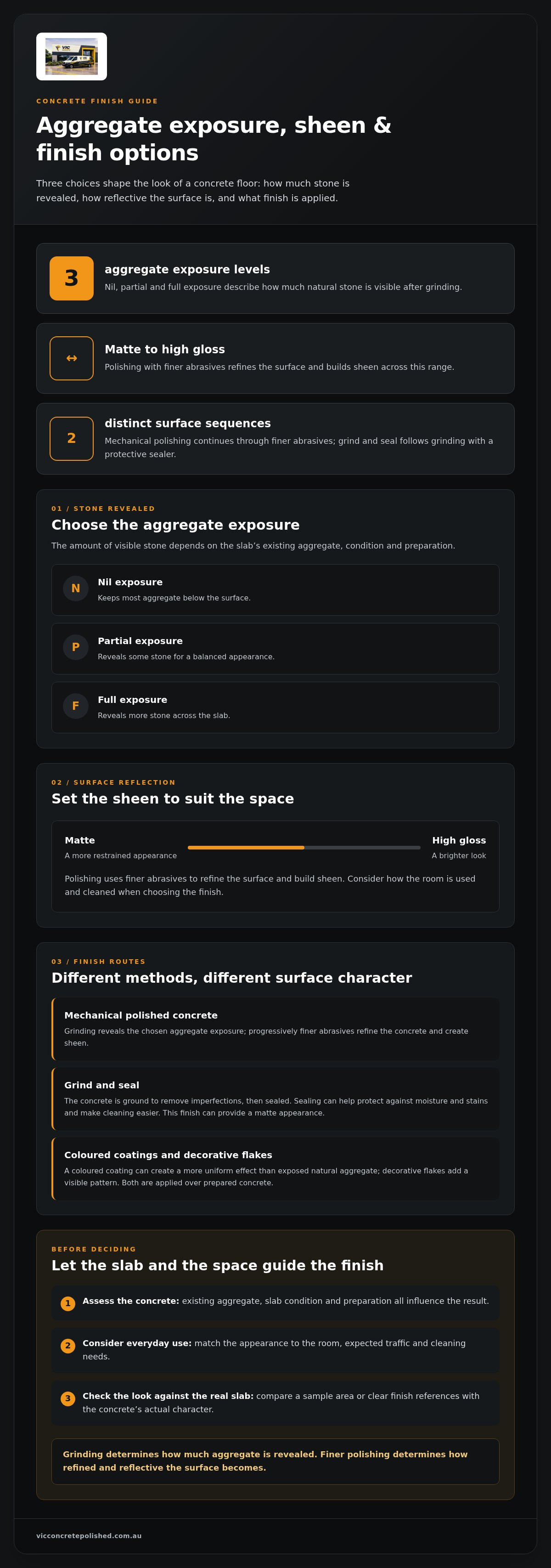
Aggregate exposure describes how much stone is visible after grinding. A nil-exposure finish keeps most aggregate below the surface, while full exposure reveals more stone across the slab. Partial exposure falls between the two, creating a balanced appearance. The existing aggregate, slab condition and preparation all influence the result, so consider the look you want alongside the concrete itself.
Sheen is another choice: polished concrete can range from matte to high gloss. Polishing uses finer abrasives to refine the surface and build sheen, while grinding determines how much aggregate is revealed. A matte finish can suit a restrained interior, while a higher-sheen surface creates a brighter look. Choose a finish that also suits how the room is used and cleaned.
Grind and seal follows a different sequence: the concrete is ground to remove imperfections, then sealed. Sealing after grinding can help protect against moisture and stains and make cleaning easier. Grind and seal can provide a matte appearance, while finer polishing can achieve a higher sheen. The chosen sealer and preparation affect the final result.
Decorative and coloured finishes offer another way to shape a floor’s appearance. A coloured coating, for example, can create a more uniform effect than exposed natural aggregate, while decorative flakes add a visible pattern. These finishes are applied over prepared concrete, so the slab’s condition and preparation matter. Choose based on the room’s colours, expected traffic and preferred level of visual texture.
Before settling on a finish, compare a sample area or clear finish references with the slab’s actual character. Consider aggregate exposure, sheen, colour and maintenance together rather than choosing each in isolation. For outdoor areas, account for wet conditions: water can make polished concrete slippery, so discuss an anti-slip finish with a specialist. This helps balance appearance with everyday use.
Grinding applications including coating and glue removal
Grinding can remove glue, paint and epoxy coatings from concrete before a new finish is applied. It can also remove weak surface material and minor imperfections. For example, grinding can remove adhesive left after carpet removal, preparing the slab for polishing, staining, sealing or a new coating. The goal is a clean, prepared surface, not simply a fresh appearance.
The process depends on what remains bonded to the concrete. A thin paint layer calls for a different approach from stubborn adhesive or an existing epoxy coating. Grinding commonly progresses from more aggressive abrasives to finer grits, removing residue first and refining the surface afterwards. The depth and consistency of removal matter because leftover coating can interfere with the next layer’s bond.
Preparation usually follows a practical sequence:
- Identify the material to remove, such as carpet glue, paint or epoxy.
- Grind the concrete to remove residues and create an even surface.
- Prepare the exposed slab for its next finish, such as polishing or sealing.
This preparation is useful in homes, retail spaces and warehouses, where old finishes may need to come off before floors can be renewed. Grinding also prepares concrete for coatings and toppings by improving adhesion. A suitable surface helps the new layer bond, while careful preparation supports a lasting finish. Depending on the floor system, sealing after grinding can add protection against moisture, stains and wear.
Dust extraction equipment significantly reduces dust during grinding, and the work area should be kept clear while the surface is processed. The slab’s condition, residue and intended finish all affect the preparation required. Concrete receiving a sealer, for example, needs a different final surface from concrete being mechanically polished. Matching the grinding stages to the next application helps avoid unnecessary removal and uneven results.
Planning to remove glue or coatings from a concrete floor? Arrange concrete floor grinding as the preparation step for your next finish.
Vic Concrete Polished: Mechanical Polished Concrete
Vic Concrete Polished can turn a suitable concrete slab into a finished floor with Mechanical Polished Concrete. This option suits property owners seeking a refined surface that reveals the concrete’s natural character. The slab’s condition and preparation inform the finish, so consider existing damage or old coatings before work begins.
For a different finish, Grind and Seal adds a protective sealer after grinding. The Decorative Flakes Coating System and Epoxy - Resin offer coating options for prepared concrete. The right fit depends on the slab and how you want the space to look and function.
If you’re planning a concrete floor finish or preparing an existing slab, contact Vic Concrete Polished to discuss your project.
Plan a finish that fits your space
Before choosing your next step, consider what matters most in the finished floor: its appearance, how the space will be used and the level of upkeep you prefer. These priorities can guide a focused discussion about the concrete surface and the finish that suits it.
For concrete grinding in Melbourne, Vic Concrete Polished offers Mechanical Polished Concrete, Grind and Seal, and a Decorative Flakes Coating System. Each creates a different result, from revealing the concrete’s natural character to providing a sealed or decorative surface. The slab’s condition and intended use can help guide your choice.
Bring your preferred look and practical requirements into the discussion, so the next step can focus on the right preparation and finish for your space. Contact Vic Concrete Polished to discuss your flooring project and move forward with a clear plan.
Frequently Asked Questions
What Industries Does Concrete Grinding Work Best For?
Concrete grinding suits residential, commercial and industrial spaces where an existing slab can be prepared for a new finish. A homeowner might prepare a garage floor, while a retailer could address worn concrete in a customer area. Warehouses and workshops can use grinding to prepare floors for coatings suited to daily operations. The space’s use helps determine the appropriate finish.
What is the cost of concrete grinding per square metre?
There isn’t one per-square-metre price for every grinding job. The quote depends on the project and follows an initial consultation. A small area with straightforward access differs from a larger floor that needs old coverings removed first. When requesting a quote, describe the floor area, existing surface and intended finish to help clarify the scope.
Will concrete grinding remove cracks and holes in my concrete?
Grinding can smooth minor surface variations, but it doesn’t fill cracks or holes. A shallow surface mark may be reduced during preparation, while a deep crack or hole needs repair assessment before finishing work. For example, examine a damaged warehouse floor for loose or broken concrete before considering a new coating. The repair and finish need to suit the slab’s condition.
What concrete grinding services are available in Melbourne?
Concrete grinding can prepare an existing slab for polished concrete, a grind-and-seal finish or a coating. Related floor preparation may include measuring and removing existing tiles, carpet or vinyl. For example, after carpet removal during a renovation, the exposed concrete may need grinding before a new finish is applied. Available finishes include mechanical polishing, epoxy resin and decorative flakes coatings.
How much does concrete grinding cost per square metre in Melbourne?
For concrete grinding in Melbourne, the quote depends on the floor area, surface condition, covering removal and finish required. Vic Concrete Polished provides free, no-obligation quotes after an initial consultation rather than publishing a universal per-square-metre rate. Describe whether the floor is bare concrete or covered, and explain the result you want, so the quote can reflect the work involved.
What factors affect the price of concrete grinding in Melbourne?
The main factors affecting the quote are the area’s size, the concrete’s condition, access to the work space and the preparation required. Existing carpet, tiles or vinyl may need removal, and stubborn residue can add preparation work. The chosen finish also affects the scope, since polishing, sealing and coating involve different finishing steps. A clear description of these details helps define the quote.


