
A high-gloss finish isn’t automatically the safest choice outdoors: polished concrete in an alfresco area can become slippery when wet. Concrete can handle heavy foot traffic, weather fluctuations and UV exposure, but the finish needs to suit the conditions and how you use the space. In wet or exposed areas, prioritise a finish with suitable grip.
It’s understandable to want a refined surface without extra upkeep or a safety concern. Choose by balancing appearance, grip, maintenance and the preparation the concrete needs, rather than by sheen alone.
This guide explains which finishes can improve slip resistance, how to care for the surface and what affects the cost of an alfresco project. You’ll also see how preparation and finish choices shape the result, so you can plan a practical, durable outdoor floor with greater confidence.
Key Takeaways
- Choose an outdoor finish for the conditions and use of your alfresco area, not just its sheen; a high-gloss surface can be slippery when wet.
- Keep the floor clear of grit with regular sweeping, and use a neutral pH cleaner for occasional wet mopping.
- Compare finish options for grip and appearance, including whether a non-slip grit can be added to a grind and seal coating.
- Plan your budget around the area size, desired finish and the preparation the concrete needs.
Why Choose Polished Concrete for an Alfresco Outdoor Area?
For an alfresco, compare the surface’s grip, maintenance needs and exposure to weather. The finish matters as much as the concrete beneath it.
Outdoor Flooring Comparisons
When comparing concrete with pavers, tiles or timber, consider joints, cleaning and the look you want. Concrete creates a continuous surface, while joints between pavers and tiles can collect debris. Timber has a different appearance and care requirements. No option suits every outdoor space, so factor in weather exposure and how you use the area.
An existing alfresco slab may be suitable for polishing, depending on its condition and surface. Preparation, including grinding, helps create a base for the selected finish.
Entertainment Areas and Pool Surrounds
In an outdoor entertaining area, polished concrete can create a consistent floor between dining and seating zones. Consider sun exposure, rain and foot traffic when selecting the finish. Around a pool, wet feet make grip especially important. Highly polished concrete is not a safe default for a wet pool surround, so prioritise a less slippery finish.
Australian building and drainage requirements depend on the project and site. Plan drainage so water moves away from the home and does not pool on the alfresco surface.
Outdoor Slip Risks
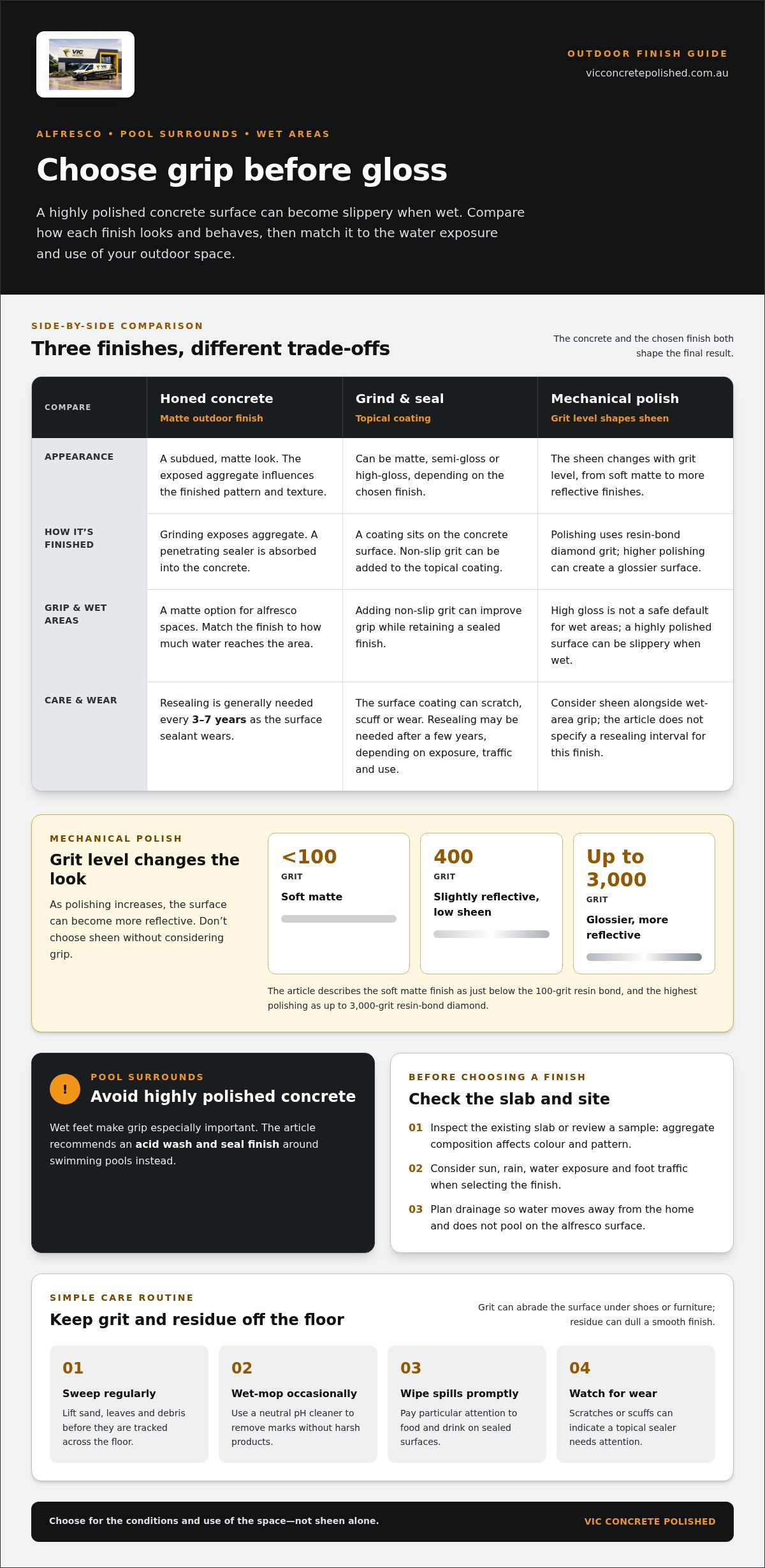
A highly polished surface can become slippery when wet, so high gloss and outdoor safety don’t always go together. For grind and seal, non-slip grit can be added to the topical coating to improve grip. Honed concrete is another option, with a penetrating sealer that absorbs into the concrete instead of sitting on top. Match the finish to the area’s expected exposure to water.
Durability and Weather Resistance
Concrete can withstand heavy foot traffic, weather fluctuations and UV exposure, making it a durable outdoor flooring option. The finish still affects performance: a grind and seal coating sits on the surface and can scratch, scuff or wear. Honed concrete has a matte appearance, while grind and seal can be matte, semi-gloss or high-gloss. Choose for the conditions, not appearance alone.
What is the recommended maintenance routine for polished concrete in alfresco areas?
A simple routine helps protect the finish and keep outdoor flooring clean. Remove loose grit first, then clean according to the surface type. Grit can abrade the floor under shoes or furniture, while residue on a smooth surface can dull its appearance. Clear away leaves and dirt, especially after wind or rain.
For everyday concrete floor care, use these steps:
- Sweep or dust-mop regularly to lift sand, leaves and other debris before it is tracked across the floor.
- Wet-mop occasionally with a neutral pH cleaner to remove marks without relying on harsh cleaning products.
- Wipe spills promptly, particularly food and drink, to limit staining on the sealed surface.
- Look for worn, scratched or scuffed areas, which can indicate that a topical sealer needs attention.
Grind and seal finishes may need resealing after a few years as the surface coating wears. The timing depends on exposure, traffic and how the area is used. Before sealing, the concrete must be clean: acid washing prepares the surface, while dirt can prevent proper adhesion and contribute to peeling after a few months. Moisture trapped between an outdoor slab and its coating can also cause discolouration, so preparation and suitable drying conditions matter.
Honed concrete has a different maintenance cycle. Its penetrating sealer is absorbed into the concrete, and resealing is generally needed every 3-7 years as the surface sealant wears. Keep the routine practical: remove debris, wet-mop when needed and monitor changes in the finish. These steps suit contemporary alfresco spaces without demanding complicated daily care.
For a grind and seal floor showing wear, plan resealing around its condition and exposure. If preparation is needed before a new finish, concrete floor grinding can help create a clean surface for the next coating.
Slip-resistant finishes for outdoor and wet areas
For outdoor concrete, balance surface grip with the appearance you want. Around pools, avoid a highly polished finish and consider how water reaches the surface.
Honed Finishes and Aggregate Exposure
Honed concrete is a matte outdoor finish, not a high-gloss polish. Grinding exposes the concrete’s aggregate, which influences the finished pattern and texture. Discuss the preferred exposure before installation, as the amount of visible stone affects the final look. A honed surface suits alfresco spaces where a subdued appearance is preferred.
Choose the aggregate exposure by considering the existing slab and the look you want. The concrete itself shapes the result.
Stone Exposure, Colours and Sealers
Aggregate exposure reveals the stones within the concrete, so the slab’s composition helps determine its colour and pattern. Inspecting the existing floor or reviewing a sample can help you choose a finish. Honed concrete uses a penetrating sealer, while grind and seal uses a topical coating that sits on the surface. These finishes differ in appearance and maintenance needs.
For an outdoor grind and seal, non-slip grit can be added to the topical coating. This can improve grip while retaining a sealed finish.
Polished Finishes and Grit Levels
Grit level changes the look of mechanically polished concrete. A finish just below the 100-grit resin bond has a soft matte appearance; 400-grit is slightly reflective with low sheen. Higher polishing can create a glossier, more reflective surface, including finishes up to 3,000-grit resin-bond diamond. For wet areas, don’t choose sheen without considering grip.
Avoid highly polished concrete around swimming pools. An acid wash and seal finish is recommended instead. Outdoor honed concrete has a matte finish, so compare these options with how the area is used and exposed to water.
Alfresco polished concrete costs
The scope of a residential alfresco concrete floor project depends on three main factors: area size, finish customisation and preparation work. These determine how much concrete needs treatment, how detailed the finish will be and what must be done before installation. Even a simple-looking floor may need substantial preparation if the existing concrete requires attention.
Start by defining the area and the finish you want. A larger space requires more surface work, while a customised appearance may involve choices about sheen, aggregate exposure or colour. Foot traffic and weather exposure also help determine which finish suits the space, though appearance alone won’t reveal how much preparation is needed.
Preparation affects the project scope. Existing coatings, uneven areas or concrete that needs grinding may add work. The slab’s condition matters because the finish is applied to the concrete beneath it. Discussing your preferred finish alongside the slab’s current condition helps clarify the work involved.
To compare options, organise your priorities before requesting a quote:
- Measure the alfresco area so its size is clear.
- Choose the look you prefer, such as matte or higher sheen.
- Note whether you want visible aggregate or a more uniform concrete surface.
- Describe how the space is used, including regular foot traffic and outdoor exposure.
- Identify existing coatings or surface areas that may need preparation.
There isn’t one finish that is automatically the most affordable: the overall cost reflects the area, chosen customisation and preparation required. The price depends on the project and is provided after a quote request. To discuss your alfresco flooring and the work its concrete surface needs, request a project quote.
Vic Concrete Polished: Mechanical Polished Concrete
Vic Concrete Polished provides Mechanical Polished Concrete for property owners planning a refined, hard-wearing concrete finish. If your alfresco slab is suitable for polishing, this service can help create the look you want while keeping preparation and surface condition central to the result.
Where a topical coating better suits the space, Vic Concrete Polished also provides Grind and Seal, Decorative Flakes Coating System and Epoxy - Resin flooring. The right approach depends on the existing concrete, intended use and your priorities for appearance and care. Discussing these details helps you choose a practical finish, rather than selecting by sheen alone.
Contact Vic Concrete Polished to discuss your alfresco concrete project.
Plan an alfresco floor around how you live
Before choosing a polished concrete finish for an alfresco area, picture how you’ll use the space day to day. Consider where furniture will sit, how people move between indoors and outdoors, and whether the floor should visually connect with adjoining rooms. These practical details help you assess the finish in context, rather than judging it from a sample alone.
Gather a few project details before discussing your floor: the area involved, the slab’s current condition and the look you want. Note any transitions to other flooring and how you’ll use the alfresco. This gives the conversation a clear starting point and keeps decisions focused on your needs.
Vic Concrete Polished can discuss the flooring approach that suits your project. Contact Vic Concrete Polished to take the next step and shape a considered plan for your alfresco area.
Frequently Asked Questions
What does polished concrete cost per square metre for an alfresco in Australia?
There isn’t one per-square-metre price for every project. The scope depends on the area, chosen finish and customisation, and the preparation the existing concrete needs. A slab that requires extra grinding involves different work from a clean, ready surface. For an accurate quote, Vic Concrete Polished considers the project scope and site conditions together.
Is polished concrete suitable for outdoor alfresco areas in Australia?
Polished concrete can suit an outdoor space if the finish matches its exposure and intended use. It can handle heavy foot traffic, weather fluctuations and UV exposure, but a highly polished surface can become slippery when wet. Consider where rain or splashes reach the floor, especially near a pool or open garden.
What slip rating is required for polished concrete in an outdoor alfresco?
The suitable slip rating depends on the location and how the surface will be used. Water exposure, such as at a pool edge, affects finish selection. Don’t assume that a particular gloss level or finish name establishes slip performance. Consider wet conditions and intended use, and assess the specific area appropriately.
How does polished concrete compare with honed concrete for an alfresco?
Mechanically polished concrete can range from matte to reflective, while outdoor honed concrete has a matte finish. Honed concrete uses a penetrating sealer absorbed into the slab; grind and seal has a topical coating. Compare appearance, care and water exposure. For a polished concrete alfresco floor, suitable grip matters more than the preferred sheen.
What are the steps for installing polished concrete in an alfresco?
First, assess the existing slab’s condition and whether it suits the intended finish. Grind the concrete to prepare the surface, then determine the desired aggregate exposure and appearance. Depending on the finish selected, mechanically polish the surface or apply a coating system. The slab’s condition and finish choice shape the preparation and work required.
How do you seal and maintain outdoor polished concrete?
Follow a cleaning routine suited to the finish: sweep away grit, then wet-mop as needed with a neutral pH cleaner. For grind and seal, watch for worn or scuffed coating, which can indicate that the surface sealer needs renewal. Honed concrete has a penetrating sealer and a different resealing cycle. Remove debris and spills promptly, especially in exposed areas.


