

Vinyl removal from a concrete floor is a specialist task that involves much more than simply lifting the covering. The stubborn adhesive must also be thoroughly removed and the underlying slab expertly prepared for its next finish. Whether working on commercial or residential sites across Australia, including right here in Melbourne, the condition of the vinyl, adhesive and concrete helps determine the right approach.
Vic Concrete Polished understands that a clean, even surface matters, and removing old flooring without damaging the concrete takes genuine care. This guide explains how professional removal, adhesive grinding and debris cleanup prepare the slab for its next finish. It also covers what to assess before choosing polishing or sealing, ensuring you understand every step from stripping the floor to achieving a flawless final result.
Key Takeaways
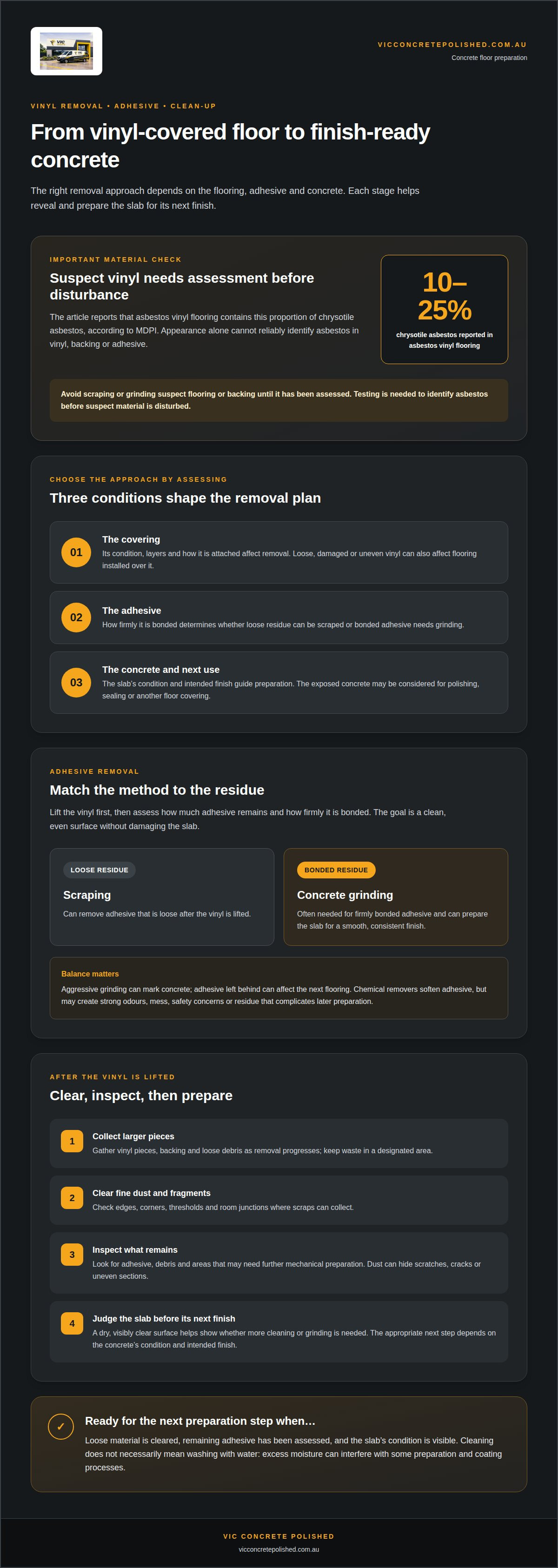
- Some vinyl backing may contain asbestos; the article states asbestos vinyl flooring contains 10-25% chrysotile asbestos, according to MDPI.
- Adhesive left on concrete can affect how even the surface is, so removal methods should suit the adhesive and slab.
- Cleaning and waste handling are part of preparing the floor for its next use, not just finishing touches.
- Whether the exposed concrete is suitable for polishing or sealing depends on its condition and quality.
Why Get Vinyl Floors Removal Services?
Professional vinyl removal exposes the concrete and prepares it for a new finish. The right method depends on the flooring, adhesive and how the space will be used.
Residential and commercial floor removal
In a home, removal may involve vinyl in a kitchen, living area or hallway, with care around adjoining rooms and fixtures. In commercial spaces, the floor’s condition, access and area size affect how the work is organised. A shop or office may need a broad, continuous surface prepared for a new finish, while a home project may involve separate rooms and transitions.
Commercial vinyl removal in Melbourne also needs to account for how the floor will be used next. Lifting the covering and addressing adhesive helps reveal whether the concrete is suitable for another covering or a finish such as polishing. Vinyl and linoleum backing may contain asbestos. The article states asbestos vinyl flooring contains 10-25% chrysotile asbestos, according to MDPI.
Removal versus installing over existing vinyl
Installing new flooring over existing vinyl can avoid removing the old layer, but only when the vinyl is in suitable condition and compatible with the new material. Sound vinyl may accept some coverings, including laminate, carpet and certain types of vinyl. Loose, damaged or uneven areas can affect the surface and the flooring installed above it.
Removing vinyl exposes the concrete, allowing adhesive to be addressed and the slab prepared for its next finish. It also adds work, particularly when adhesive is firmly bonded. For vinyl removal from a concrete floor in Melbourne, the condition of the covering and the intended finish help determine the approach.
In Victoria, asbestos requirements depend on whether the material contains asbestos and on the work involved. Avoid disturbing suspect flooring. Arrange an assessment before removal so the material can be handled appropriately.
Appearance alone cannot reliably show whether vinyl, its backing or adhesive contains asbestos. Testing is needed to identify it before suspect material is disturbed.
Removal time depends on the floor area, number of layers, covering condition and adhesive strength. A small, accessible room is different from a large commercial floor with stubborn adhesive.
Vinyl adhesive removal from concrete
Adhesive removal depends on how firmly it is bonded, the vinyl’s condition and the concrete underneath. The goal is a clean, even surface ready for the next floor finish.
Concrete adhesive removal methods
Professionals first lift the vinyl, then assess how much adhesive remains and how firmly it is bonded. Scraping can remove loose residue, while bonded adhesive often needs concrete grinding to leave an even surface.
The method matters. Aggressive grinding can mark the concrete, while leftover adhesive may affect the new flooring. Before installation, the surface should be clean and even, with the removal method suited to the slab and intended finish.
Health and safety risks
Removing vinyl and adhesive can create dust and debris. Chemical removers may produce strong odours, leave a mess and raise safety concerns. They can also leave residue that complicates later floor preparation, so their use needs careful consideration.
Suspected asbestos-containing material presents a separate risk if disturbed. Avoid scraping or grinding suspect vinyl or backing until it has been assessed. Age and appearance alone cannot establish whether it contains asbestos.
Chemical removers soften adhesive rather than grinding it away. Their odour, mess and safety concerns may make them unsuitable for some concrete floors. The adhesive type and planned finish help determine the right removal method.
Bonded adhesive may need attention before concrete is prepared for a new finish. Carpet glue can leave sticky patches, while tile adhesive can create raised, uneven areas. Grinding can remove tile adhesive and prepare the slab for a smooth, consistent finish.
For a slab that needs mechanical preparation, concrete floor grinding can remove bonded residue and create an even base for its next finish.
Post-removal cleaning and waste disposal
After vinyl is lifted, loose backing, adhesive residue and fragments need to be cleared. Cleaning reveals the concrete’s condition, while organised waste handling keeps removed material separate from the prepared floor.
The process usually starts by collecting larger vinyl pieces and scraping away loose residue. Fine dust and small fragments are then cleared from the slab and surrounding edges. Corners, thresholds and room junctions also need attention, as scraps can collect where machines cannot reach.
Next, the surface is checked for remaining adhesive and debris. Glue residue can affect a new floor finish, while dust may hide scratches, cracks or uneven areas. If residue remains, further mechanical preparation may be needed before the concrete is ready for its next use.
Gather waste as removal progresses rather than leaving it across the room. Keeping vinyl offcuts, backing and loose debris in a designated area helps stop material being tracked over cleaned sections. The type and condition of the flooring also affect how it should be handled and disposed of.
Cleaning does not necessarily mean washing the concrete with water. The next step depends on the intended finish and the slab’s condition, as excess moisture can interfere with some preparation and coating processes. A dry, visibly clear surface makes it easier to judge whether more grinding or cleaning is needed.
For example, a kitchen floor may have adhesive concentrated around edges and beneath former cabinets, while an open commercial area may have residue across a wider surface. Inspect each area after removing debris, rather than making only a quick pass through the centre.
A thorough clean also reveals what remains before polishing, sealing or installing another covering. The removal stage is complete when loose material is cleared, residue is assessed and the concrete is ready for the next preparation step. A project quote can account for the floor area, adhesive condition and any additional cleaning or grinding.
Concrete polishing and sealing after floor removal
Removing vinyl can reveal concrete that may work as a finished floor. Suitability for polishing depends on the slab’s condition and quality, including visible damage, uneven areas and marks left by adhesive. The planned flooring matters too: polished concrete leaves the slab exposed, while another covering may need a different preparation finish.
Before polishing, the concrete needs to be assessed and prepared. Residue and rough patches can affect the result, so grinding may be needed to create a consistent base. The surface after preparation helps show whether polishing suits the room. Existing stains, repairs and variations in the slab may remain visible as part of its character.
Mechanical polishing refines the concrete surface to create a smooth, finished appearance. It differs from applying a sealant, which forms a protective layer and can help limit dust on the surface. The right option depends on the look you want, the slab’s condition and how the room will be used.
For example, an open living area may suit exposed polished concrete, while a floor intended for new vinyl needs preparation for that covering. If the slab has uneven patches or adhesive marks, address them before applying the finish. Skipping this groundwork can make defects more noticeable in the completed floor.
Assess the concrete after removing the covering and residue, then match the preparation and finish to the slab. Polishing is not automatically suitable for every exposed floor; the concrete’s condition and quality matter. Sealing may suit a different goal, particularly if limiting surface dust is important.
For a polished finish, discuss concrete polishing and floor preparation for the exposed slab.
Vic Concrete Polished: Tiles, Carpet and Vinyl removal
Vic Concrete Polished removes vinyl, carpet and tiles, and prepares the exposed floor for its next finish. This is a practical option when old coverings and bonded residue need to be cleared before assessing the concrete.
Once the surface is prepared, the right finish depends on the slab and the result you want. Mechanical Polished Concrete leaves the concrete exposed, while Grind and Seal or a Decorative Flakes Coating System offers another finish. The aim is to connect removal and preparation with a surface that suits the space.
For a floor-covering removal project or a concrete finish, contact Vic Concrete Polished to discuss the work.
Plan the next finish for your floor
For vinyl removal from a concrete floor in Melbourne, look beyond clearing the surface: decide how the room should look and function when the work is complete. That choice helps determine the preparation needed and whether the concrete will remain visible or receive another finish. Consider how the room is used, the appearance you want and the level of ongoing maintenance that suits your home or workplace.
Vic Concrete Polished offers Mechanical Polished Concrete, Grind and Seal, and a Decorative Flakes Coating System. Each provides a different way to finish a prepared floor, depending on the slab and the result you want. Discussing your intended outcome helps connect vinyl removal and floor preparation with a suitable finish.
Contact Vic Concrete Polished to discuss your floor and the next step. A considered plan can make the transition from old covering to a useful, well-finished space more straightforward.
Frequently Asked Questions
Can you polish the concrete under my existing flooring?
Yes, if the exposed concrete’s condition and quality make it suitable for polishing. The slab must first be uncovered and assessed, since old coverings can conceal damage, repairs or uneven areas. For example, extensive adhesive marks may require further preparation before polishing. The exposed surface’s appearance and condition help determine whether polishing is appropriate.
Is it expensive to remove tile, carpet, or vinyl?
The work involved depends on the floor covering, area size and condition of the concrete beneath it. Firmly bonded vinyl adhesive, widespread carpet glue and uneven tile adhesive each call for different preparation. The project scope and any additional grinding or cleaning also affect the work required. Vic Concrete Polished provides a free, no-obligation quote after an initial consultation.
How much does vinyl flooring removal from a concrete floor cost in Melbourne per square metre?
There is no single per-square-metre figure for every Melbourne floor. The work depends on the area, the vinyl’s condition, how firmly the adhesive is bonded and whether the concrete needs further grinding. Stubborn residue may require different preparation from a covering that lifts cleanly. Vic Concrete Polished provides a free, no-obligation quote after an initial consultation.
What factors affect the cost of removing vinyl flooring in Melbourne?
The main factors are the amount of flooring, its condition, adhesive strength and the concrete’s state after removal. Extra layers or residue across a broad area can add preparation work, while damaged or uneven concrete may need attention before a new finish. Access and the intended finish can also shape the work required. Vic Concrete Polished can discuss the project and provide a free, no-obligation quote.
Can vinyl flooring be removed from concrete as a DIY project, and what tools are needed?
A small area can be tackled manually with a utility knife, pry bar or scraper, but firmly bonded flooring is difficult to lift cleanly. A heat gun may soften some materials, but incorrect use can set backing paper alight. Do not disturb flooring suspected of containing asbestos. Leave heavy-duty floor-scraping machinery to flooring specialists.
How should a concrete floor be prepared after vinyl and adhesive removal?
Clear the floor of vinyl scraps and loose debris, then assess the concrete for adhesive residue, dust and uneven patches. Remaining adhesive may need mechanical grinding to create a suitable base. The next preparation step depends on the intended finish: polishing, sealing or installing new flooring each calls for a clean, appropriately prepared surface. Avoid covering residue that could interfere with the finish.


