

The floor is only part of the job. Through Vic Concrete Polished, floor covering removal in Melbourne can mean lifting tiles, carpet or vinyl, then assessing and preparing the surface underneath before a new finish goes down.
It’s reasonable to want to know what removal involves, how cleanup is handled and how quotes and measurements fit into planning. Measurements establish the area and preparation required, while the floor type and installation method help determine the removal approach.
This guide explains which coverings can be removed, how tile removal and cleanup are handled, and what affects the work involved. It also covers service availability across Melbourne and how measurements and quotes fit into planning, so you can understand the next steps before a flooring project begins.
Key Takeaways
- The removal approach depends on the covering, how it was fixed and the condition of the surface underneath.
- Tile removal starts with identifying the tile and installation method, which helps shape the work and what follows.
- Understand how dust management and site clean-up fit into preparing the floor for its next finish.
- See what to consider when checking Melbourne service coverage, measurements and quote arrangements for your project.
Removal of tiles, vinyl, carpet, timber and epoxy coatings
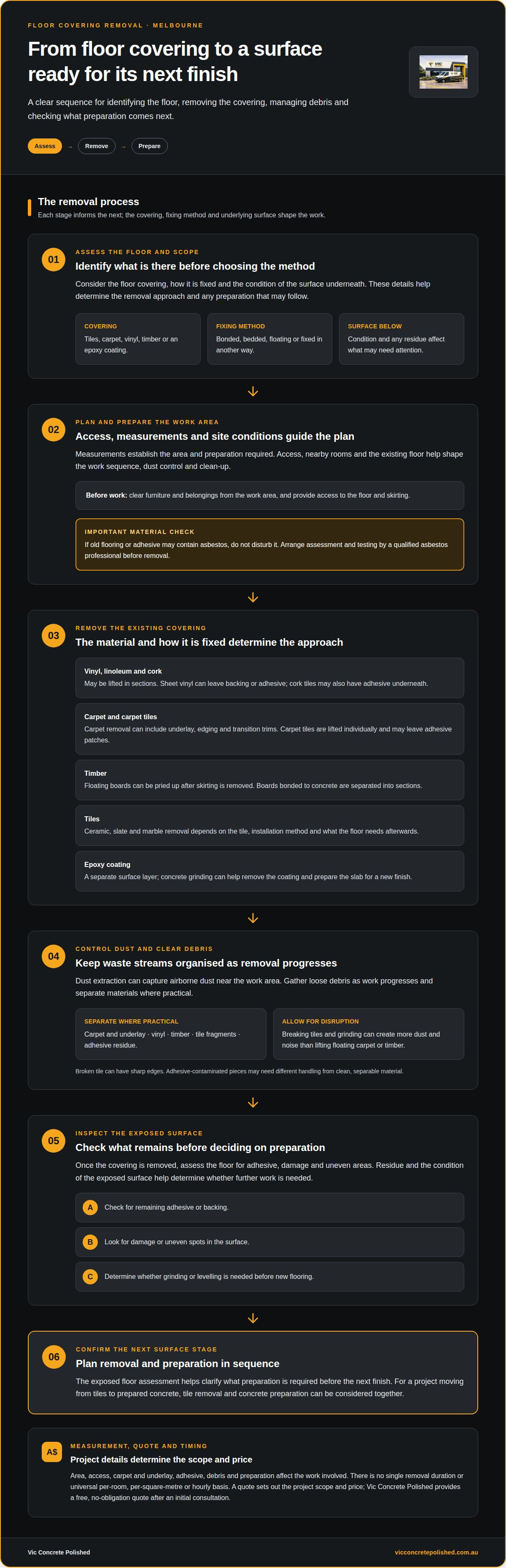
Removal methods depend on the covering, how it is fixed and the surface underneath. The work can include lifting flooring, removing trims and preparing concrete for a new finish.
Vinyl, Linoleum and Cork Removal
Vinyl, linoleum and cork may be lifted in sections, depending on how each layer is fixed. Sheet vinyl, for example, can leave backing or adhesive on concrete after the visible covering is removed. Cork tiles may also have adhesive beneath them. Identifying these layers helps determine whether further removal and surface preparation are needed.
Carpet, Tile and Underlay Removal
Carpet removal involves lifting the carpet, then removing underlay, edging and transition trims where needed. Carpet tiles are lifted individually and may leave adhesive patches that need separate attention. Timber requires a different approach: floating boards can be pried up after skirting is removed, while boards bonded to concrete are separated into sections. Tile removal also depends on the tile and installation method.
Adhesive Removal and Surface Preparation
After carpet or vinyl is lifted, adhesive may remain on the concrete. Removing residue and assessing the exposed surface shows whether grinding or levelling is needed before new flooring. If old flooring or adhesive may contain asbestos, don’t disturb it. Arrange assessment and testing by a qualified asbestos professional before removal. To prepare your home, clear furniture and belongings from the work area and provide access to the floor and skirting.
Carpet Removal Costs
How much does carpet removal cost in Melbourne? The work involved depends on the area, access, carpet and underlay, adhesive, and preparation required. Vic Concrete Polished provides a free, no-obligation quote after an initial consultation, based on the project details.
For timber flooring, the fixing method and subfloor affect removal: boards over plywood may be glued or nailed, while timber bonded to concrete is removed in sections. Epoxy coatings are a separate surface layer. Concrete grinding can help remove a coating and prepare the slab for a new finish.
Ceramic, slate, marble and other tile removal
Tile removal starts with identifying the material, how it was installed and what the floor needs afterwards. Ceramic, slate and marble can leave different surfaces and debris, so the removal method depends on the tile and the next finish.
Professional Tile Removal
Assessment begins with the tile type, fixing method and condition of the surrounding floor. Ceramic tiles, slate and marble may be bedded or bonded differently, affecting how they can be lifted and how much residue remains. A careful approach helps limit unnecessary disturbance to the underlying surface.
The work progresses across the tiled area, with tiles lifted and broken pieces cleared as removal advances. Once the covering is up, the exposed surface can be assessed for adhesive, damage or uneven areas. This helps determine whether grinding or levelling is needed before new flooring is installed.
Tile and Strip-Out Work
Tile removal may be part of a broader strip-out if several existing floor layers or finishes need to come out. The scope depends on what is being replaced and the condition of the substrate. Separating tile removal from other work areas helps organise the sequence and clarify the next preparation step.
Debris should be gathered and cleared as tiles are lifted, rather than left scattered across the work area. Broken ceramic, slate or marble can have sharp edges, so controlled handling matters during removal and cleanup. Once the area is clear, the remaining surface can be checked for adhesive and uneven spots that could affect the new finish.
For a project moving from tiles to a prepared concrete floor, tile removal and concrete preparation can be considered together, so removal and the next surface stage are planned in sequence.
Dust extraction and site clean-up
Dust and debris vary with the existing floor, the covering and the removal method. Plan for dust control, waste handling and assessment of the exposed surface as part of the renovation.
Dust Extraction and Debris Management
Removal creates different waste streams, including carpet and underlay, vinyl, tile fragments, timber and adhesive residue. Separating materials as work progresses keeps sharp tile debris apart from flexible coverings and makes cleanup more orderly. Dust extraction can capture airborne dust near the work area, while loose debris is gathered for appropriate handling.
Before work starts, the removal team can assess access, nearby rooms and the existing floor. These details help shape containment and the clean-up sequence.
Removal Dust and Site Disruption
Breaking tiles and grinding can create more dust and noise than lifting floating carpet or timber. The work plan should account for the flooring type, tools and surrounding rooms. DIY removal leaves that planning and debris handling to the property owner. Sharp tile pieces, dust and hidden adhesive are practical risks, so stop work if unfamiliar material is exposed.
There is no single removal duration: floor area, material, layers and access affect the time required. Charges also depend on the measured area, removal scope, debris and preparation, rather than one universal per-room, per-square-metre or hourly basis. A quote sets out the project scope and price.
Permit and rule requirements depend on the property, material and wider renovation scope. Consider whether the work involves only floor coverings or affects other parts of the building, and account for any material requiring controlled handling.
Flooring Waste Disposal and Recycling
Separate carpet, underlay, vinyl, timber and tile debris where practical. Disposal or recycling depends on the material’s condition and whether a Melbourne facility accepts that waste stream. Adhesive-contaminated pieces may need different handling from clean, separable material, so keep those streams distinct during site clean-up.
Floor covering removal includes lifting the agreed materials and clearing debris from the work area. Disposal arrangements depend on the agreed scope. For a renovation, plan the waste route before removal begins, then assess the cleared floor for dust or residue before the next stage.
Melbourne flooring service areas
Floor removal is available across Victoria, with Melbourne projects planned around the property, floor type and work required. A suburb name alone doesn’t explain the job: access, the area being cleared and the next flooring stage also shape the practical scope.
For a home in Melbourne, start by identifying the rooms included and the coverings to be removed. A carpeted bedroom with underlay presents a different task from a tiled kitchen or vinyl hallway. Clear measurements define the work area and help plan removal, debris handling and any required floor preparation.
Property access matters, too. The removal team needs a workable route between the rooms and the exit, especially when carrying bulky floor coverings. In an apartment, narrow corridors or shared access can affect how materials are moved. In a house, the distance from the room to the waste collection point can influence the removal sequence.
Plan around the next installation, too. If one room needs a smooth concrete surface for a new finish, its preparation may follow removal directly. If carpet and underlay are being lifted from several rooms, defining each area helps keep the project organised. An efficient scope identifies what stays, what comes out and which surfaces need assessment afterwards.
For a quote, measuring the floor and describing the covering provide a clear starting point. Include the property location, rooms involved, flooring type and access details. This information helps define the requested work and plan the removal sequence across the site.
For a Melbourne project, plan your flooring removal and preparation around the rooms, access and intended finish.
Vic Concrete Polished: Tiles, Carpet and Vinyl removal
Vic Concrete Polished removes tiles, carpet and vinyl to clear the way for the next stage of a flooring project. This service suits property owners replacing existing coverings or preparing a concrete floor for a new finish. The removal scope depends on the flooring and what the project requires afterwards.
After removal, floor preparation and measuring help establish the surface requirements for a new finish. Options include Mechanical Polished Concrete, Grind and Seal, and a Decorative Flakes Coating System. Sharing the property location, rooms involved and covering type helps describe the work and supports a quote request. Quote and measurement arrangements can be discussed when planning the project.
Contact Vic Concrete Polished to discuss your floor covering removal project.
Plan the next stage with confidence
Before setting a renovation date, decide what the cleared space needs to be ready for. The new finish, room access and household routines all affect how removal fits into the wider project. Planning the sequence early helps you move from the old floor to the next stage without treating removal as a separate task.
For floor covering removal in Melbourne, outline the rooms involved, the existing covering and the finish you’re planning. This gives the project discussion a practical starting point and helps define the work required for your space.
Vic Concrete Polished can discuss tiles, carpet and vinyl removal alongside suitable flooring options for the prepared surface. Contact Vic Concrete Polished to talk through your project and its next steps.
A clear plan makes it easier to move from removal to a floor that suits the way you use your home.
Frequently Asked Questions
Do you provide free quotes and measurements?
Vic Concrete Polished provides free, no-obligation quotes after an initial consultation. Floor measuring is available as part of its preparation services, but the free-quote policy doesn’t establish that measurements are free. For a useful quote discussion, describe the rooms involved, the existing floor covering and the finish you’re considering. This helps clarify the project scope before work is planned.
Need the old floor out?
Vic Concrete Polished removes existing tiles, carpet and vinyl. For floor covering removal in Melbourne, this can suit a renovation where these coverings need to come out before the floor is prepared for a new finish. The business also provides floor preparation and measuring, plus concrete floor grinding. Describe the covering and intended outcome to help define the project scope.
What areas of Melbourne do you service?
Vic Concrete Polished serves customers nationally across Australia. Its service coverage isn’t limited to one metropolitan area, so projects can be discussed from locations across the country. For floor covering removal in Melbourne or elsewhere in Australia, share the property’s location, rooms and work involved. This gives the team useful context for discussing the project’s practical requirements.
Will the floor removal process cause excessive dust and mess in my property?
Floor removal can create dust and debris, depending on the covering and removal work. Breaking tiles and concrete grinding may create more dust than lifting carpet. Before work begins, discuss access and nearby rooms, especially if people will remain in the property. A clear work area and an agreed cleanup scope help set expectations.
What floor covering removal services are available in Melbourne?
Available removal work includes existing tiles, carpet and vinyl. Related services include floor preparation and measuring, concrete floor grinding, Mechanical Polished Concrete, Grind and Seal, Epoxy - Resin, and the Decorative Flakes Coating System. The right next step depends on the covering being removed and the planned finish. Describe both when discussing your project, so the work can be scoped around your intended result.


