
What if the deciding factor in a concrete floor isn’t the finish in a sample, but the slab already beneath your home? Residential polished concrete can have a clean, understated look, but the amount of aggregate showing, natural colour variation and existing surface marks all influence the result.
It’s reasonable to wonder whether concrete will feel cold or hard underfoot, or become difficult to keep clean. Suitability depends on how each room is used, your comfort preferences and the condition of the existing slab. Assessing and preparing the concrete helps set realistic expectations before polishing begins.
This guide explains how polished concrete can look and feel in different parts of an Australian home, what affects its appearance and where it may suit your household. You’ll also learn what to consider when choosing a finish and how routine care helps keep the floor looking presentable. Understanding the process and the slab’s role can help you decide whether this seamless finish is right for your home.
Key Takeaways
- Learn how mechanical processing and aggregate exposure shape the finished floor, and why results vary between slabs.
- See how colour, sheen, natural light and nearby materials influence the way concrete looks in a room.
- Use room purpose, household traffic and cleaning habits to judge whether residential polished concrete fits your routine.
- Follow a practical approach to removing grit and cleaning everyday marks, using care guidance suited to the floor’s finish.
- Plan with greater confidence by considering the room, slab condition, preferred appearance and upkeep before work begins.
What is residential polished concrete, and what does it look like at home?
Residential polished concrete is a floor finish created by mechanically grinding and polishing an existing concrete surface. Instead of laying a separate material over the slab, the process refines the concrete itself to achieve a selected sheen and level of aggregate exposure. The result may look understated and smooth, or reveal more of the small stones and materials within the concrete. For a neutral introduction to the method, see What is Polished Concrete?
The finished appearance depends on the concrete, how it is processed and how much aggregate is exposed. A photograph can help you identify a look you like, but it is inspiration rather than a promise of identical colour or pattern. Each slab has its own composition and history, so the finished floor reflects those starting conditions.
How does polished concrete become a residential floor finish?
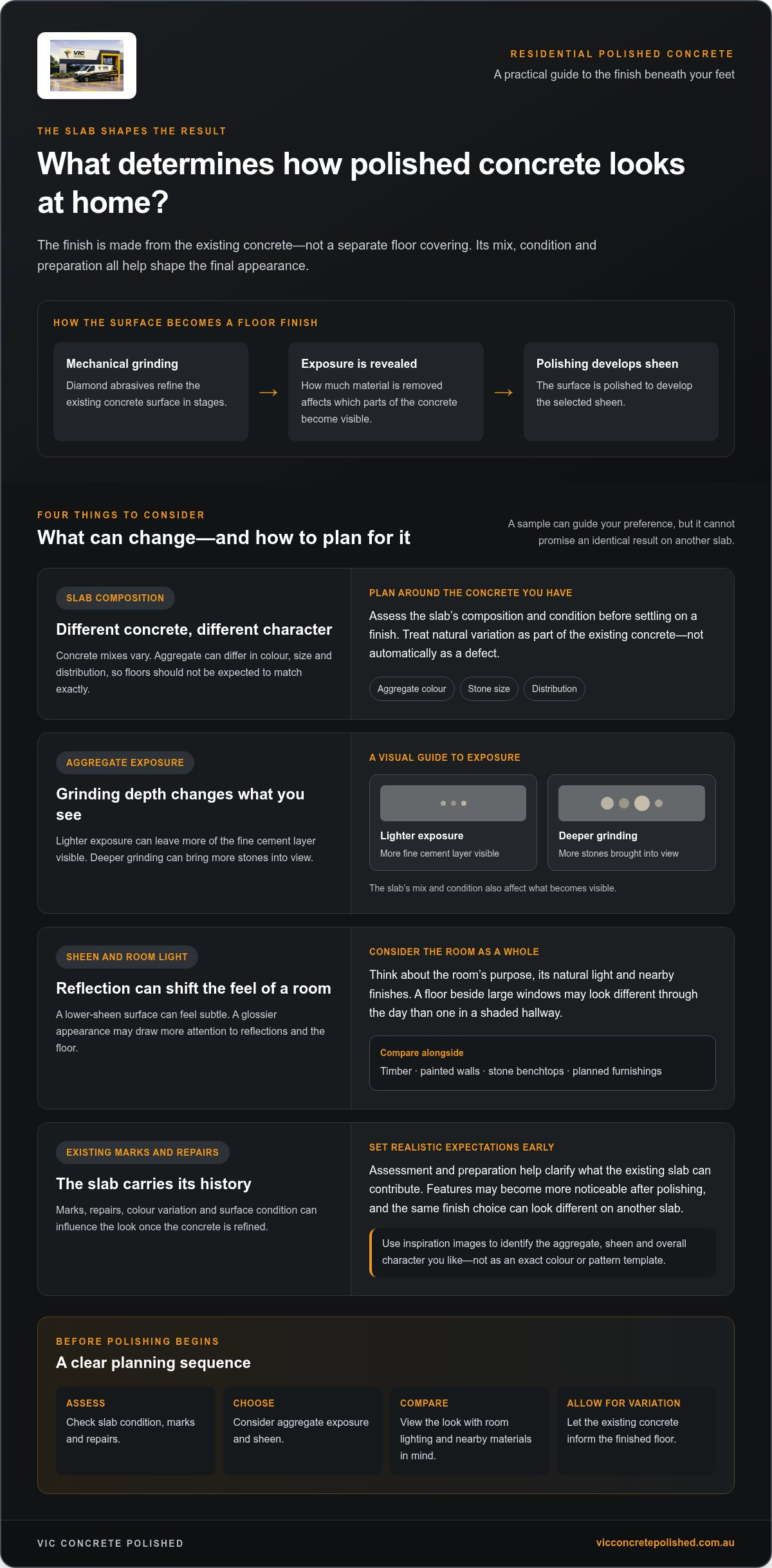
Mechanical grinding uses diamond abrasives to refine the surface in stages, while polishing develops the selected sheen. The amount of material removed affects which parts of the concrete become visible. Because the slab remains the floor’s surface, its characteristics help determine the result. The mechanical polished concrete finish guide explains the process and what to expect.
Assessment and preparation are important before polishing. Existing marks, repairs, variations and the general condition of the slab can influence how the floor looks once refined. Identifying these features early helps set practical expectations, rather than treating a sample or image as an exact template.
Why can two polished concrete floors look different?
Concrete mixes vary, so the aggregate in one slab may differ from another in colour, size and distribution. Grinding depth also affects how much aggregate is revealed. Lighter exposure can leave more of the fine cement layer visible, while deeper grinding can bring more stones into view. These choices shape the floor’s character.
Natural variation is part of working with an existing slab and isn’t automatically a defect. Differences in tone, small marks or uneven aggregate distribution may reflect the concrete itself. Consider the selected exposure alongside these characteristics. The guide to aggregate exposure in concrete floors explains how exposure changes the look.
When comparing inspiration images, look beyond colour. Notice the visible aggregate, sheen and consistency across the floor, then allow for your slab to produce a different combination. Surface assessment and preparation help clarify what the existing concrete can contribute to the finished residential floor.
How residential polished concrete shapes the look and feel of a room
A concrete floor can read as a quiet backdrop or a strong design feature, depending on its colour, sheen and visible aggregate. Those details influence how the floor works with cabinetry, furniture and wall finishes. There isn’t one appearance that suits every home, so consider the room as a whole rather than choosing a finish from a sample alone.
Aggregate exposure changes the visible character of the floor. Less exposed stone can create a more restrained, fine-grained look, while greater exposure makes the stones a more noticeable part of the pattern. The slab’s mix and condition also affect what becomes visible, so separate rooms or slabs shouldn’t be expected to match exactly.
What finish details should homeowners consider?
Sheen describes how much light the floor reflects. A lower-sheen surface can feel subtle, while a glossier appearance may draw more attention to reflections and the floor itself. Neither is automatically right for every home. Consider the room’s purpose, the amount of natural light and adjoining materials such as timber, painted walls or stone benchtops.
Light changes how colour and texture are perceived. A floor beside large windows may look different through the day than it does in a shaded hallway, while warm-toned furnishings can influence how the concrete’s colour reads. View samples in the room’s lighting and alongside the materials already planned, while allowing for natural variation in the slab.
How does the existing slab influence the final appearance?
A slab carries evidence of its composition and past use. Its aggregate, colour variation, marks, repairs and surface condition can all influence the finished look. These features may become more noticeable after the surface is refined, and the same finish choice can appear different on another slab. Natural variation is not automatically a flaw; it is part of the character of existing concrete.
Assessment helps establish realistic expectations before work begins. Vic Concrete Polished assesses and prepares concrete surfaces, taking their condition into account when planning a mechanical polished finish. For broader context on how slab floors contribute to Australian homes, see the Australian Government's guide to concrete floors, which discusses their role in home design and thermal comfort.
Before settling on a look, consider the room’s light, adjoining finishes and how much visible stone you prefer. Reviewing residential concrete polishing options can help you understand how a considered finish relates to the existing slab.
Is residential polished concrete suitable for everyday household use?
Residential polished concrete can work well in a home when its finish suits the people, rooms and routines using it. It won’t look or feel identical in every property, and no single finish is right for every household. Suitability depends on the existing surface and practical priorities, including how busy the space is, how you prefer to clean and what you expect underfoot.
What household needs can polished concrete suit?
A continuous concrete finish may appeal if you prefer an uncluttered floor and are comfortable with a regular routine for removing grit and cleaning everyday marks. Entry areas may collect sand or dirt from shoes, while kitchens can see frequent splashes and spills. Consider these routines alongside the finish rather than assuming the same care plan will suit every room.
Think about how each space is used. A living area with steady foot traffic has different demands from a bedroom, while a kitchen may need prompt attention to spills. Planned use helps guide finish decisions and care expectations. Polished concrete isn’t scratch-proof, stain-proof or maintenance-free, so realistic expectations matter as much as visual appeal.
What should you consider before choosing the finish?
Concrete is a hard surface. That may suit a household looking for a firm, continuous floor, but it can feel less forgiving than a cushioned surface if you stand for long periods or often sit and play on the floor. It may also feel cool under bare feet, depending on conditions in the home and your personal preference. These are comfort considerations, not signs that the floor is unsuitable by default.
Consider how much natural variation you’re happy to see and whether the floor’s character will sit comfortably with your interior. Reference images can help communicate a general preference, but they can’t show exactly how your slab will look. Assessing the existing surface helps align expectations with the concrete available to be finished.
For broader technical context, the Polished Concrete Council of Australia standards page offers industry-related information to inform your planning. Ultimately, the right choice balances the look you want with room use, comfort and a care routine your household can maintain.
Daily care for residential polished concrete
Regular, gentle cleaning helps keep residential polished concrete looking presentable and limits loose grit being moved across the surface. The right routine depends on the completed floor’s finish, so follow the care instructions for your specific floor rather than assuming every polished surface should be cleaned in the same way.
What is a sensible routine for cleaning polished concrete?
Start by removing loose dust, sand and other grit with a soft broom or suitable dust-removal method. Pay particular attention to entry points, where dirt tracked in on shoes can collect. Removing particles first helps avoid dragging them around while cleaning.
For ordinary household marks, damp cleaning may suit routine upkeep if it aligns with the floor’s care guidance. Use the approach and products recommended for the completed finish, and avoid experimenting with cleaners that haven’t been approved for it. If a mark needs more attention, follow the specific instructions rather than scrubbing aggressively or applying a stronger product without guidance.
In short: remove loose grit, clean everyday marks as directed, and follow the care guidance for your particular finish. Polished concrete still needs routine attention; a considered cleaning habit is part of looking after the floor.
How can homeowners protect the floor from avoidable wear?
Small habits can help limit unnecessary wear. Wipe up spills promptly as a sensible housekeeping measure, and take care when moving heavy items so they aren’t dragged across the surface. Use a suitable lifting or moving method for the item rather than relying on the floor to withstand rough handling.
Grit can act like an abrasive when repeatedly moved under shoes or objects, while unsuitable cleaning products may affect the floor’s appearance or finish. These are reasons to use gentle, finish-appropriate care, not a cause for alarm. If a spill or mark is difficult to remove, check the care instructions before trying a different cleaning method.
Care advice can vary with the way the floor has been finished and protected. Keep the product-specific guidance for your completed floor accessible and use it as the reference for cleaning and ongoing upkeep. That way, your routine is based on the actual finish rather than general advice intended for a different surface.
For guidance on mechanical polishing and floor preparation, explore Vic Concrete Polished’s concrete flooring services.
Planning residential polished concrete: from slab assessment to finished floor
Good planning starts with the room and the concrete already there. Before deciding on residential polished concrete, consider how the space will be used and what you want the finished floor to contribute. Inspiration images can help describe a preference, but the existing slab informs the colour, visible aggregate and surface character that can be achieved.
What should homeowners have in mind before work begins?
Prepare a short checklist to clarify your priorities:
- Room use: Note the expected foot traffic and the activities that take place in the space.
- Slab condition: Consider visible marks, repairs or surface changes that may influence the finished appearance.
- Desired look: Think about colour, sheen and how much aggregate you’d like to see, while allowing for the slab’s natural variation.
- Care expectations: Decide what kind of regular cleaning routine suits your household, and retain the care guidance for the completed floor.
Existing floor coverings also matter to project planning. Tiles, carpet or vinyl need to be considered when preparing the surface, along with the condition of the concrete beneath them. Vic Concrete Polished removes these coverings and provides floor preparation, then assesses the exposed concrete to inform the work ahead. This sequence grounds finish expectations in the actual surface, not a photograph alone.
What can the Vic Concrete Polished approach add?
Vic Concrete Polished focuses on floor preparation and mechanical polishing, assessing the concrete before work begins. The slab’s condition and characteristics help guide preparation and finish planning, so decisions are made with the existing surface in view. Assessment can clarify how the concrete may influence the finished appearance, but it can’t make every slab look identical or guarantee a particular colour or pattern.
That practical understanding is useful when weighing a design preference against the floor you have. Clear priorities around room use, appearance and care help shape a considered plan, while careful preparation provides the foundation for polishing.
If you’re considering this finish for your home, explore residential concrete polishing with Vic Concrete Polished.
Make a considered choice for your home
Residential polished concrete brings the existing slab into the design, so the finish is shaped by its condition as well as your choices around sheen and aggregate exposure. Before planning, consider how each room is used, how a hard surface will feel underfoot and what care routine suits your household. A reference image can guide your preferences, but the slab itself helps set realistic expectations for the finished floor.
Vic Concrete Polished specialises in residential mechanical polishing and floor preparation, with over 18 years of industry experience. Assessing and preparing the concrete helps inform a finish that works with the surface already in your home.
Explore residential concrete polishing with Vic Concrete Polished and take the next step towards a floor planned around your home and its existing concrete.
Frequently Asked Questions
Is polished concrete suitable for houses?
Yes, polished concrete can suit a house when the existing slab, room use and household preferences align with the finish. It offers a continuous concrete surface, but it’s hard underfoot and its appearance varies with the slab. Consider foot traffic, comfort and cleaning habits before deciding. An assessment of the concrete helps establish what finish may be achievable and whether it suits the way your household uses the space.
Can existing concrete be polished inside a home?
Yes, an existing indoor concrete slab can often be mechanically polished, subject to its condition and suitability for the intended finish. Assessment considers the surface and features such as marks, repairs or previous coverings, which can affect preparation and the final appearance. Vic Concrete Polished assesses and prepares concrete surfaces before mechanical polishing, helping plan the work around the slab already in the home.
Does residential polished concrete look the same in every room?
No, residential polished concrete may look different from room to room, particularly if the slabs vary in composition, condition or previous use. Light and surrounding materials can also change how the floor’s colour, sheen and aggregate appear. Even where a consistent finish is intended, an identical pattern or tone can’t be assumed. Comparing the actual surfaces during planning helps set realistic expectations for each space.
How do you clean polished concrete floors at home?
Remove loose dust and grit with a soft broom or suitable dust-removal method, then clean everyday marks according to the care instructions for your finished floor. Damp cleaning may suit routine upkeep, but follow the product-specific guidance rather than choosing an unverified cleaner. Wipe up spills promptly as a sensible housekeeping measure. If a mark persists, check the care instructions before trying a different product or cleaning method.
Is polished concrete hard to maintain?
Polished concrete can be straightforward to care for, but it isn’t maintenance-free. Regularly removing grit, cleaning household marks and following the care guidance for the specific finish are practical parts of upkeep. Take care with products that aren’t recommended for the floor, as they may affect its appearance. The suitable routine depends on the completed surface, so use its product-specific instructions rather than a one-size-fits-all schedule.
What affects the appearance of a polished concrete floor?
The existing slab is a major influence. Its colour, aggregate, surface condition, marks and repairs can all affect what becomes visible in the finished floor. Processing choices, including the amount of aggregate exposure and selected sheen, also shape its character. Natural light and nearby finishes influence how the colour and texture read in a room. Reference images show possibilities, not a guarantee of an identical result.
Can polished concrete be used in different rooms of a home?
Polished concrete may be considered for different indoor spaces, but suitability should be assessed in light of each room’s use and the condition of its floor. For example, an entry may collect grit, while a kitchen may need prompt attention to spills. Comfort preferences matter too, as concrete is a hard surface. Planning room by room helps match finish expectations and care habits to everyday household routines.


