
The polished look doesn’t come from laying a shiny coating over the concrete. With mechanical polished concrete, the existing slab is progressively ground and refined, so its condition and the material within it help shape the finished floor. The result is tied to what’s already there, not just the sheen you choose. That distinction matters when you’re comparing mechanical polishing with a grind and seal or another coating, or wondering whether your slab can deliver the appearance you have in mind.
Before work begins, it’s reasonable to want clear answers: what happens at each stage, how much aggregate may show, and what cracks, unevenness or old floor coverings could mean for the result. This guide explains the process and the factors that affect appearance, suitability and planning. You’ll learn what slab assessment and preparation involve, how grinding and polishing build the finish, and what to ask a flooring specialist. A careful assessment helps set a realistic direction before work starts, so you can plan with greater confidence.
Key Takeaways
- Mechanical polished concrete is created by grinding and progressively polishing the existing slab, rather than covering it with a decorative topcoat.
- The slab’s condition and history influence the finish, so discuss surface variations before work begins.
- Clarify how the floor will be used and the appearance you want, then check whether the slab and any existing floor coverings need preparation.
- An on-site assessment can identify damage, coatings or contamination that may affect the work and finish expectations.
- Agree on the project scope and preparation before work starts, so you understand what the flooring specialist will do and what to expect.
What is mechanical polished concrete, and what makes the finish distinctive?
Mechanical polished concrete is made by grinding the existing concrete slab and progressively refining its surface with mechanical equipment, rather than covering it with a decorative coating. The sheen and visible character come from the concrete itself. Depending on the slab and the agreed finish, the work may reveal fine sand or more of the stone aggregate within the concrete.
This makes the slab a key part of the design. Its age, previous use, repairs, cracks, uneven areas, coatings and contamination can all affect the preparation required and the appearance that can reasonably be achieved. Grinding can refine the surface, but it won’t make every slab look identical or correct underlying structural issues. A specialist should assess the concrete and discuss realistic finish expectations before work begins.
How does mechanical polishing differ from a surface-applied finish?
Mechanical polishing refines the concrete through successive grinding and polishing stages, using progressively finer abrasives to develop the chosen level of smoothness and reflectivity. Some systems also use a densifier during processing to help harden the concrete surface. For a general overview of what polished concrete involves, see Wikipedia’s explanation of the process.
A surface-applied finish works differently: a sealer or resin layer sits over the concrete and provides its own surface appearance. In mechanical polishing, the visible finish is created by processing the slab, so natural variations remain part of the result. A grind and seal also starts with grinding the existing concrete, but adds a topical sealer. If you’re comparing these options, ask what each proposed system includes and how it suits the slab and the space.
Where can mechanical polished concrete be used?
Mechanical polished concrete may suit residential and commercial interiors, but suitability depends on the slab and how the space will be used. A living area, retail space or workplace can have different priorities for appearance, foot traffic and day-to-day cleaning.
Consider the room’s purpose alongside the finish you want. A polished surface can reflect light, while the amount of aggregate showing and natural variation will depend on the concrete and processing. Share these priorities with a flooring specialist, who can assess the slab before advising whether the proposed finish is appropriate.
How is mechanical polished concrete made, from slab assessment to final polish?
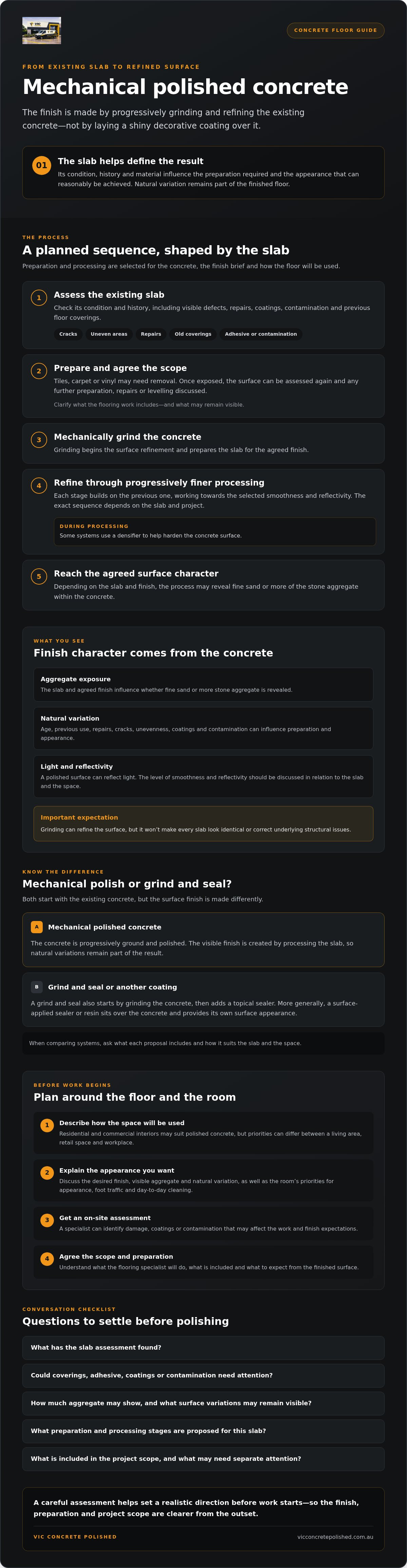
The work follows a planned sequence, but the preparation and processing depend on the slab, the finish brief and how the floor will be used. Assessment comes first. It helps the flooring specialist identify what the concrete can support and what needs attention before polishing starts. Ask for the proposed stages to be explained in relation to your floor, rather than assuming every slab follows an identical process.
What happens during concrete assessment and preparation?
The specialist checks the slab’s condition and history, including previous floor coverings, adhesive residue, existing coatings, contamination and visible defects. Tiles, carpet or vinyl may need to be removed, and the surface assessed again once it’s exposed. Cracks, uneven areas and repairs also need discussion, since polishing won’t automatically make every mark disappear or correct an underlying problem.
Based on those checks, the preparation scope can be clarified before the finish is specified. This may include identifying areas that need further preparation or assessing whether repairs or levelling are required. Ask what has been found, what can be addressed as part of the flooring work and what may remain visible in the finished surface. This gives you a clearer basis for agreeing on the expected result and the work included in the project.
What are the grinding and polishing stages?
Once the slab is ready, mechanical grinding begins the surface refinement. The specialist works across the concrete to prepare it for the chosen finish, then continues through progressively finer processing. Each stage builds on the previous one, refining the surface towards the agreed appearance. The exact sequence isn’t universal. It’s selected for the slab and project rather than assumed in advance.
Controlled grinding and polishing determine how evenly the surface is refined, which affects the clarity and character of the finished floor. Careful, consistent work matters because variations in the slab can show through. The amount of aggregate revealed also depends on the concrete and the processing decisions.
If a densifier or protective treatment is part of the proposed method, ask the specialist what will be used and why. These treatments aren’t automatically the same for every project, so have the approach confirmed rather than assuming a particular product or sequence.
In practical terms, the work moves from assessment to preparation, grinding, progressive refinement and a check of the completed surface. Before proceeding, ask the flooring specialist to explain how the proposed steps respond to your slab and finish expectations. You can also discuss mechanical polished concrete services with Vic Concrete Polished as part of planning the work.
What affects the appearance and performance of a mechanical polished concrete floor?
The finished floor reflects three things: the concrete that’s already there, the slab’s history and the requirements of the space. Mechanical polished concrete isn’t a printed or painted finish, so natural differences in the concrete may remain visible after processing. A clear project brief helps the flooring specialist recommend a suitable approach and explain what the slab is likely to show.
How can the existing slab change the finished look?
Concrete can vary across a single floor. Previous coverings may leave adhesive marks or areas with a different appearance, while repairs, surface marks and changes in the slab can affect how evenly it takes the finish. These features may still be noticeable after polishing. The amount of aggregate exposed also depends on the slab and the agreed processing approach. For a closer look at aggregate exposure levels, refer to a dedicated exposure-level guide.
Before work starts, discuss what you can see on the slab and what matters most to you, such as overall tone, visible variation or the amount of stone showing. Assessment helps set realistic expectations, but a general description can’t guarantee a particular colour, pattern or aggregate reveal. Agreeing on the intended appearance with the specialist is more useful than assuming the floor will be perfectly uniform.
What should owners understand about care and durability?
A mechanically polished floor can be durable and relatively straightforward to maintain, but it isn’t maintenance-free. How it looks over time depends partly on how the space is used. A busy entry or commercial walkway may experience different levels of traffic and wear from a quieter room. Dirt or grit tracked across the surface can also affect its appearance.
Plan cleaning around the room’s use and follow the contractor’s advice on suitable products and routine upkeep. Ask what cleaning method they recommend for the specific finish, and whether any particular care is needed for the proposed system. Regular, appropriate cleaning helps manage everyday dirt, while clear guidance helps you avoid products or methods that may not suit the floor.
- For a high-traffic area: Discuss expected foot traffic and how the floor will be cleaned.
- For a living space: Consider how natural variation and the selected finish will look under the room’s lighting.
- For any room: Ask what changes in appearance may develop with normal use and what routine care is recommended.
These practical conversations connect the look you want with the way the floor needs to perform, helping you judge whether the proposed finish suits your space.
How should you plan a mechanical polished concrete project?
A good plan starts before equipment arrives. Define how the room will be used, gather what you know about the slab, and decide which appearance details matter most. These points help the flooring specialist assess whether the concrete and proposed finish align with your needs.
An on-site assessment is especially useful if the slab’s condition is unclear or tiles, carpet or vinyl are still in place. Existing coverings and their residue can affect preparation, so discuss the work required before settling on a finish or scope.
What should you discuss during a site assessment?
Use the visit to understand how the contractor will inspect the slab, including any existing coatings, floor-covering residue, visible damage and uneven areas. Explain the room’s intended use and the level of traffic you expect. Then discuss what appearance the existing concrete may reasonably achieve, including which variations or marks could remain visible.
Ask how preparation will be handled and whether any repairs or levelling are included, excluded or require separate consideration. A written scope should make clear what work is proposed and where responsibilities sit, so there’s less room for different assumptions later.
How can you set realistic expectations before work begins?
Ask the contractor to explain how the slab’s history and condition may influence its finished appearance. Confirm the planned work sequence, what access is needed, and what you’ll need to do before work starts, including whether furniture must be removed. Check the expected timing with the contractor and ask when the floor can be used after completion, as this depends on the agreed method and project conditions.
Before booking, confirm the inclusions, exclusions, access arrangements, furniture responsibilities, timing and care instructions for the specified finish. Checklist: agree on the room’s use, slab condition, appearance expectations, preparation scope, access, timing and ongoing care before work begins.
Clear answers help you compare the proposed scope with your priorities and prepare the space without relying on assumptions. If you’re planning mechanical polished concrete, discuss your concrete floor project with Vic Concrete Polished.
What to expect from a mechanical polished concrete specialist
A dependable specialist starts by understanding the slab, not by promising a particular look from a brief description. With mechanical polished concrete, assessment connects the floor’s actual condition to a suitable preparation plan and realistic finish expectations. The specialist should explain what they find in clear terms, including where existing marks or repairs may influence the result.
Methodical preparation and open communication also make the project easier to manage. You should know what work is included, what needs to be ready before the team begins and what care the completed floor will require. If a detail is unclear, ask for it to be explained before agreeing to proceed.
What should a flooring specialist explain before starting?
Look for a clear account of how the slab will be assessed, what surface preparation is proposed and how the work will progress. The specialist should relate the finish recommendation to the concrete they’ve inspected, rather than presenting an appearance as certain before checking the floor. Confirm the project scope, practical access requirements and the care advice for the specified finish.
A useful discussion distinguishes what the preparation can address from what may remain visible. It should also clarify any work that falls outside the agreed scope, so you can make an informed decision without relying on assumptions.
How can Vic Concrete Polished help with your project?
Vic Concrete Polished provides mechanical polishing and floor preparation, including measuring and concrete grinding. Its work also includes removal of existing tiles, carpet and vinyl where floor-covering removal is required as part of project preparation. The specific process and preparation needs should be discussed in relation to your floor.
Before settling on a finish, share how the room will be used, what appearance you’re hoping to achieve and any known history of the slab or coverings. This gives the specialist useful context for discussing the project requirements and likely preparation.
If you’re ready to talk through your slab and the work involved, Discuss your concrete floor project.
Take the next step with a clear project plan
Mechanical polished concrete gets its character from the existing slab, refined through careful mechanical processing rather than hidden beneath a decorative coating. That means the finish you can achieve depends on the concrete’s condition and history, so assessment and realistic expectations are central to planning well.
Before proceeding, be clear about how the space will be used, the appearance you’re aiming for and the preparation included in the project scope. Confirm practical details such as access, timing and care advice too. These conversations help you understand the work ahead and make decisions with greater confidence.
Vic Concrete Polished provides mechanical polishing and floor preparation, including removal of existing tiles, carpet and vinyl where required for the project. To discuss your slab, intended use and project requirements, contact Vic Concrete Polished about your concrete floor project.
A considered assessment is a practical starting point for a floor that suits your space. Take the time to ask questions and plan the work carefully.
Frequently Asked Questions
What is mechanical polished concrete?
Mechanical polished concrete is a floor finish created by mechanically grinding and progressively polishing the concrete surface. The visible floor is the processed slab itself, not a decorative coating applied over it. Because the slab’s condition, previous use and existing marks influence what can be achieved, a site assessment helps clarify both the likely appearance and the preparation needed. This gives you a more realistic basis for choosing a finish.
How is mechanical polished concrete made?
The process generally starts with an assessment of the slab, followed by surface preparation, mechanical grinding and progressively finer polishing. The precise method depends on the concrete’s condition and the finish agreed for the project. There isn’t one universal grit sequence or treatment that suits every floor. Before work starts, ask the specialist to explain the proposed stages, what preparation is included and how the approach relates to your slab.
Can any concrete floor be mechanically polished?
Not every slab is suitable for the finish or appearance you have in mind. Previous coverings, adhesive residue, damage, contamination and the concrete’s general condition can affect the preparation required and the result. Assessment is needed before the scope or expected appearance can be confirmed. Polishing won’t necessarily remove every flaw or create a uniform look. Discuss the slab and intended finish with a flooring specialist before deciding to proceed.
Is mechanical polished concrete slippery?
Slip performance depends on the finished surface and the conditions in which it’s used, including footwear, moisture, contamination and foot traffic. It isn’t accurate to describe every polished concrete floor as either slip-proof or slippery. Consider how the space will be used, such as whether it’s an entryway that may get wet, and discuss relevant safety expectations with the contractor. Ask for guidance specific to the proposed finish rather than assuming all polished floors behave alike.
How do you maintain mechanical polished concrete?
Routine care is generally straightforward, but follow the contractor’s advice for the specific completed finish. Remove everyday dirt and spills using suitable cleaning methods, and check before using products that haven’t been approved for the surface. Low maintenance doesn’t mean maintenance-free: traffic, cleaning habits and ongoing wear all influence how the floor looks over time. Ask for clear care instructions before the work is complete, including what to use for regular cleaning.
How long does mechanical polished concrete take to install?
Project timing varies with the floor area, slab condition, existing floor-covering removal, preparation or repair needs, access and specified process. Without those details, a standard duration could be misleading. Ask the contractor for a schedule based on an assessment of your floor. Confirm how long preparation and polishing are expected to take, whether access will be restricted during the work, and when the floor can return to normal use.
Does mechanical polished concrete need a coating?
Mechanical polishing refines the concrete itself, while any additional treatment depends on the specified system and project requirements. A topical coating isn’t automatically required for every polished floor. Ask the specialist whether a densifier or protective product is proposed, what it does and why it’s appropriate for your slab. Having the treatment and its purpose explained helps you understand what the finished floor includes and how to care for it.