
A polished floor can look durable and still be the wrong fit for a busy commercial space. Commercial polished concrete works best when the finish is selected for the slab, the way people and equipment move through the space, and the daily cleaning routine, not appearance alone.
Before choosing a finish, consider whether the existing concrete is likely to polish evenly, how the floor will handle spills and regular use, and whether a topical seal or coating better suits the job. The slab’s condition influences the finished appearance. The space’s traffic, contaminants and maintenance needs help determine which surface is practical.
This guide explains how mechanical polishing works, what preparation involves and how to set realistic expectations before planning a project. It compares mechanical polished concrete with grind and seal and resin flooring, and outlines what to consider about traffic, slip resistance and ongoing care. Use these factors to plan a finish around the way your business uses its floors.
Key Takeaways
- Learn how slab condition and surface preparation influence the appearance and performance of commercial polished concrete.
- Follow the main stages of mechanical polishing, from assessing the concrete to refining the finished surface.
- Compare mechanical polishing, grind and seal, and resin finishes to understand which surface characteristics may suit your space.
- Use a practical planning checklist to account for traffic, spills, cleaning routines and access needs.
- See how Vic Concrete Polished’s concrete preparation and finishing options can suit different commercial floor requirements.
What commercial polished concrete offers, and what determines suitability
Mechanically polished concrete is an existing concrete slab refined through successive grinding and polishing stages. The process works the concrete itself into the finished surface, creating a continuous floor that retains the slab’s natural character. In commercial interiors, this can provide a clean, considered look and a surface that can be maintained with a regular cleaning routine.
A general overview of what polished concrete is explains the basics, but the right result depends on the floor and its intended use. Slab condition, the chosen finish, foot traffic, furniture movement, spill exposure and cleaning practices all affect suitability. A polished appearance also doesn’t mean every area will have identical colour, aggregate exposure or texture. Concrete varies from slab to slab, and that variation contributes to the finished floor’s character.
Commercial suitability depends on the condition of the slab, how the space is used and the appearance the business wants to maintain. Considering these factors together helps set realistic expectations before work is planned.
Which commercial spaces may suit polished concrete?
Retail interiors, offices, showrooms and selected shared commercial spaces may suit polished concrete when a continuous surface and visible concrete character support the design. The type and intensity of use matter. Steady pedestrian traffic differs from frequent movement of heavy furniture or equipment. Operating hours also affect planning, because access and disruption need to be managed around how the site functions.
Presentation-led areas may prioritise a consistent visual impression, while spaces exposed to demanding work conditions need closer consideration of traffic, spills and cleaning. Polished concrete isn’t automatically right for every commercial area. Assess the expected conditions before deciding on the finish.
What the existing slab can tell you
Assessment starts with the concrete already in place. Previous floor coverings, surface variation and visible damage can affect preparation and the achievable finish. Removing tiles, carpet or vinyl may reveal marks or differences that weren’t visible before. Grinding can refine the surface, but it can’t make every slab’s underlying colour or aggregate identical.
The concrete itself influences the final colour, character and amount of visible aggregate. Reviewing the slab early helps align expectations with its condition. For more detail on the stages involved, read the mechanical polished concrete process guide.
How the commercial concrete polishing process shapes the finished floor
The final surface depends on more than the last polishing stage. Slab assessment and preparation inform the work that follows, while each grinding stage progressively refines the concrete. This sequence helps match the result to the selected finish and the condition of the floor.
From slab assessment to surface preparation
The process begins by reviewing the slab’s visible condition, including uneven areas, damage and traces of previous floor coverings. If tiles, carpet or vinyl are present, their removal may form part of the preparation. Adhesive residues and other surface materials also need to be considered, as they affect how the concrete is prepared for the chosen system.
Preparation creates a suitable substrate for the specified finish. Concrete floor grinding can remove incompatible surface material and refine the concrete, but the work required depends on what’s present and the result being planned. Addressing these conditions before polishing helps make the preparation part of the finish plan, rather than an afterthought.
Grinding, refinement and finish selection
After preparation, mechanical grinding progresses through successive stages. Each stage further refines the concrete and influences how much aggregate is revealed and how smooth or reflective the surface appears. The finish is then refined to achieve the selected look. There isn’t one sequence that produces an identical result on every slab: the concrete and the chosen finish both shape what can be achieved.
Careful preparation gives the grinding stages a sound starting point, while progressive refinement develops the character of the finished surface.
For example, two areas with different concrete composition or surface history may show different colour and aggregate, even when both are polished carefully. Sheen and aggregate exposure are shaped by the slab, so they shouldn’t be treated as a promise of perfect uniformity. More detail on aggregate exposure levels in concrete floors can help explain how grinding choices affect the look.
For a commercial polished concrete project, thinking in stages, assessment, preparation, grinding and refinement, connects practical decisions with the finished appearance. Vic Concrete Polished provides concrete floor preparation and mechanical polishing as part of this process. Details of concrete preparation and finishing options describe how the work can be planned around your floor.
Commercial polished concrete compared with sealed and resin floor finishes
Start by comparing what each floor needs to handle, not just how it looks. Foot traffic, furniture or equipment movement, spills and cleaning routines can point to different systems. Mechanical polishing refines the concrete itself. Grind and seal adds a topical protective layer, while epoxy and resin create a coating over the prepared substrate.
| Finish | System and finish character | Preparation and care | Conditions to consider |
|---|---|---|---|
| Mechanical polished concrete | The concrete is progressively ground and refined, with its natural character and aggregate potentially visible. | Requires preparation suited to the slab and polishing process. Routine cleaning should match the finished surface and site conditions. | May suit presentation-led interiors where the slab’s character is part of the design. |
| Grind and seal | Concrete is ground, then protected with a topical sealer. | Preparation supports the sealer’s application. Care should account for the protective surface layer and the floor’s use. | May suit spaces seeking a ground-concrete look with a sealed finish, depending on traffic and maintenance demands. |
| Epoxy or resin | A coating system creates a continuous finished surface over prepared concrete. | Substrate preparation is essential. Cleaning and performance depend on the selected system and site conditions. | May be considered for workshops, industrial areas or other spaces with specific operational requirements. |
Mechanical polish or grind and seal?
Mechanical polishing uses multiple grinding and polishing stages to refine the concrete, rather than relying on a topical sealer to create the finish. Grind and seal also involves grinding, but a sealer is applied over the prepared concrete. This protective layer is a key difference in how the finishes are formed and cared for. Neither option is automatically right for every commercial floor.
This guide to grind and seal versus mechanical polish provides a closer comparison of the two systems.
When might a resin floor be more appropriate?
Epoxy and resin coatings create a seamless floor system and may suit selected heavy-use or chemical-exposure settings. A workshop, for example, may have different operating demands from a customer-facing showroom. Performance depends on the chosen system, the substrate and the substances or activities involved. Don’t assume chemical or slip resistance without project-specific evidence.
When comparing options for commercial polished concrete, weigh the slab, daily operations and care requirements together. This helps narrow the choices before appearance becomes the deciding factor.
Planning a commercial polished concrete floor around use, safety and maintenance
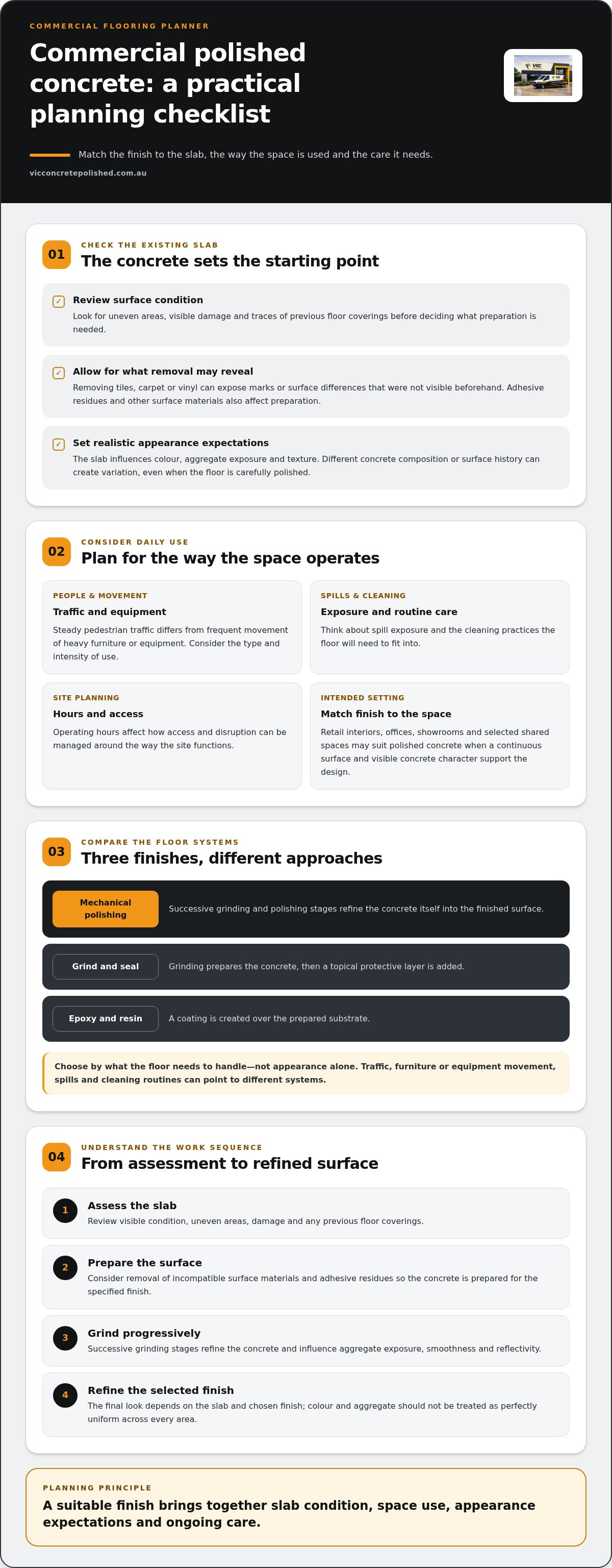
A useful floor plan starts with the working day, not just a finish sample. Map how people and equipment move through the space, where spills are likely and how the floor is cleaned. This helps determine whether commercial polished concrete suits the site’s daily demands and what to expect for appearance and upkeep.
Match floor performance to daily operations
Before settling on a finish, consider how each part of the floor is used. A public-facing entrance may have different demands from a staff work area or loading zone. Include furniture movement and access requirements in the plan, as these affect both finish selection and how the work area needs to be prepared.
- Traffic patterns: Identify pedestrian routes, busy thresholds, equipment movement and loading areas.
- Spills and contaminants: Note what may reach the floor, where it happens and how quickly it needs to be cleaned.
- Cleaning practices: Record the usual cleaning methods, products and frequency so care can suit the completed surface.
- Access: Consider how staff, customers and equipment use the area, and what access needs to be managed during floor works.
- Appearance priorities: Decide whether visible concrete character or a particular presentation matters, alongside practical operating needs.
Separating appearance goals from operational requirements makes trade-offs easier to identify. A finish chosen for a showroom’s presentation may not suit an area regularly exposed to specific contaminants or intensive activity.
Set practical expectations for upkeep and safety
Routine care usually starts with removing dust and loose debris, followed by cleaning suited to the completed surface and the site’s normal contaminants. There isn’t one cleaning routine for every floor. The right approach depends on the finish and what the space is exposed to, so plan for actual conditions rather than assuming polished concrete is maintenance-free.
Concrete can retain natural variation, and day-to-day use may make marks visible. Lighting, the slab and the selected finish all influence the appearance. A sample or reference image shouldn’t be treated as a guarantee that the whole floor will look identical.
Safety also needs to be considered in context. Traction can be affected by the finish, contaminants and maintenance, not appearance alone. Identify the conditions the floor will face, including wet or spill-prone areas, and verify the applicable slip-resistance requirements and any project-specific classification for the space before finalising the plan.
For information about planning a commercial concrete floor, see Vic Concrete Polished’s commercial concrete flooring services.
How Vic Concrete Polished approaches commercial polished concrete projects
Vic Concrete Polished brings commercial surface finishing and concrete floor preparation together in a considered project process. The work begins with the slab and its intended use, then matches preparation and finish choices to the space. This keeps the condition of the floor and the business’s requirements in view from the outset.
A considered process from preparation to finish
Each slab presents different conditions. Existing coverings, adhesive residues, surface variation and visible damage can all inform the preparation plan. Removing tiles, carpet or vinyl may be part of uncovering the concrete. Grinding then prepares the substrate for the selected finish, addressing the surface that will actually be finished.
Measuring and assessing the floor also help shape a practical plan. Mechanical polishing, grind and seal, epoxy and resin, and decorative flake coatings each involve a different finish system. Preparation and methodical work connect the condition of the substrate with the chosen surface, rather than treating finishing as a standalone step.
Choose a finish that fits the project
For commercial polished concrete, mechanical polishing progressively refines the concrete itself, making it an option where the slab’s character is part of the desired look. Grind and seal gives a ground-concrete appearance with a topical sealer. Epoxy and resin, including decorative flake coatings, provide coating-based alternatives for different presentation or operational priorities.
No single finish is right for every space. Appearance, traffic, likely spills and cleaning practices all inform the decision. A showroom may place greater emphasis on the visible surface, while a work area may need a finish plan that accounts closely for daily operations. Vic Concrete Polished’s surface finishing and preparation services help connect these priorities with the slab and intended result.
For details about the available finishes, see Vic Concrete Polished’s commercial flooring options.
Plan a commercial floor with confidence
The right commercial polished concrete finish starts with the slab and the work your space needs to support. Assessing the concrete, traffic, spills and cleaning routines helps set realistic expectations for appearance, preparation and ongoing care. Mechanical polishing, grind and seal, and resin flooring use different approaches, so base the decision on operational needs as well as the look you want.
Vic Concrete Polished brings more than 18 years of industry experience to commercial surface finishing and floor preparation. Its options include mechanical polishing, grind and seal and resin flooring, with preparation planned around the existing surface and intended finish.
To plan a commercial floor around your slab and day-to-day requirements, discuss your commercial flooring project with Vic Concrete Polished.
Frequently Asked Questions
Is commercial polished concrete durable enough for busy workplaces?
It can suit many commercial interiors, but durability depends on the slab, preparation, selected finish and conditions of use. Assess pedestrian traffic, equipment movement, spills and cleaning practices together rather than relying on the term “polished concrete” alone. A busy entry, for example, may face different demands from an office area with lighter foot traffic. Consider the actual conditions to determine whether commercial polished concrete suits the space.
Can an existing commercial concrete floor be polished?
Yes, an existing concrete floor may be suitable for mechanical polishing, depending on its condition and the finish required. Previous coatings, adhesive from removed floor coverings, uneven areas, repairs and visible damage can affect preparation and appearance. Assessment and grinding help establish a practical approach, while the slab itself influences the finished colour and aggregate character. Polishing won’t make every existing floor look identical.
How much maintenance does a commercial polished concrete floor need?
Maintenance depends on traffic, the contaminants that reach the floor and how the space is cleaned. Regular dust removal and cleaning suited to the completed surface can help manage everyday soil. Handle spills using procedures appropriate to the substances and the site. Include routine care when selecting a finish, because no flooring system is maintenance-free in every operating environment.
What happens if a commercial concrete slab is uneven or damaged?
Assess the slab before choosing a finish. Grinding can address some surface irregularities, while other conditions may call for additional preparation or a different finishing approach. The type and extent of the issue matter. Don’t assume polishing alone will correct every defect or create a perfectly uniform surface. The slab’s condition also influences the appearance that can realistically be achieved.
Is polished concrete slippery in commercial spaces?
Slip performance depends on the finish, surface contamination, footwear, cleaning and how the area is used. A floor’s appearance alone doesn’t show how it will perform in every condition. Consider whether the space is exposed to water or other contaminants, then verify the applicable slip-resistance requirements and any project-specific classification before specifying a finish.
What is the difference between mechanical polished concrete and grind and seal?
Mechanical polishing refines the concrete through multiple grinding and polishing stages. Grind and seal involves grinding the surface to the desired appearance, then applying a topical sealer. The systems differ in how the finish is created and protected, which affects appearance and care considerations. Compare both against the slab, expected use and maintenance routine rather than assuming one is best for every commercial space.
Can polished concrete suit a retail or office fit-out?
It may suit a retail or office interior when the slab, desired appearance and daily use align with the finish. Plan around pedestrian traffic, furniture movement, cleaning routines and any area-specific safety requirements. A customer-facing space and a staff work area may have different priorities, even within the same fit-out. Assessing these factors beforehand helps set realistic expectations for the finished floor and its ongoing care.


