
A glossy concrete floor isn’t automatically the best fit for your space. With concrete grinding and polishing, the result depends on the existing slab, how the room will be used and the upkeep that suits you. It’s useful to know whether your concrete can achieve the finish you want, and whether a sealed surface is the same as mechanically polished concrete.
This guide explains how preparation and grinding work, and how mechanical polishing develops a finished surface. You’ll also learn how polishing differs from grind and seal, how slab condition can affect your options and what to consider when comparing finishes for a home or business. Use the room’s purpose, existing floor and preferred appearance to plan a practical approach.
Key Takeaways
- Concrete grinding and polishing prepare and refine an existing slab, with the work sequence shaped by its condition and the intended finish.
- Mechanical polished concrete, grind and seal, epoxy resin and decorative flake coatings use different finishing approaches.
- The slab’s current condition can influence preparation needs and the final appearance.
- Plan ahead by noting existing floor coverings, room access, how the space will be used and the look you want.
- Vic Concrete Polished provides preparation and finishing services for different flooring projects across Australia.
What Does Concrete Grinding and Polishing Actually Do?
Grinding prepares or reshapes the concrete surface; polishing progressively refines it into a finished floor. The terms are related, but they don’t describe the same result. Grinding can prepare a slab for a sealer or coating, or form part of the process for mechanically polished concrete. The intended finish determines how the surface is treated and refined.
A ground floor isn’t automatically polished. A sealed or coated finish uses a protective layer over prepared concrete, while mechanical polishing develops the finish through further mechanical processing. The Polished concrete process overview also describes preparation, grinding, densifying and finishing as parts of a polished floor system.
What does concrete grinding change on a floor?
Grinding uses mechanical abrasion to remove surface irregularities and prepare the slab for its next finish. In a renovation, preparation may also include removing remnants of tiles, carpet or vinyl. The work required depends on what is beneath the coverings and the concrete’s condition once it is exposed.
Cracks, uneven areas, marks and previous surface treatments can affect the preparation required and the appearance achievable. For a sealer or coating, a preparation grind readies the concrete for the selected finish. For a polished floor, grinding is one stage in a broader refinement process, not the finished result by itself.
What is meant by polishing concrete?
Polishing is a progressive mechanical process that refines the concrete surface through successive stages of treatment. The approach varies with the slab’s condition and the appearance you want. As the surface is refined, its texture and visual character change, creating a smoother, more finished look.
Mechanical polishing develops the finish in the concrete itself. Grind and seal, by contrast, applies a sealer after grinding, so “polished” and “sealed” aren’t interchangeable descriptions. For more detail on the stages, read the mechanical polished concrete process guide.
In short, grinding is a method of surface preparation and refinement; polishing is a finishing process that builds on mechanical treatment. The slab is the starting point, and its condition helps shape both the work required and the final appearance.
How Concrete Grinding and Polishing Progress from Slab to Finish
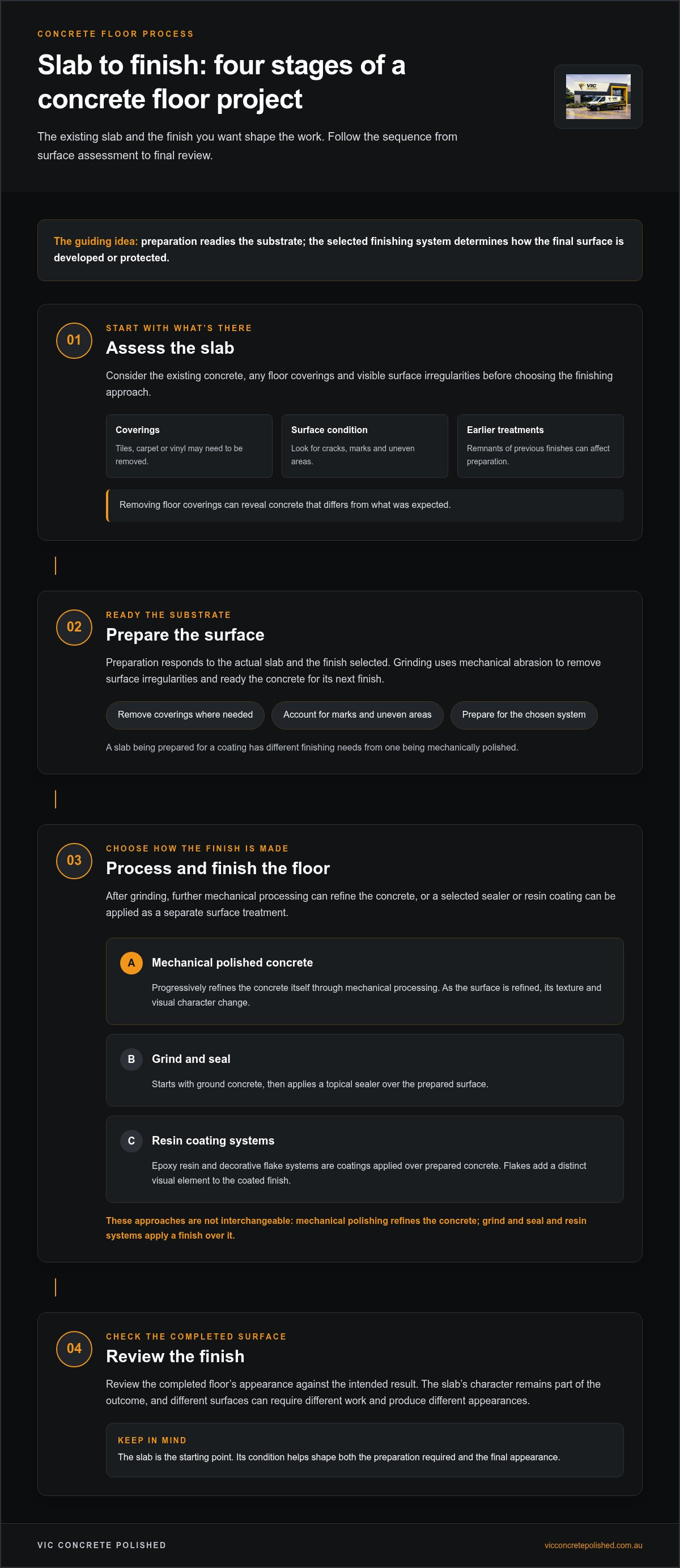
A flooring project starts with the surface that’s already there. Concrete grinding and polishing follows an adaptable sequence: assess the slab, prepare it, carry out the mechanical processing, develop or apply the selected finish, then review the completed floor. The work depends on the substrate and whether the intended result is mechanically polished concrete, grind and seal or a resin coating.
Preparation readies the substrate; the selected finishing system determines how the final surface is developed or protected. Good preparation helps create a consistent surface for the chosen finish. It also makes it possible to account for existing irregularities rather than treating every slab as identical.
Why slab assessment and preparation come first
Before work begins, consider the existing surface, any floor coverings and visible irregularities. Removing tiles, carpet or vinyl may reveal concrete that differs from what was expected. Marks, uneven areas and remnants of earlier finishes can all affect the preparation required.
This assessment helps match the finishing approach to the actual substrate. A slab being prepared for a coating has different finishing needs from one being mechanically polished. The American Society of Concrete Contractors offers industry resources on concrete construction practices. Decisions for a project still need to account for the specific floor and selected system.
How grinding and finishing stages work together
Mechanical grinding prepares or refines the surface. The amount and type of grinding depend on the slab and intended result, so the same sequence won’t suit every project. After preparation, further mechanical polishing can develop the concrete finish, or a selected sealer or resin coating can be applied as a separate surface treatment.
These approaches aren’t interchangeable. Mechanical polishing progressively refines the concrete itself, while grind and seal and resin coating systems apply a finish over prepared concrete. The completed floor is reviewed against the intended appearance, with the slab’s character remaining part of the result. Different surfaces can require different work and may produce different appearances.
- Assess: Consider the existing concrete, coverings and visible surface condition.
- Prepare: Remove coverings where needed and ready the substrate for its selected finish.
- Process and finish: Grind and refine the slab, then mechanically polish it or apply the chosen system.
- Review: Check the completed floor’s appearance and overall finish.
Vic Concrete Polished’s floor preparation and finishing services bring these steps together around the existing floor and intended finish.
How to Match Concrete Grinding and Polishing to Your Space
The right floor finish isn’t simply the one with the most shine or colour. Match it to the slab’s condition, how the space will be used, the appearance you want and the care routine you can maintain. Concrete grinding and polishing can be part of several different systems, so compare what each option leaves on the floor.
Which finish fits the floor and its intended use?
Mechanical polished concrete is progressively refined through mechanical processing, allowing the concrete itself to form the finished surface. Grind and seal also starts with ground concrete, but a topical sealer is applied over it. Epoxy resin and decorative flake systems are coatings; flakes add a distinct visual element to the coated finish.
These options describe different finishing approaches, not a universal ranking. Technical specifications can help define the expected result; the American Concrete Institute standards include guidance relevant to polished concrete. The floor’s condition and the needs of the space remain central to choosing an approach.
| Finish | Appearance | Finishing approach | Space considerations |
|---|---|---|---|
| Mechanical polished concrete | Refined concrete, with the slab’s character contributing to the look | Mechanical processing develops the finish in the concrete | Consider whether the existing slab suits the desired appearance and how the room is used |
| Grind and seal | Ground concrete beneath a sealed surface | A topical sealer is applied after grinding | Consider the preferred sealed look and the room’s practical requirements |
| Epoxy resin | A coated surface, with appearance shaped by the selected system | Resin coating is applied to prepared concrete | Consider the design requirements and intended use of the space |
| Decorative flake coating | A coated finish incorporating decorative flakes | A flake coating system is applied over prepared concrete | Consider whether a flaked appearance suits the room and its use |
Use the comparison to narrow down your priorities rather than choosing on appearance alone. A slab with visible wear may need a different preparation approach from a sounder surface, and the desired finish affects how much of the concrete remains visible. Consider the room’s use, the look you want and the cleaning routine that feels practical. These factors help you compare finishes without assuming one system suits every floor.
What to Plan Before Concrete Grinding and Polishing Begins
Sharing a few details before work starts helps shape a practical plan for the floor and surrounding space. Existing concrete can affect the preparation required and the finished appearance, so describe what’s there and what you want the room to look like and do. This gives the project a clear starting point without assuming every slab needs the same treatment.
What information helps scope the flooring work?
Note the room’s purpose and current floor covering, whether that’s tiles, carpet, vinyl or exposed concrete. Record visible cracks, uneven areas, stains or previous surface treatments. Photos and basic measurements can also help describe the area and its requirements.
- Floor covering: Identify what’s currently installed and whether it needs removal.
- Room use: Describe how the space is used and your practical priorities for the finished floor.
- Visible condition: Note cracks, uneven sections and signs of earlier treatments.
- Desired appearance: Share whether you’re considering a refined concrete look, a sealed surface or a coated finish.
- Photos and measurements: Gather what’s available to help describe the size and condition of the area.
These details don’t replace assessing the actual substrate, but they help frame the project. With concrete grinding and polishing, the slab’s condition can influence preparation and the visual character of the result. Discuss expectations in light of the floor itself.
How can you prepare the space and set finish expectations?
Clear movable items from the work area and plan access in line with the project arrangements. Discuss any disruption that may affect use of the room, then agree on the intended appearance and practical priorities before work begins. A clear understanding of the selected finish helps keep expectations grounded in the slab and the chosen system.
Aftercare guidance should match the finish installed. Mechanical polished concrete, grind and seal, epoxy resin and decorative flake coatings use different finishing approaches, so care instructions should be specific to the completed floor.
How Vic Concrete Polished Delivers a Prepared, Finished Concrete Floor
Vic Concrete Polished specialises in concrete finishing and floor preparation across Australia. Its services bring together measuring, surface preparation and a finish selected around the floor and project requirements. That matters because spaces with similar design goals can have different existing surfaces, coverings and practical needs.
How preparation supports the selected floor finish
Preparation services include measuring, concrete grinding and removing existing tiles, carpet or vinyl. These steps help establish the floor’s condition and ready the substrate for the chosen finishing system. Including preparation in the overall plan helps align the work with the intended finish.
The existing slab remains an important part of the outcome. Its condition can influence the preparation required and the floor’s final appearance, so results can vary between projects. The finishing approach is planned in response to the floor, rather than assuming every slab is identical.
Choosing a finishing service for your project
Mechanical polished concrete is refined through mechanical processing, while grind and seal uses a topical sealer over ground concrete. Epoxy and resin systems, including decorative flake coatings, create coated finishes with different visual options. The suitable category depends on the appearance you want, the existing slab and how the room will be used.
For a home, the desired look and the role of each room can guide the choice. In a commercial space, workshop or garage, consider the activities taking place and the appearance you want the floor to have. These details help connect the project with mechanical polishing, grind and seal, epoxy resin or decorative flakes, without assuming one system fits every setting.
Vic Concrete Polished provides concrete flooring preparation and finishing to suit the slab and your preferred result. Explore the concrete flooring services.
Plan a Concrete Floor That Suits Your Space
The right floor finish depends on more than appearance. The condition of the existing slab, how the room will be used and the upkeep you prefer all help shape the approach. Concrete grinding and polishing can involve preparation followed by mechanical refinement, while grind and seal, epoxy resin and decorative flake coatings offer different ways to finish prepared concrete.
Vic Concrete Polished provides concrete grinding, mechanical polishing and floor preparation, alongside finish options planned around the project and surface. Sharing details about the room, current floor and look you’re aiming for helps start a practical conversation about the work involved.
With the slab and finish considered together, you can move forward with a clearer plan. Discuss your concrete flooring project with Vic Concrete Polished.
Frequently Asked Questions
What is the difference between concrete grinding and polishing?
Grinding mechanically removes or refines the concrete surface, often to prepare it for another finish. Polishing uses progressive mechanical processing to create a more refined concrete surface. Grinding may be one stage of concrete grinding and polishing, but a ground floor isn’t automatically mechanically polished. The appropriate process depends on the slab’s condition, the appearance you want and the requirements of the space.
Can any concrete floor be ground and polished?
Not every slab suits the same finishing approach or produces the same appearance. The concrete, its condition, previous coatings and surface irregularities can all affect preparation and the result. An assessment helps establish what work the floor needs and which finish is appropriate. A reference image can help explain your preferred look, but it isn’t a promise of an identical result on a different slab.
How does concrete grinding prepare a floor for polishing?
Grinding mechanically removes or refines the upper surface and helps address irregularities before further processing. The preparation required depends on the slab and any existing surface treatments. For a polished finish, grinding is part of a broader mechanical process, not the entire finishing stage. Vic Concrete Polished can assess the floor and plan the work around its condition and intended appearance.
Is mechanically polished concrete the same as grind and seal?
No. Mechanical polished concrete is refined through progressive mechanical processing, while grind and seal involves grinding the existing concrete and applying a topical sealer. Both methods include grinding, but the finishing approach differs. The right option depends on the slab, the appearance you want, how the space will be used and the care requirements that suit you.
Does concrete grinding create dust?
Concrete grinding can create airborne dust, so suitable equipment and work practices are important. The approach to managing dust depends on the equipment, work area and project conditions. Include site access, occupancy and relevant safety considerations in your project planning. For current Australian health and safety guidance, refer to Safe Work Australia information rather than relying on generalised or outdated claims about dust controls.
How do I maintain a ground and polished concrete floor?
Care depends on the finish and how the floor is used. As a general starting point, remove loose grit regularly and use cleaning methods suited to the specific surface. A mechanically polished floor may have different care needs from concrete finished with a topical sealer or coating. Follow the aftercare guidance for your selected finish, and deal with spills or abrasive debris promptly to help preserve the floor’s appearance.
What should I prepare before a concrete grinding and polishing project?
Start by noting the room’s use, its current floor covering and the appearance you want. Record visible irregularities or previous surface treatments, and organise clear access to the work area in line with project arrangements. Photos and measurements can help describe the space during an initial discussion. Sharing these details helps Vic Concrete Polished plan preparation and finishing around the actual floor and your project requirements.


