
The finish that looks more polished isn’t always the better choice for your floor. If you’re weighing up grind and seal vs mechanical polish, compare how each system is made, the condition of your concrete and the demands of the space.
Appearance matters, but so do traffic, cleaning and the level of aggregate you want to see. Grind and seal uses a protective sealer to create its finish, while mechanical polishing refines the concrete itself. That difference affects the finished surface and the care it needs.
This guide explains how both processes work and compares their appearance, practical performance and maintenance considerations. You’ll also find questions to ask a flooring contractor, from how the space is used to what the existing slab may require. Vic Concrete Polished provides both finishes, along with floor preparation and measuring, to help you discuss your project requirements.
Key Takeaways
- Both finishes start with grinding, but the final steps differ: grind and seal adds a topical sealer, while mechanical polishing refines the concrete itself.
- When comparing grind and seal vs mechanical polish, consider how the space is used, the look you want and the care you’re prepared to provide.
- Existing coverings, slab condition and natural concrete variation can affect preparation and the finish that’s achievable.
- Decide on your preferred look and describe how the floor will be used, then ask a flooring professional to assess the concrete and technical suitability.
- Vic Concrete Polished provides both finish options, with floor preparation and measuring to inform your project assessment.
Grind and seal vs mechanical polish: what is the difference?
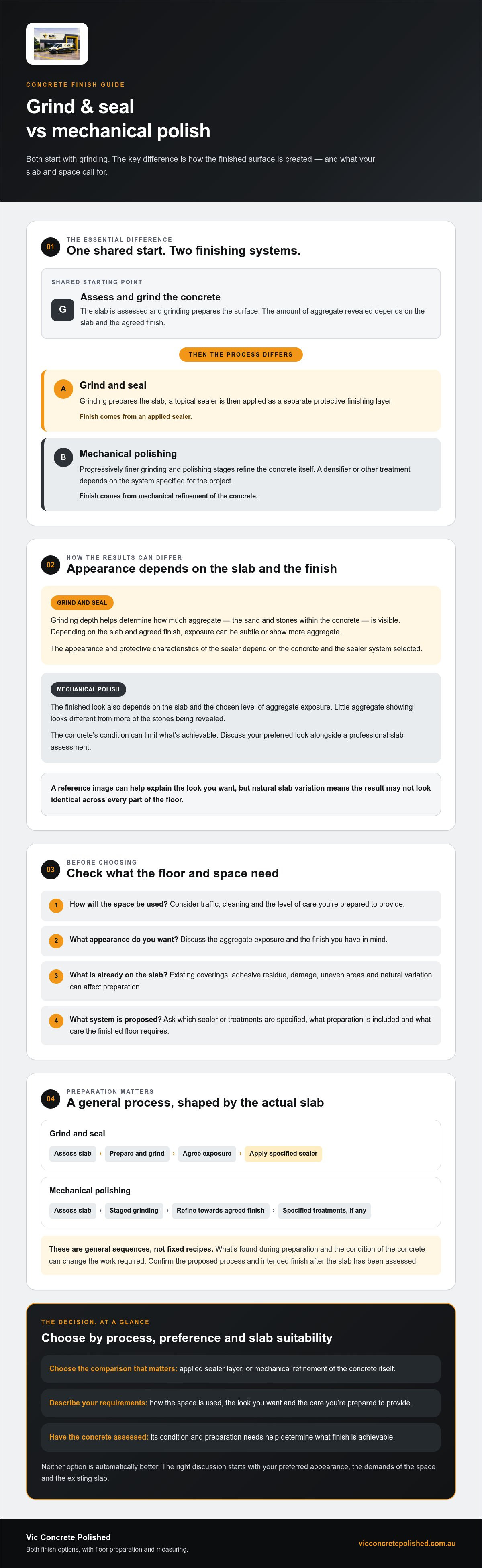
Both finishes begin with grinding the concrete, but they use different finishing systems. Grind and seal applies a topical sealer as a distinct protective layer over the prepared surface. Mechanical polishing uses progressively finer grinding and polishing stages to refine the concrete itself. Any additional treatment depends on the system specified for the project.
The main difference is how the finish is created: grind and seal relies on an applied sealer, while mechanical polishing develops the finish through mechanical refinement of the concrete. Neither is automatically the better option. The slab, intended appearance and conditions of use all need to be considered.
How does a grind and seal concrete finish work?
Grinding removes surface material and prepares the slab. The depth of grinding also helps determine how much of the aggregate, the sand and stones within the concrete, is visible. Depending on the slab and the agreed finish, the result can have subtle exposure or show more aggregate.
Once the surface is prepared, a topical sealer is applied as a separate finishing layer. Its appearance and protective characteristics depend on the concrete and the sealer system selected. Ask which system is proposed and what care it requires. Don’t assume every sealed floor will look or perform the same way.
What makes mechanical polished concrete different?
With mechanical polishing, the concrete is worked through progressively finer grinding and polishing stages. This refines the surface rather than relying on a topical sealer to create the polished appearance. The Polished concrete overview describes the use of progressively finer grits and densifiers in this process. Treatments specified for an individual project can vary.
The finished look depends partly on the slab and the chosen level of aggregate exposure. A floor with little aggregate showing will look different from one where more of the stones are revealed. The condition of the concrete can limit what’s achievable, so discuss your preferred look alongside a professional assessment of the slab.
In short, grind and seal adds a protective finishing layer, while mechanical polish works the concrete surface to achieve its finish. That distinction is the starting point for comparing grind and seal vs mechanical polish. Then consider preparation, appearance, how the space will be used and the care required.
How each concrete finish is made, and why preparation matters
The finish is only one part of the result. Before work begins, the concrete needs to be assessed so the preparation and proposed process suit the slab. Previous floor coverings, adhesive residue, surface damage, uneven areas and natural variation in the concrete can all affect the work required.
A broad comparison of the usual process is:
- Grind and seal: assess the slab, prepare and grind the surface, agree on the intended aggregate exposure, then apply the specified topical sealer.
- Mechanical polish: assess the slab, then use staged mechanical grinding and refinement to work towards the agreed finish. Any densifier or other treatment depends on the specified system.
These are general sequences, not fixed recipes. The condition of the concrete and what’s found during preparation can change the work required. Confirm the proposed process and intended finish with the contractor after the slab has been assessed.
What happens during a grind and seal installation?
After assessment, grinding prepares the concrete and helps establish the intended exposure, from a more subtle look to one with visible aggregate. The specified sealer is then applied as a separate finishing layer. The amount of grinding, further preparation and any repairs depend on the slab found on site. Confirm these details before work begins so you understand what is included and what may affect the final appearance.
What happens during mechanical polishing?
Mechanical polishing also starts with an assessment, followed by staged grinding and refinement of the concrete. The selected finish and the slab’s condition guide how the work proceeds. A densifier or protective treatment may form part of the specified system, but it shouldn’t be assumed as a universal step. Ask the contractor to explain which treatments are proposed for your floor and how they relate to the finish you want.
Aggregate exposure isn’t chosen in isolation. It depends on the concrete beneath the surface as well as the finish agreed with the contractor. Slab variation can mean the same exposure target won’t look identical across every part of a floor. Discuss what’s realistic once the concrete has been assessed, particularly if you have reference images of a specific look.
Careful preparation helps address the slab’s condition before the final finish is applied. This is why a clear assessment matters when comparing grind and seal vs mechanical polish. It helps connect your preferences with the actual surface, rather than relying on appearance alone.
Before requesting an assessment, note any previous coverings, visible damage, uneven areas and the finish you have in mind. You can also discuss your slab and project requirements with Vic Concrete Polished, which provides both grind and seal and mechanical polished concrete.
Grind and seal vs mechanical polish: compare appearance, use and upkeep
Appearance is only one part of the choice. When weighing up grind and seal vs mechanical polish, consider how the floor will be used, what finish you want and what care the specified system requires. Neither option is automatically more durable in every setting. Traffic, the installation, the concrete itself and ongoing care can all influence how a floor performs.
| Factor | Grind and seal | Mechanical polish |
|---|---|---|
| Finish method | Ground concrete with a topical sealer applied as a separate layer. | Concrete refined through mechanical grinding and polishing; treatments depend on the specified system. |
| Appearance | Varies with the slab, aggregate exposure and selected sealer. | Varies with the slab, exposure level and chosen finish. |
| Protection | The topical sealer forms a protective layer; its characteristics depend on the system selected. | The concrete surface is mechanically refined; any additional treatment should be confirmed for the project. |
| Upkeep | Follow the care instructions for the specified sealer system. | Follow the maintenance guidance for the specified polished finish. |
| Suitability | Assess against the space, expected traffic and slab condition. | Assess against the space, expected traffic and slab condition. |
Which finish suits different spaces and traffic levels?
A home, shop floor or other commercial space can face different demands. Before choosing, describe the activity the floor needs to accommodate: regular foot traffic, vehicles, moved equipment, spills or frequent cleaning. A garage or work area may see heavier use, but that alone doesn’t make either finish the right choice. The concrete and the specified system need to be assessed together before suitability can be confirmed.
It can help to separate the practical requirements from appearance preferences. For example, tell the contractor whether the floor is mainly used for parking, storage, work or customer access, then explain the finish you want. This gives them context to assess the slab and discuss the system’s protection and care requirements without assuming that one finish suits every use.
How do appearance and ongoing care compare?
Both finishes can show different amounts of aggregate, depending on the concrete and the agreed exposure. The slab influences the final look, so share reference images if you have them and ask what can reasonably be achieved on your floor. Images are useful for describing a preference, but the contractor should assess the actual concrete before setting expectations.
Care also depends on the system installed. A topical sealer and mechanically polished concrete aren’t maintained in exactly the same way, so request clear, system-specific cleaning and maintenance guidance. Ask which products and methods are suitable and whether future attention to the finish may be needed. Avoid relying on generic care advice that doesn’t identify the system used on your floor.
The right system depends on the floor’s use and the specified finish. A professional assessment can connect those practical needs with the slab’s condition. This is more useful than relying on a broad claim that one option suits every space.
How to choose between grind and seal and mechanical polish
Start with how the floor needs to work, then check whether the existing concrete can support the finish you want. Your preferences can guide the project brief, while a site assessment helps confirm preparation requirements and technical suitability. Use the steps below to make the discussion more specific.
What should you check before selecting a finish?
Prepare a short project brief before speaking with a flooring contractor. Include:
- Use and traffic: note whether the floor is in a home, garage, workplace or customer-facing space. Describe expected foot traffic, vehicles or equipment.
- Cleaning routine: explain how often the area is cleaned and what kinds of spills or dirt are likely.
- Existing floor: record any coverings that need to be removed, visible damage and known concerns about the slab.
- Appearance: collect reference images showing the colour, sheen and aggregate exposure you prefer.
These details help separate decisions you can make, such as the appearance you’re aiming for, from questions that need professional judgement. The contractor can assess how the slab should be prepared and which finish it can reasonably support.
What should you ask a flooring contractor?
Bring your brief and ask for a clear explanation of the proposed system. Useful questions include:
- Which finish do you recommend for this space, and how does the slab’s condition inform that recommendation?
- What preparation is expected, including how existing coverings, residue or visible damage will be addressed?
- What appearance should I expect from this concrete, and how might natural variation affect the result?
- What cleaning and ongoing care does the specified system require?
- What’s included in the scope, and which site conditions could change the preparation or work required?
Answers should relate to your actual floor, not just general claims about grind and seal vs mechanical polish. Before work proceeds, make sure the agreed finish, preparation and care guidance are clear. Vic Concrete Polished provides both grind and seal and mechanical polished concrete, along with floor preparation and measuring. You can Discuss your concrete flooring project and the requirements of your slab.
Plan your concrete finish project with Vic Concrete Polished
Choosing between grind and seal and mechanical polish is easier when you consider the whole project, not just the finish name. Compare how each system is made, whether it may suit the existing slab, the appearance you’re aiming for, how the area will be used and the care the specified finish requires. A general comparison can help you prepare, but the concrete itself needs to inform the recommendation.
What information helps with an initial project discussion?
Share the details that describe the floor and your priorities. A useful starting point includes:
- How the space is used, its approximate area and the traffic or activity it needs to accommodate.
- The current surface covering, such as tiles, carpet, vinyl or exposed concrete, and any known slab concerns.
- Your preferred appearance, including colour, sheen and aggregate exposure, along with practical cleaning and maintenance priorities.
Clear photos can provide helpful context, especially if they show the whole area and any visible damage. They can’t show every detail of the slab, however, and don’t replace an on-site assessment.
What should you expect from a considered recommendation?
A considered recommendation should connect your intended use and finish preferences with the slab’s condition. Expect to discuss what preparation may be needed, which finish systems are options and what appearance is realistic for the concrete. Ask for the proposed scope in clear terms, including any conditions that could change the work and the care guidance for the specified system.
That conversation is more useful than relying on a broad online comparison alone. Existing coverings, variation and other site conditions can affect what’s practical, so ask how the recommendation relates to your actual floor.
Vic Concrete Polished provides mechanical polished concrete and grind and seal, as well as concrete grinding and floor preparation. A project discussion can clarify what should be assessed and what information is needed before you settle on a finish. The final choice should reflect your slab, intended use and maintenance expectations, not a blanket promise about either system.
Talk through your concrete floor requirements.
Make your concrete finish decision with confidence
The key to choosing between grind and seal vs mechanical polish is looking beyond the finish name. Both systems begin with grinding, but use different finishing methods. Your slab’s condition, the appearance you want, how the space will be used and the care required should all guide the decision.
Preparation matters, too. Previous coverings, surface condition and natural variation in the concrete can influence what’s achievable, so a project-specific assessment is more useful than relying on a general comparison. Before proceeding, make sure you understand the proposed system, preparation scope and care guidance.
Vic Concrete Polished provides both mechanical polished concrete and grind and seal, alongside concrete grinding and floor preparation. The business serves customers nationally across Australia and can discuss your slab and project requirements without assuming one finish will suit every space.
Discuss your concrete flooring project with Vic Concrete Polished to take the next step with a clearer understanding of your options. A considered assessment can help you choose a finish based on your concrete, intended use and maintenance expectations.
Frequently Asked Questions
Can grind and seal look like mechanical polished concrete?
Yes, the two finishes can have a similarly refined concrete appearance, but they’re produced differently. Grind and seal applies a topical sealer over ground concrete, while mechanical polishing refines the concrete through staged mechanical work. The final look depends on the slab, aggregate exposure and selected finish. Ask your flooring contractor to explain the proposed system and, if available, show examples that help set realistic expectations.
Is mechanical polished concrete more durable than grind and seal?
There isn’t a reliable one-size-fits-all answer. Durability depends on the concrete, preparation, installation quality, traffic, maintenance and specified finish system. Grind and seal relies on a topical sealer, while mechanical polishing refines the concrete itself, so each system has different characteristics and care requirements. Compare those requirements with how your floor will be used, and ask for maintenance guidance specific to the proposed system before deciding.
Which is better for a garage: grind and seal or mechanical polish?
Either may be suitable for a garage, depending on the slab, how the space is used, and the finish and upkeep you prefer. Consider vehicle and foot traffic, how often you’ll clean the floor and any visible damage or existing surface issues. A flooring specialist can assess the concrete, explain preparation requirements and discuss which system may suit the space. Don’t assume a finish is right for every garage without checking the slab.
Does a grind and seal concrete floor need resealing?
A grind and seal floor has a topical sealer, but whether or when it needs reapplication depends on the specified product, floor use, traffic and care. There isn’t one schedule that applies to every installation. Ask which sealer system is proposed, what cleaning methods and products are suitable, and what signs may indicate the surface needs professional attention. Follow the care guidance provided for your particular floor.
Can existing concrete be mechanically polished?
Existing concrete may be suitable for mechanical polishing, but its condition and history affect the achievable finish. Previous coverings, adhesive residue, damage, repairs and natural slab variation can influence preparation and appearance. A site assessment helps establish whether polishing is appropriate and what aggregate exposure may be realistic. Have the concrete checked before relying on a general example as a promise of how your own floor will look.
How do I choose between grind and seal and mechanical polish?
When comparing grind and seal vs mechanical polish, start with how the floor will be used, then consider slab condition, preferred appearance and the care you’re prepared to follow. Ask a flooring specialist to assess the concrete and explain the proposed system, preparation, protection and ongoing maintenance in plain language. The most suitable option is specific to your project, so compare the actual recommendations rather than choosing by finish name alone.
