

A chipped concrete floor isn’t automatically beyond polishing. Repairing chips in polished concrete can restore a sound, even surface, while holes and cracks may also be repairable depending on their size and condition. If a repair includes a newly poured concrete slab, keep off the floor for at least 48 hours.
It’s understandable to worry that a patch will stand out or that polishing could worsen existing damage. The repair method, preparation and finish all affect the result. Colour-matching can help a repair blend with the surrounding concrete, although an exact match may be difficult on a worn floor.
This article explains how chips, holes and cracks are assessed and repaired, what affects colour matching, and when the floor can be walked on again. You’ll also learn when polishing can reduce visible damage and when a crack or deeper defect needs attention before the surface is refinished.
Key Takeaways
- Identify what caused a crack and how deep the damage runs before deciding how to prepare the floor for polishing.
- Colour and exposed aggregate both affect how closely a repair blends with the surrounding concrete.
- Plan access around the repair method: a newly poured slab needs at least 48 hours before walking on it.
- Polishing can reduce the appearance of some damage, but deeper scratches may still show after refinishing.
Can you colour-match the repair material to the polished concrete?
Yes, repair material can be colour-matched to polished concrete, although age and wear affect how closely it blends. The match depends on the concrete’s colour, exposed aggregate and the repair material selected.
Matching repair colour and aggregate
Matching involves choosing a repair colour and aggregate that resemble the surrounding concrete. Both matter because polishing can expose stones within the slab, so a colour-only match may still look different. A repair is more likely to blend when its colour and visible aggregate suit the area around the chip. The defect’s size and depth also affect how much repair material is visible.
Professional repair is particularly useful for chips in prominent areas or where the surrounding floor has a distinct colour or aggregate. The repair needs to suit the existing finish, not just fill the damaged spot. Coordinating the patch with floor preparation and polishing can help create a more consistent-looking surface.
Colour-matching polymer repairs and joint filler
Polyurethane and epoxy polymer materials can be selected and colour-matched for concrete repairs. First, the damaged area is cleaned; then, repair material is chosen to suit the substrate. Joint filler also needs to look appropriate alongside the concrete. Matching it can be challenging when the floor has stains or dyes, including colours from L. M. Scofield Co. or Prosoco Inc.
DIY repairs can leave a noticeable colour difference, especially if the patch material or joint filler doesn’t suit the existing floor. Poor preparation can also affect how well the material bonds, leaving an uneven repair that may need more work. A professional can assess the defect and select materials suited to the surrounding concrete and intended polished finish.
Colour-matching concrete patches
Colour-matching a concrete patch means choosing repair material that complements the slab’s tone and exposed aggregate. Clean the defect before applying polyurethane or epoxy, as debris can interfere with the repair. A patch may still look different if the surrounding concrete has aged, worn or changed colour. Comparing it with nearby areas helps set realistic expectations for how closely it will blend.
Coloured flakes can add colour and texture to some repairs, but they won’t necessarily reproduce the natural aggregate in polished concrete. The right approach depends on the floor’s existing appearance and the damaged area’s size. Matching the material and finish is key to a more cohesive repair.
Can A Floor Be Polished If My Concrete Slab Has Chips, Holes, or Cracks?
Yes, chipped or cracked floors can often be polished after the defects have been assessed and repaired. The repair method depends on the damage, its cause and the floor’s condition.
Repairing damage before polishing
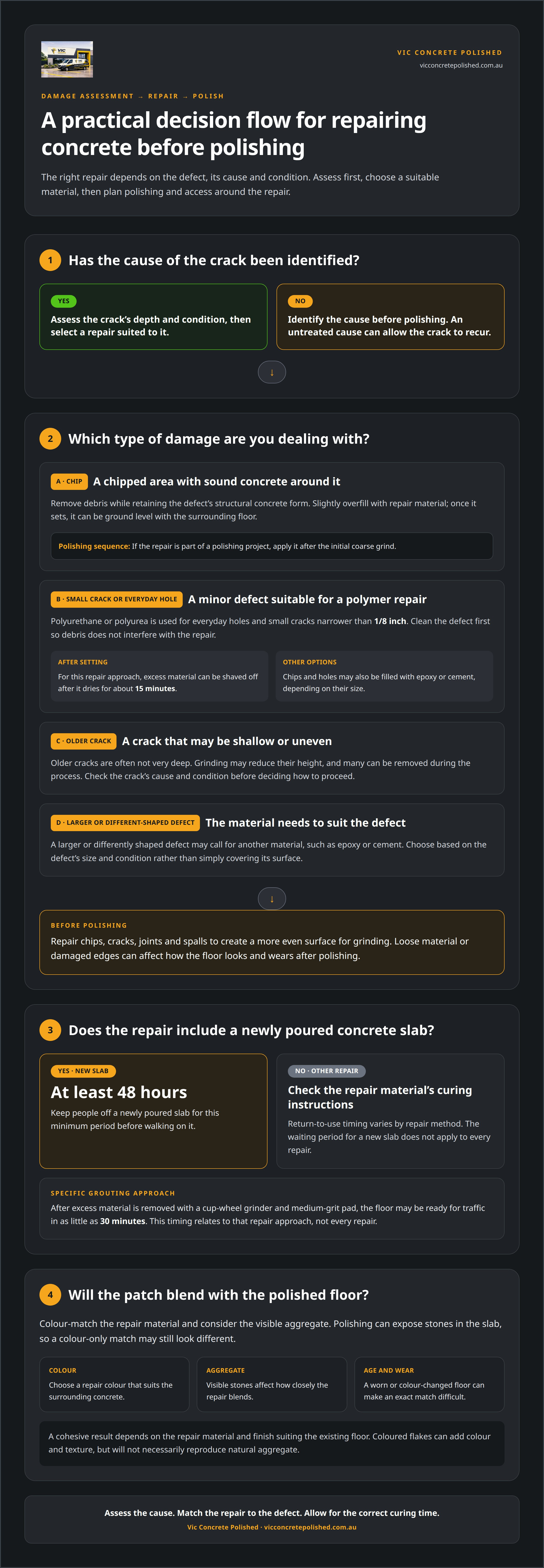
Repairing chips, cracks, joints and spalls before polishing creates a more even surface for grinding. Loose material or damaged edges can affect how the floor looks and wears after polishing. The cause of a crack should also be identified, because an untreated cause can allow it to recur.
For a chip, remove debris while retaining the defect’s structural concrete form. Slightly overfill the damaged area with repair material, ready for grinding once it sets. If repairs are part of a polishing project, apply them after the initial coarse grind. This sequence helps the repair sit level with the surrounding floor.
Repairing chips, holes and cracks
Polyurethane or polyurea polymer is used for everyday holes and small cracks narrower than 1/8 inch. Concrete chips and holes can also be filled with epoxy or cement, depending on their size. The material needs to suit the defect, rather than simply covering its surface.
After the repair material dries for about 15 minutes, excess can be shaved off. Older cracks are often not very deep; grinding may reduce their height, and many can be removed during the process. That can make polishing practical, though the crack’s cause and condition still matter.
Grouting minor holes and cracks
Grouting fills minor holes and cracks with repair material, helping create a flatter surface for polishing. For small cracks narrower than 1/8 inch, polyurethane or polyurea may be suitable. Larger or differently shaped defects may call for another material, such as epoxy or cement.
Once excess material is removed with a cup-wheel grinder and medium-grit pad, the floor may be ready for traffic in as little as 30 minutes. That timing relates to this repair approach, not every repair. Old cracked concrete can also be ground to reduce unevenness before polishing.
To help prevent chips and cracks recurring, identify the cause of each crack before polishing. Plan floor repairs before polishing so defect treatment and grinding work together.
Curing time before walking on repaired concrete
Access depends on the repair material and whether the work involves a new concrete slab. For a newly poured slab forming part of a polished concrete floor repair, keep people off it for at least 48 hours. This is the minimum waiting period before walking, not a statement that every repair has the same cure time.
A small polymer patch and a new cement slab require different repairs, so their return-to-use timing isn’t interchangeable. When pouring a replacement section or undertaking larger structural repairs, professional concreting specialists such as inspireconcrete.com.au stress the importance of allowing proper cure times to ensure lasting durability. The repair material needs time to set and bond; foot traffic too soon can disturb the surface or mark the repair. Follow the curing instructions for the material used.
Before work begins, plan how people will move around the affected area. For example, keep a hallway or work zone closed while a newly poured slab reaches its 48-hour minimum. If the repair sits across a doorway or access route, arrange an alternative path rather than stepping over the wet or curing area.
Dust and debris also matter during repairs. Prepare the damaged area before applying material, and keep nearby traffic from carrying debris onto the repair. Keeping the area clear helps protect the patch as it sets and prevents grit from being tracked across the concrete floor.
Walking access is only one part of returning a repaired floor to use. Moving furniture, wheeled equipment or heavy items places different demands on the surface than careful foot traffic. Treat the repair according to its material instructions, and don’t assume the 48-hour minimum for a new slab applies to every patch or means it is ready for heavier use.
For a polished floor, the repair and grinding sequence also affects when the area can be used. The repair needs to be firm enough for the next stage of work, and the finished surface must be clear of grinding debris before reopening. Planning access helps protect the repaired concrete and surrounding floors.
Whether damaged polished concrete can be repaired
A damaged polished concrete floor can often be repaired, but the right approach depends on the defect. A chip, crack and deep scratch affect the surface differently, so assess the damage before deciding whether to patch, grind or repolish. The aim is a sound, usable floor, with the repair made as visually consistent as practical.
Scratches need particular care. In one example, a scratch was assessed as fairly deep. Applying a clear coat may partly disguise it, but it can remain visible on closer inspection. A coating changes how the mark looks; it doesn’t remove the damaged concrete beneath it. This distinction helps set expectations before work starts.
If a scratch is too difficult to repair with a simpler treatment, a professional can refill and repolish it. Refilling addresses the damaged area, while repolishing restores the surrounding finish. Both steps matter: treating only the scratch can leave a visible difference in sheen or texture across the polished surface.
For a property owner, the practical question is whether the repair can address both the defect and the finish. A shallow mark may need a different response from a deeper scratch that catches the eye on close inspection. The extent of the damage and the surrounding polish guide the repair approach. A clear coat alone isn’t a full repair if the scratch remains visible.
Repairing chips in polished concrete is also about preserving the floor’s function, not just hiding a blemish. An assessment can distinguish local surface damage from a defect that needs more involved treatment. If the damage is deep or a previous repair remains conspicuous, arrange a polished concrete floor assessment to establish the suitable repair and refinishing approach.
Vic Concrete Polished
Vic Concrete Polished can assess a damaged floor and plan the preparation needed before polishing. Floor Preparation and Measuring and Concrete floor Grinding address the surface condition, while Mechanical Polished Concrete provides a polished finish once the floor is ready. This is a practical next step when chips, cracks or scratches need to be considered alongside the floor’s overall condition.
The right approach depends on the damage and the finish you prefer. A surface that needs a different treatment may suit Grind and Seal, a Decorative Flakes Coating System or Epoxy - Resin instead of mechanical polishing. Considering these options helps align the repair and finish plan with how the floor will be used.
For guidance on preparing and finishing a damaged concrete floor, contact Vic Concrete Polished.
Plan the next step for your floor
A repair is also an opportunity to decide how the finished floor should look and function. If you want to retain a polished appearance, consider how the repair will sit within the surrounding surface. If you’re considering a different finish, Mechanical Polished Concrete, Grind and Seal and a Decorative Flakes Coating System are options to discuss alongside the floor’s condition.
For repairing chips in polished concrete, a useful next step is an assessment that considers the damaged area and the finish together. This gives you a clearer basis for deciding how to proceed, rather than treating the chip as an isolated blemish. The most suitable approach depends on the floor and the outcome you want.
Vic Concrete Polished can help you consider the preparation and finish options for your concrete floor. Contact Vic Concrete Polished about repairs to discuss your floor and possible next steps. With a considered repair plan, you can move towards a surface that suits your space and its everyday use.
Frequently Asked Questions
Is polished concrete fixable if it is damaged?
Yes, damage to polished concrete can often be repaired, although the treatment depends on the defect. A small chip may need filling and refinishing, while a deep scratch may need refilling and repolishing. A clear coat can partly disguise a deep scratch, but it may remain visible on close inspection. The repair should address both the damaged spot and how it sits within the surrounding finish.
How do you repair chips in polished concrete floors?
A repair generally starts by removing debris and loose material from the chip, then applying a suitable filler slightly above the surface. Once the material sets, the excess is shaved or ground away so the patch sits level with the floor. If polishing is also planned, apply the repair material after the initial coarse grind, allowing later grinding to blend the repaired area.
What materials and tools are needed to repair a chip in polished concrete?
Materials may include polyurethane, polyurea, epoxy or cement, selected to suit the defect. For small cracks narrower than 1/8 inch, polyurethane or polyurea may be used. Preparation requires removing debris; a cup-wheel grinder and medium-grit pad can remove excess repair material. The specific combination depends on the chip, the repair product and whether the floor will be polished afterwards.
How do you match the colour and aggregate when patching polished concrete?
Colour matching starts with the concrete beside the repair, including its tone and visible stones. A patch can look different even when its colour seems close, because polishing may expose aggregate around the repaired area. For example, a floor with prominent dark stones needs a different visual match from plain, pale concrete. Age and wear can also affect how closely a patch blends.
Can small chips in polished concrete be repaired as a DIY job?
A small chip can seem straightforward to repair, but DIY work may leave a visible patch if the filler colour, aggregate or finish doesn’t suit the floor. Inadequate cleaning can also affect the result. Professional help is useful for chips in prominent areas, near joints or on floors being polished, because the repair needs to integrate with the surrounding surface and planned grinding.
How long does a polished concrete chip repair take to cure and polish?
Timing depends on the repair material and the work involved. A cup-wheel grinder with a medium-grit pad can remove excess material, and the floor may be ready for traffic in as little as 30 minutes using that approach. A newly poured concrete slab needs at least 48 hours before walking. These timings differ, and neither sets a universal polishing schedule for every repair.


