
A lower upfront cost does not always mean better value over time. How much does polished concrete cost? It depends mainly on the finish, the slab’s condition, and the size and layout of the area. Small or detailed spaces can have a different per-square-metre rate from larger, straightforward floors.
Compare the initial price with how the floor will be used and maintained, not just how it looks on installation day. If you’re asking how much polished concrete costs, this guide explains the main cost factors, how project size affects pricing, and whether an existing garage floor can be polished.
You’ll also see how polished concrete compares with tiles, carpet and epoxy, so you can weigh up differences in finish, upkeep and long-term use. The aim is to make the options clearer before you decide what suits your space.
Key Takeaways
- Compare finish types, slab condition and preparation needs to understand what drives the overall flooring estimate.
- Allow for project size and layout: smaller areas can cost more per square metre, while larger, simpler spaces may benefit from efficiencies.
- A garage floor can be polished when the concrete surface is suitable; access, existing damage and the chosen finish affect the work involved.
- Weigh polished concrete against tiles, carpet and epoxy by considering both the initial outlay and ongoing maintenance.
- Mechanical polishing, grind and seal, and coating systems create different finishes, so match the method to how the space will be used.
Average polished concrete floor costs in Australia
Across Australia, an average figure can hide very different project scopes. A straightforward slab and a heavily marked floor need different preparation, even if they cover the same area. Finish choice matters too: mechanical polishing and grind and seal use different processes, so their project costs are not directly comparable.
Pricing varies with the finish and site conditions. Market estimates for grind and seal, honed and mechanically polished floors differ, so a figure from one location should not be treated as a national rate. Compare the scope behind each estimate: floor area, concrete condition, access, edge work and required finish.
Existing concrete may need repairs before polishing begins. Cracks, uneven patches, old coatings and damaged edges can require separate attention because they affect the grinding process and final appearance. For example, a crack may need more work if the damage extends beyond the visible surface. The repair type and extent, not just the floor area, influence the overall cost.
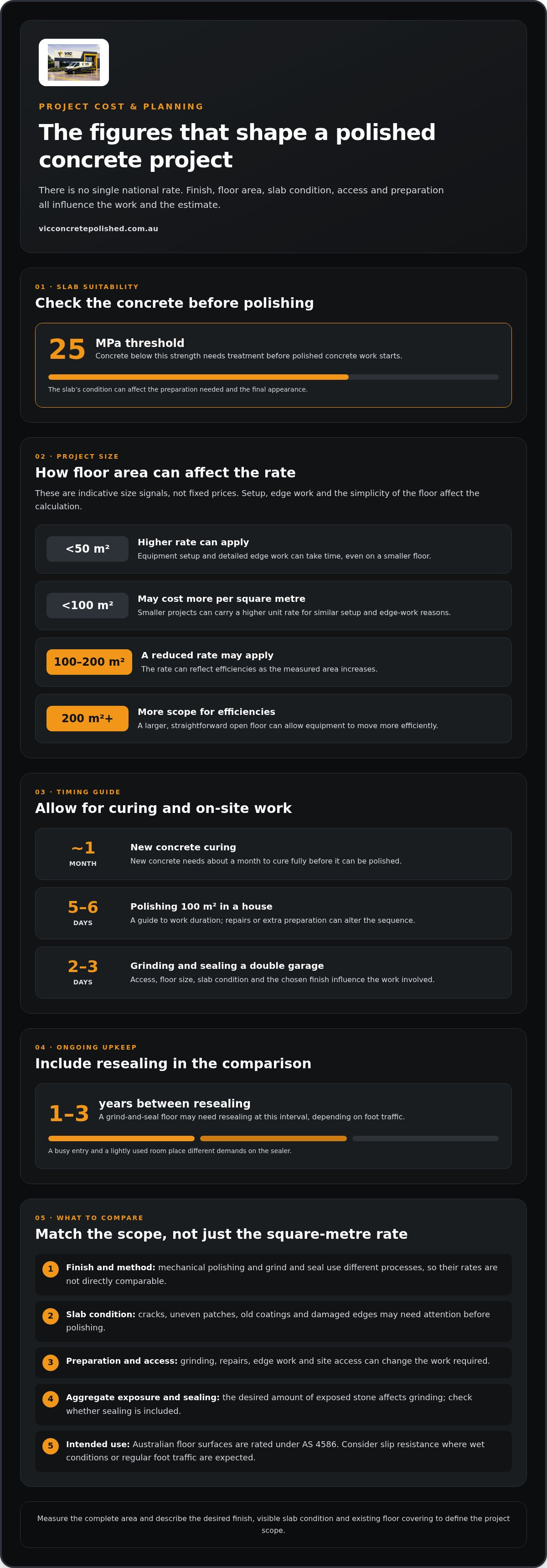
Preparation usually starts with clearing the floor and assessing its condition, followed by grinding to remove coatings or surface irregularities. Concrete surfaces below 25 MPa need treatment before polished concrete work starts. That threshold matters because a weak surface may not support the intended finish without additional work. Measuring the floor and identifying repairs early helps define the project scope.
State and territory requirements can shape specifications for a floor’s intended use, particularly slip resistance. Australian floor surfaces are rated under Australian Standard AS 4586, so finish selection should account for how the area will be used. A high-gloss appearance isn’t the only consideration where wet conditions or regular foot traffic are expected.
Timing depends on the slab and the chosen process. New concrete needs about a month to cure fully before it can be polished. As a guide to work duration, polishing 100 square metres in a house usually takes 5 to 6 days. Grinding and sealing a double garage floor usually takes 2 to 3 days. Repairs or extra preparation can alter the sequence.
Sealing protects the concrete surface. A grind-and-seal floor may need resealing every one to three years, depending on foot traffic. A busy entry and a lightly used room place different demands on the sealer. Include upkeep in your comparison, not just the initial finish, as maintenance frequency affects longer-term costs.
Your project’s price depends on the finish, floor area, slab condition, access and preparation required. Vic Concrete Polished provides a free, no-obligation quote after an initial consultation.
Polished concrete cost per square metre
A square-metre rate helps compare finishes, but it does not show every project cost. The method, slab condition and floor area all shape the project scope.
Australian cost per square metre
A per-square-metre rate divides the project’s total work across its measured floor area. It is a starting point for comparing polished concrete floors, but not a like-for-like price on its own. Mechanical polishing and grind and seal, for example, involve different processes. Their rates reflect distinct preparation, grinding and finishing requirements.
Size also affects the calculation. Areas under 50 square metres can carry a higher rate because equipment setup and edge work take time. Projects under 100 square metres may cost more per square metre for similar reasons. Areas of 100-200 square metres may receive a reduced rate, while 200 square metres or more can gain efficiencies.
Indicative square metre prices
Indicative pricing can show how finish and project scale influence costs, but it is not a fixed rate for every floor. The rate can change with aggregate exposure, the amount of grinding, slab condition and access. These details matter because floors of the same area can need very different preparation and finishes.
To compare estimates, match the scope first. Check whether each covers grinding, repairs, edge work, aggregate exposure and sealing. A 50-square-metre room with a clear slab won’t involve the same work as an equal-sized space with old coatings or damage. The finish selected also changes the method and labour involved.
Treat the per-square-metre figure as one part of the calculation. A small room can have a higher unit rate despite requiring less total work, because setup and detailed edge work are still needed. A larger, open floor may allow equipment to move more efficiently. The floor’s shape and access affect how the work is carried out.
Aggregate exposure is another key choice. Grinding reveals the stones within the concrete, and the amount exposed depends on the slab and the desired finish. More grinding can change both the appearance and the work required. Patches or previous coatings may also affect how consistently the aggregate appears.
For a useful comparison, measure the complete area and describe the desired finish. Include the slab’s visible condition and any existing floor covering in the project scope. The price depends on these factors and is provided in a quote for your case. Floor preparation and measuring can help define the surface and work involved.
Can you polish a garage floor?
A garage floor can be polished if its concrete surface is suitable. Access, slab condition, floor size and the selected finish all affect the work involved.
Access, floor size and timing
Access and floor size shape how equipment can move across internal and garage spaces. A clear double garage allows a more direct work sequence than a cluttered or restricted area. Grinding and sealing a double garage floor usually takes 2 to 3 days. Polishing 100 square metres inside a house usually takes 5 to 6 days.
The concrete’s age matters too. Allow the concrete time to cure before polishing begins. Clear the floor before work starts, including stored items and vehicles, so the whole surface is accessible. Restricted access can affect the work sequence, as equipment must be moved around obstacles.
Garage floor cost example
A practical cost comparison starts with the measured floor area, then considers the rate for the chosen finish and any required preparation. For example, measure a double garage in square metres and note visible cracks, coatings or uneven patches. This gives you a more useful comparison than using the home’s internal floor area as a proxy.
An estimate should reflect the actual scope, not just the garage’s size. A straightforward surface differs from one needing crack repairs or extra grinding. Access can also affect the work sequence. Compare like with like: include the same finish, preparation, repairs and area in each project calculation.
Lifespan and maintenance
Finish type influences how long a garage floor can serve before refinishing. Grind-and-seal concrete floors typically last 5 to 10 years, while mechanically polished concrete floors usually last more than 10 years. These lifespan estimates help you weigh initial work against the upkeep expected across the floor’s use.
Routine care matters too. Clean polished concrete with a vacuum, dust rag or slightly damp mop, and avoid harsh chemicals. A pH-neutral cleaner helps prevent acidic or abrasive products from dulling the finish. In a garage, regular cleaning also removes tracked-in grit before it builds up on the surface.
Concrete floors can often be polished, but cracks and other damage may affect the preparation required. Inspect the surface before choosing a finish, taking note of existing coatings and uneven areas. Honed concrete is another finish to consider when comparing appearance and use. The slab’s condition and how the garage is used should guide your choice.
Garage and interior floors have different demands. Vehicle access, surface wear and the need to move stored items can shape a garage project. Interior rooms may have more edges and transitions to work around. Measure each space separately, record its condition and note access limits to define a realistic project scope.
Project size and residential pricing
For residential floors, the measured area affects both the total scope and the per-square-metre rate. Setup, edge work, traffic and finish complexity help explain why two rooms of different sizes may have different rates.
Pricing for larger projects
Projects of 200 square metres or more may receive a lower rate per square metre through improved work efficiencies. More continuous floor area can make equipment setup and grinding more efficient than separate small rooms.
A straightforward warehouse floor over 1,000 square metres is a different scale from a home living area. Large open spaces can allow a consistent work sequence, while columns, corners and separate zones add detail. Compare the floor layout and finish scope, not only the total area, when reviewing quotes.
Project size and price
Project size affects the rate because setup and edge work remain necessary, even across a compact floor. Areas under 50 square metres generally attract a higher rate per square metre. Work under 100 square metres can also cost more per square metre, while areas from 50 to 100 square metres fall within the standard pricing range.
To prepare for an estimate, measure each room and combine the areas included in the same project. For example, record the living room and adjoining hallway separately before adding them together. This shows whether the floor is one continuous area or several spaces requiring separate edge work. Traffic patterns matter too: a busy entry may need different finish considerations from a low-use room.
Online calculators can provide a preliminary area estimate, but each tool has its own input limits. If a calculator cannot accept the full floor, split an irregular layout into rectangles, calculate each area, then add the results. This gives you a clearer measurement without treating the calculator’s maximum entry as a limit on the project itself.
Minimum project charges
Minimum project charges account for setup and the work involved in a small job. A compact room still requires equipment, preparation, grinding and detailed edge work, so the total does not always decrease in direct proportion to the floor area.
Existing internal areas under 50 square metres may attract a minimum charge, while a larger, straightforward floor can be priced across more area. Check that quotes describe the same rooms, finish, repairs and preparation. A quote for one open space isn’t directly comparable with one covering several small rooms.
For a useful comparison, provide the measured area, layout, concrete condition and expected traffic. Specify whether you want mechanical polishing or another finish, since each process changes the work involved. Vic Concrete Polished provides a free, no-obligation quote based on your project details.
Polished concrete compared with tiles, carpet and epoxy
Compare floors by more than their initial cost: consider lifespan, maintenance, finish and how each space is used. Polished concrete, tiles, carpet and epoxy suit different priorities, so the lowest starting figure may not be the best fit over time.
Polished concrete keeps the existing slab as the finished surface. Mechanical polishing uses diamond abrasives to refine the concrete, while grind and seal applies a protective sealer after grinding. Both avoid installing a separate floor covering, but the result depends on the slab and chosen finish. Polished concrete flooring is listed with a lifespan of 20+ years, making long-term use an important part of the comparison.
Tiles create a distinct surface, with visible grout lines between individual units. They suit spaces where a patterned or varied look is preferred, though grout lines add areas to clean. Compare the complete floor area and finish, rather than comparing the material cost of tiles with the cost of a complete polished-concrete project.
Carpet offers a softer underfoot finish than a hard concrete surface. Its listed lifespan is 5 to 15 years, shorter than the comparison table’s 20+ years for polished concrete. Carpet may suit rooms where softness and a textile finish matter most. In busy spaces, consider how routine cleaning and eventual replacement fit your plans, alongside the initial installation cost.
Epoxy creates a coated surface over concrete, while polished concrete exposes and refines the slab itself. Those different methods produce different appearances and maintenance needs. Epoxy floor coatings may need recoating every 5 to 7 years, so include future coating cycles in your long-term comparison. A mechanically polished finish avoids that coating approach, but it still benefits from suitable cleaning and care.
Let the room’s purpose guide your choice. A continuous concrete finish can create visual consistency across a large, open living area. Tiles may suit a design based on distinct patterns, while carpet offers a softer finish in selected rooms. Epoxy is another coating option for concrete, with a different surface character from diamond-polished floors.
Before deciding, compare the same area, preparation and finish across each option. Include existing floor removal where needed, because tiles, carpet or vinyl must be dealt with before a new surface can be installed. For a project-specific comparison of polished concrete and coating options, discuss your flooring options.
Vic Concrete Polished: Mechanical Polished Concrete
Vic Concrete Polished provides Mechanical Polished Concrete for property owners seeking a refined finish from their existing concrete floor. The right approach depends on the slab’s condition, desired appearance and how the space will be used. Floor preparation and concrete grinding help create a suitable surface before finishing.
For a different look, consider Grind and Seal, the Decorative Flakes Coating System or Epoxy - Resin. Comparing these finishes with the room’s intended use can help you identify the surface that best suits your priorities for appearance, upkeep and durability.
Contact Vic Concrete Polished for a free, no-obligation quote and to discuss the finish that suits your flooring project.
Plan a floor that suits your space
Before settling on a finish, consider how the floor needs to perform in everyday use. The question “how much does polished concrete cost?” can help guide your budget, while the room’s purpose helps you choose a floor you’ll be comfortable living with.
Vic Concrete Polished offers Mechanical Polished Concrete, Grind and Seal, and a Decorative Flakes Coating System. If you’re asking “how much does polished concrete cost?” for your project, the estimate depends on its scope and chosen finish.
Contact Vic Concrete Polished to discuss your flooring project. A considered choice is a sound place to begin.
Frequently Asked Questions
What is concrete polishing?
Concrete polishing grinds and refines a concrete surface to create a finished floor. Mechanical polishing uses progressively finer diamond abrasives to transform the slab itself, rather than covering it with tiles or carpet. The amount of aggregate revealed depends on the concrete and chosen finish. This makes the existing slab’s appearance part of the final design, not just a base beneath another material.
What factors affect the price of concrete per m² in 2026?
In 2026, the main cost factors are the finish, floor area, slab condition and preparation required. A mechanically polished finish involves a different process from grind and seal, so their scopes aren’t directly comparable. Repairs, existing coatings, edges and access can also change the work involved. For a useful estimate, define the area and finish first, then describe the concrete and any obstacles affecting the work.
What is the average cost per square metre for polished concrete in Australia?
There is no single rate that applies to every polished concrete floor in Australia. Estimates vary by finish and project scope, and a grind-and-seal floor is not the same specification as mechanically polished concrete. Compare estimates only after matching the finish, preparation and repairs included. This gives a more useful view of the likely project cost than relying on one average figure.
What factors affect the cost of polished concrete flooring in Australia?
Finish and slab condition are central, but floor shape and access also affect the work. A room with tight corners, thresholds or fixed obstacles needs more detailed edge work than an open space. Aggregate exposure can change the grinding required and the final look. Consider how the area will be used too, because the desired sheen and surface performance guide the finish specification.
How much does it cost to prepare or repair an existing concrete slab before polishing?
Preparation and repair costs depend on the type and extent of work the slab needs. Surface grinding may remove old coatings or high spots, while cracks or damaged sections require a separate repair approach. A small, isolated defect differs from widespread surface damage. The preparation scope should identify repairs and grinding separately, so you can understand what is included when comparing estimates.
How do polished concrete costs compare with tiles, timber, epoxy and other flooring in Australia?
Compare the complete flooring scope, not just material prices. Polished concrete finishes the existing slab, while tiles, timber and epoxy involve different installation methods and create different surfaces. Consider the preparation required, the appearance you want and the cleaning routine for each floor. Tiles have grout lines, epoxy is a coating, and timber has a distinct material and finish, so each project has a different scope.
Are there extra costs for polished concrete, such as sealing, edging, stairs or moving furniture?
Sealing, detailed edging, stairs and furniture handling can affect the project scope. Stairs and narrow edges need more careful work than broad floor areas. Furniture may need to be cleared to provide access to the slab, and sealing depends on the selected finish. Vic Concrete Polished provides a free, no-obligation quote based on your floor, preparation and included work.
What are the disadvantages, maintenance needs and risks of polished concrete flooring?
Polished concrete is a hard surface, and a high-gloss finish can be slippery when wet. A less glossy finish or an anti-slip sealer may help reduce slipperiness when the floor is wet. Clean the floor with a pH-neutral cleaner, as acidic or abrasive products can dull the finish. Concrete grinding also creates fine silica dust without effective controls, so dust management is essential during the work.


