

The tougher-looking coating isn’t automatically the better floor for your space. With epoxy vs grind and seal, the right choice depends on how the concrete will be used, the finish you prefer and the upkeep you’re comfortable with.
It’s easy to focus on colour or gloss, but the two systems work differently. Epoxy forms a resin coating over the concrete, while grind and seal refines the surface and protects it with a sealer. Those differences affect installation, appearance, maintenance and how each finish responds to daily wear.
This guide compares both options so you can match the finish to your home or work area. You’ll learn what’s involved in preparing and installing each system, how their looks and practical strengths differ, and what to consider when planning your floor. Vic Concrete Polished provides both finishes, with concrete preparation tailored to the slab and the selected system.
Key Takeaways
- Epoxy creates a resin coating over concrete, while grind and seal protects the ground surface with a topical sealer.
- Both finishes rely on suitable concrete preparation, so the slab’s condition is an important part of planning.
- Use the epoxy vs grind and seal comparison to weigh the look you want against your space’s everyday demands and upkeep needs.
- Stain, abrasion, chemical and impact resistance can vary with the system and how the floor is used.
- Before planning a finish, note how the space is used, the concrete’s condition, your preferred appearance and your maintenance expectations.
Epoxy vs grind and seal: what is the difference between the finishes?
Both systems start with prepared concrete, but their finished surfaces differ. Grind and seal exposes and refines the concrete, then protects it with a topical sealer. Epoxy is a resin-based coating applied over the prepared slab, creating a distinct layer above the concrete.
| Feature | Grind and seal | Epoxy |
|---|---|---|
| Surface layer | Ground concrete covered by a topical sealer | Resin coating over prepared concrete |
| Appearance | Natural concrete character, shaped by the slab, grinding and sealer | A more visibly coated finish, with colour or decorative flakes where specified |
| Upkeep | Care depends on the sealer and wear; the sealer may need renewal over time | Care depends on the coating system and how the floor is used |
| Typical application | Spaces where a visible concrete finish is preferred | Spaces where a continuous resin-coated surface is desired |
How a grind-and-seal finish is formed
Mechanical grinding removes surface material to refine the slab. Depending on the concrete and grinding approach, it can reveal different levels of aggregate, from subtle exposure to a more visible stone pattern. A topical sealer is then applied over the prepared surface for protection. The sealer alone doesn’t determine the finished look: the slab’s colour and condition, the grinding and the selected sealer all contribute. For more detail, see our grind and seal concrete floor guide. Polished concrete also provides background on mechanical grinding and how concrete finishes are developed.
How an epoxy floor coating is formed
Epoxy is applied after the concrete has been suitably prepared, forming a separate resin coating over the substrate rather than leaving the ground concrete as the main visible surface. The coating can create a more uniform, continuous appearance. Decorative flakes can be incorporated into a flake system. The result depends on the coating system and the slab beneath it, so preparation remains central to the finished floor.
In practical terms, epoxy vs grind and seal is a choice between a coated resin finish and ground concrete protected by sealer. Vic Concrete Polished provides both systems, with the finish selected to suit the slab and the space.
How installation and concrete preparation differ for epoxy and grind and seal
Both finishes rely on suitable concrete preparation, but grinding has a different purpose in each process. For grind and seal, it helps establish the concrete’s final visible character. For epoxy, preparation creates a suitable substrate for the coating. Existing floor coverings and adhesive can affect the work involved.
- Assess the floor. The concrete’s condition, previous coverings, adhesive residue and project requirements inform the preparation plan. Cracks, uneven areas or surface contamination may also affect how the slab is prepared.
- Prepare the substrate. Existing tiles, carpet or vinyl may need to be removed. Grinding and cleaning are tailored to the concrete and selected finish, rather than treated as one-size-fits-all steps.
- Apply the finish. Grind and seal uses grinding to create the intended concrete appearance before a topical sealer is applied. Epoxy follows a different finishing process, with resin coating applied to appropriately prepared concrete.
- Complete final checks. The finished surface is reviewed for consistency and coverage. The time before the floor can be used depends on the coating or sealer system and site conditions, so don’t assume a fixed curing period.
Preparation stages shared by both flooring systems
Assessment comes first. Vinyl may leave adhesive residue to address, while tiles or carpet need to be removed before the concrete can be examined and prepared. Once the substrate is accessible, grinding refines the surface and cleaning removes preparation residue. The amount of work and the preparation method depend on the slab’s condition and the selected finish.
This groundwork matters because the finish is applied to the concrete itself. Preparation needs to suit the substrate, whether the aim is to show the concrete or apply a coating. Vic Concrete Polished provides floor-covering removal, concrete grinding and floor preparation as part of its finishing work.
Where the application process diverges
With grind and seal, grinding both prepares the concrete and shapes its appearance. The chosen level of exposure is established before the topical sealer protects the surface. For epoxy, preparation creates a suitable base for the resin coating, which then covers the concrete as a distinct finish layer.
The epoxy vs grind and seal process therefore differs most in what grinding is intended to achieve and what goes on the slab afterwards. The selected system and conditions on site influence application and readiness. To plan preparation around your floor, explore concrete floor preparation with Vic Concrete Polished.
Epoxy vs grind and seal: compare appearance, upkeep and everyday performance
The visible difference is clear: grind and seal keeps the concrete’s character on show, while epoxy gives the floor a coating-led finish. Neither is automatically the better choice. The right fit depends on the slab, how the space is used and the maintenance expected of the finished surface.
Appearance and finish: visible concrete or a coating
With grind and seal, the concrete remains visible beneath a protective topical sealer. The slab’s colour, markings and aggregate exposure influence the result, so finishes can vary from one floor to another. Epoxy covers the substrate with a distinct resin layer, creating a more uniform appearance. Decorative flakes can be included in a flake coating system.
Grind and seal is also different from mechanical polished concrete, which is a separate finish, not a grind-and-seal surface protected by topical sealer.
Maintenance and performance in everyday use
Both finishes need regular cleaning to remove dust and grit, which can contribute to surface wear. Deal with spills in line with the care guidance for the installed system. The sealer or coating may also need attention over time, depending on its condition and how the floor is used.
Stain, abrasion, chemical and impact performance can’t be judged by the finish name alone. It depends on the selected system, preparation, installation and conditions such as foot traffic, equipment and substances that reach the floor. A busy work area and a lightly used room place different demands on a surface.
| Consideration | Grind and seal | Epoxy |
|---|---|---|
| Appearance | Visible concrete character, shaped by the slab and grinding | Coating-led finish; flakes may be incorporated where specified |
| Routine cleaning | Remove grit and clean in line with sealer care guidance | Remove grit and clean in line with coating care guidance |
| Ongoing upkeep | Sealer condition may require attention over time | Coating condition may require maintenance over time |
| Everyday performance | Varies with sealer, preparation and use | Varies with coating system, preparation and use |
For the epoxy vs grind and seal decision, first consider whether you want the slab to remain part of the visual finish or prefer a resin coating over it. Then weigh that preference against the floor’s daily demands and the care guidance for the system selected.
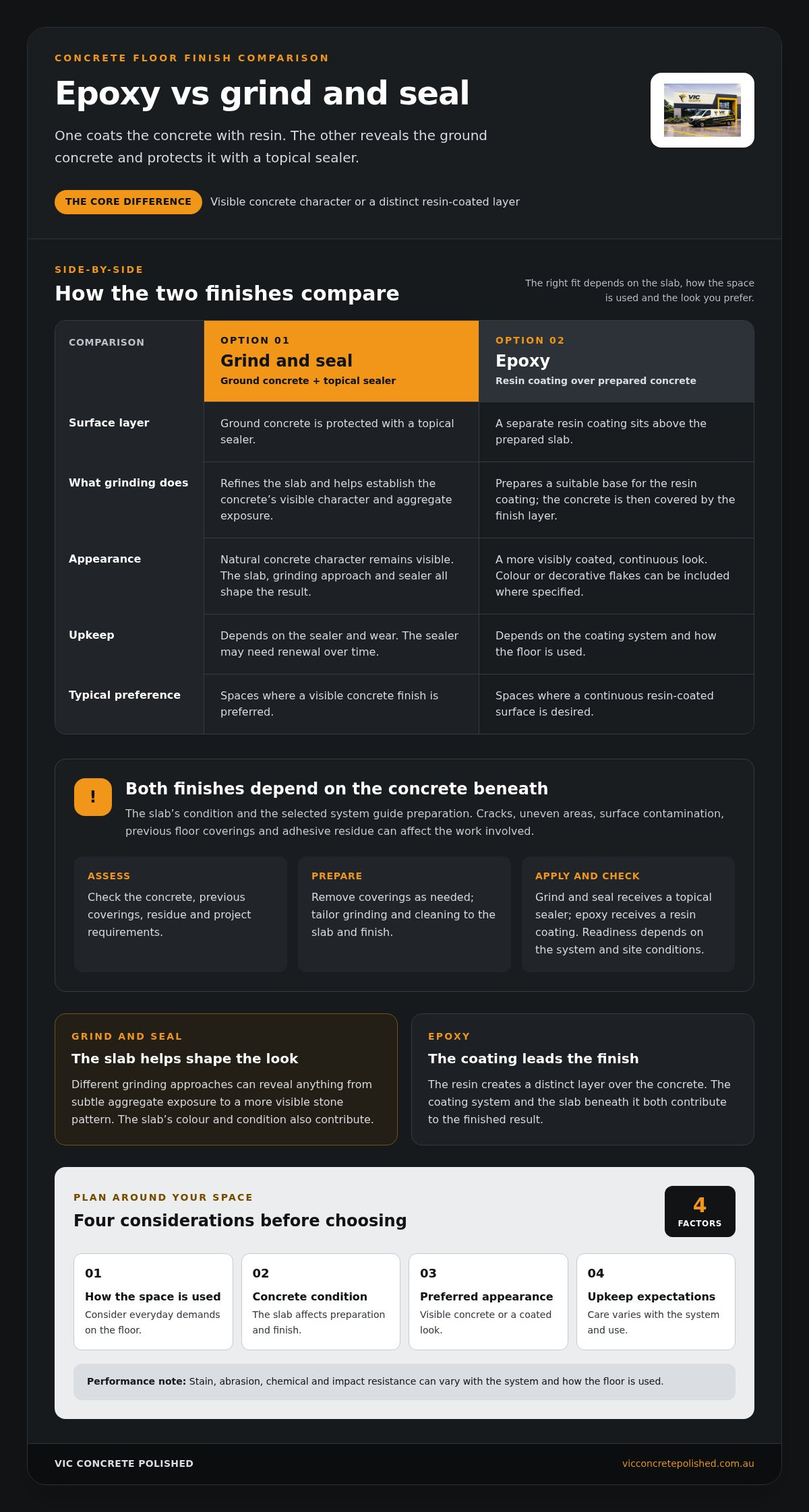
Which finish suits your space: a practical epoxy or grind-and-seal decision guide
There’s no single winner in the epoxy vs grind and seal decision. Start with four practical questions: how will you use the floor, what condition is the concrete in, what appearance do you want, and what ongoing care suits you? The answers help narrow the options before you choose a finish.
- How will the space be used? Consider foot traffic, vehicles, equipment and the types of spills the floor may face.
- What is the slab like? Existing marks, repairs, surface irregularities and previous coverings can affect preparation and the finished appearance.
- What look do you prefer? Decide whether visible concrete character or a coating-led finish better suits the space.
- What upkeep feels manageable? Both finishes need care, but the sealer or coating system determines the relevant maintenance guidance.
It’s also worth setting aside two common assumptions. Epoxy isn’t automatically tougher in every situation, and grind and seal isn’t automatically the less expensive option. Performance depends on the selected system, preparation and actual use. Project requirements and the slab’s condition also influence the work involved, so the finish name alone can’t settle either question.
When grind and seal may be the better fit
Choose grind and seal if you want the concrete itself to remain visible beneath a protective topical sealer. The slab’s existing colour, markings and aggregate affect the final look, so the result reflects the concrete as well as the grinding and sealer. This can suit a space where natural concrete character is part of the intended finish. Plan for care appropriate to the selected sealer and the floor’s traffic, including attention to its condition over time.
When epoxy may be the better fit
Epoxy may suit a garage, workshop or high-traffic commercial space if you prefer a continuous resin-coated surface. A coating-led appearance can offer a more uniform look, and decorative flakes can be included in a flake system. Suitability still depends on proper substrate preparation and the demands placed on the floor. Consider the traffic, equipment and substances likely to reach the surface, then match the coating system and its care guidance to those conditions.
Vic Concrete Polished specialises in both grind and seal and epoxy resin flooring, with concrete preparation forming an important part of the finish. Explore concrete floor finish options to consider which system may suit your space.
Plan your concrete floor finish with Vic Concrete Polished
The right choice in the epoxy vs grind and seal comparison comes down to more than appearance. Consider the flooring system, the concrete’s condition, how the space is used and the upkeep you expect. A clear picture of these factors helps guide you towards a finish suited to the floor and its day-to-day demands.
What to note before planning the floor
Before discussing the project, make a few notes about the space and what you want from the finished surface:
- Purpose and traffic: Is the area a garage, workshop, living space or commercial floor? Note the expected foot traffic, vehicles or equipment.
- Spills and exposure: Record any regular exposure to spills or chemicals, as these can influence system requirements and care expectations.
- Existing floor: Note whether the concrete is covered by tiles, carpet or vinyl, and describe any visible damage or surface issues.
- Desired appearance: Decide whether you’d prefer visible concrete character beneath a sealer or a distinct resin coating, with decorative flakes if appropriate.
- Maintenance expectations: Consider the routine care you’re comfortable with and whether you understand that the selected system may need attention over time.
These details help focus planning on the actual slab and how it will be used, rather than relying on broad assumptions about which finish is tougher or easier to maintain.
How Vic Concrete Polished can help with the finish
Vic Concrete Polished provides grind-and-seal and epoxy resin flooring, along with concrete floor preparation. The work takes account of the existing surface and project requirements. Floor preparation, measuring and grinding help establish a suitable foundation for the chosen finish, whether the goal is to retain the concrete’s visible character or apply a coating over it.
Bringing notes about use, floor condition, appearance and upkeep expectations helps focus the planning on what matters for your space. Consider the finish as a complete system, from preparing the concrete through to the protective surface layer.
Ready to explore the options for your floor? Explore Vic Concrete Polished’s flooring services and take the next step towards a finish suited to your space.
Choose a finish that works for your space
The epoxy vs grind and seal choice comes down to the finish you want, the condition of your concrete and how the floor will be used. Grind and seal keeps the concrete visible beneath a topical sealer, while epoxy creates a resin-coated surface. In either case, suitable preparation helps establish the foundation for the finished floor.
Think about traffic, spills, appearance and the ongoing care you’re comfortable with. These practical details help guide a system that fits your space, rather than relying on assumptions that one finish is always tougher or easier to maintain.
Vic Concrete Polished provides both grind-and-seal and epoxy flooring, with concrete grinding and floor preparation as part of its surface-finishing work. Explore concrete floor finishes from Vic Concrete Polished and take a considered next step towards a floor that suits how you use your space.
Frequently Asked Questions
What is the main difference between epoxy and grind and seal?
The main difference is the surface layer. Grind and seal involves mechanically grinding the concrete to refine its appearance, then applying a topical sealer for protection. Epoxy is a resin-based coating applied over prepared concrete, so it forms a distinct finish layer. The first keeps the slab visible; the second gives the floor a coating-led appearance. The final result for either system depends on the concrete, preparation and selected finish.
Is epoxy more durable than grind and seal?
Not in every situation. Epoxy forms a resin coating designed for durability and chemical resistance, while grind and seal protects the ground concrete with a topical sealer. Performance depends on the chosen system, preparation, installation and conditions such as traffic, equipment and spills. Damage and wear can also affect each finish differently. Compare the demands of your space and the care guidance for the specific system rather than relying on the finish name alone.
Can grind and seal be applied to an existing concrete floor?
Yes, grind and seal can be used on existing concrete if the slab is suitable for the finish and can be properly prepared. Grinding refines the surface and may expose aggregate, while the slab’s existing colour, marks and condition influence the finished look. Previous coverings, adhesive residue or surface damage can affect the preparation required. Assessing the accessible concrete helps determine how it can be finished and what appearance to expect.
Which is better for a garage floor, epoxy or grind and seal?
Either may suit a garage, depending on how you use it and the finish you prefer. Epoxy may appeal if you want a resin-coated surface, potentially with decorative flakes in a flake system. Grind and seal may suit you if you’d rather retain visible concrete character beneath a topical sealer. Consider vehicle and foot traffic, likely spills, slab condition and maintenance expectations. Neither option is automatically the best choice for every garage.
Does epoxy flooring need concrete grinding first?
Epoxy needs suitable preparation of the concrete before the coating is applied, and mechanical grinding is commonly part of that preparation. The aim is to prepare the substrate for the selected coating system, rather than create the visible aggregate appearance associated with grind and seal. The preparation required depends on the concrete’s condition, existing coverings or residue, and project requirements. Careful assessment and preparation help establish an appropriate base for the coating.
Is grind and seal slippery when wet?
It can’t be answered reliably from the term “grind and seal” alone. Slip underfoot may depend on the concrete finish, the selected sealer, surface texture, water and contaminants. A smoother-looking finish shouldn’t be assumed to have the same traction as a more textured one. If the floor may get wet, consider how the space is used and follow the care guidance for the installed system. The specific finish and site conditions matter.
How do I choose between epoxy and grind and seal?
Choose by weighing the space’s use, the slab’s condition, the appearance you want and the upkeep you expect. If you want the concrete to remain visible, grind and seal may suit; if you prefer a resin-coated finish, epoxy may be worth considering. In the epoxy vs grind and seal decision, avoid assuming one is always tougher or less costly. Vic Concrete Polished provides both systems, alongside concrete grinding and floor preparation.


