

Grinding isn’t the right fix for every uneven concrete floor. Choosing between uneven concrete floor repair options starts with identifying high spots, low areas, cracks or broken sections. High spots may need grinding, while depressions and damaged concrete generally need filling or rebuilding. The condition of the surface matters as much as how uneven it looks.
A smooth, durable finish depends on addressing problems that could affect the result, not simply covering them up. This guide explains how to assess common causes and signs of uneven concrete, prepare damaged areas, and choose an approach suited to the slab. It also clarifies why grinding, levelling compounds, repair mortars and crack repairs serve different purposes, and how careful preparation creates a sound base for a coating or polished finish.
Key Takeaways
- Identify whether the slab has high spots, depressions, cracks or broken sections before selecting a repair method.
- Match the treatment to the damage: grinding can reduce high areas, while low or deteriorated sections need suitable repair materials.
- Proper grinding, dust extraction and cleaning help prepare the concrete for repairs and a consistent coating finish.
- Careful substrate preparation supports durable flooring results, whether the chosen finish is polished concrete, grind and seal, decorative flakes or epoxy resin.
So, What’s the Best Concrete Repair Option?
Choose a repair after assessing the slab: high spots may need grinding, while low or damaged sections need filling or rebuilding. Whether Australian building codes or standards apply depends on the building and scope of work. Levelling alone does not establish compliance.
-
Have a professional inspect the uneven concrete slab
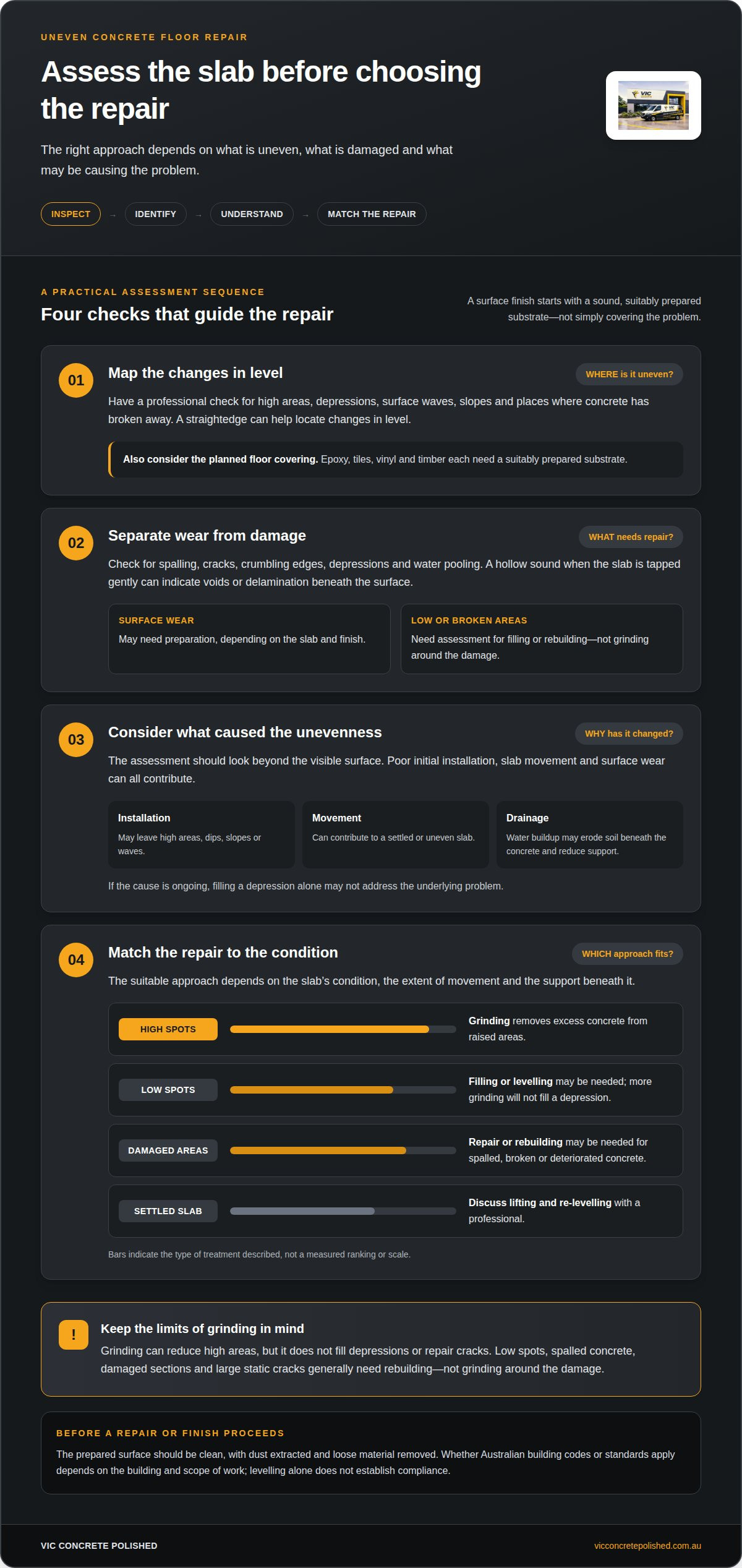
Arrange a professional assessment before choosing a repair or finish. It should identify high areas, depressions, surface waves, slopes and places where concrete has broken away. A straightedge, for example, can help locate changes in level. The assessment should also account for the planned floor covering, since epoxy, tiles, vinyl and timber each need a suitably prepared substrate.
-
Identify signs of slab damage
Ask the professional to distinguish surface wear from damage that needs rebuilding. Look for spalling, cracks, crumbling edges, depressions and water pooling. A hollow sound when the slab is tapped gently can indicate voids or delamination beneath the surface. These signs matter: grinding around a low or broken section will not repair it, and uneven concrete can leave an epoxy finish inconsistent.
-
Identify causes of slab movement
Have the assessment consider why the floor is uneven, not just where. Poor initial installation, slab movement and surface wear can all contribute. Drainage also matters: water buildup may erode soil beneath the concrete and destabilise the slab. If the cause is ongoing, filling a depression alone may not address the underlying problem. The repair plan should account for both the visible surface and its support.
-
Arrange professional slab re-levelling
Discuss professional lifting and re-levelling if part of the slab has settled. The suitable approach depends on the extent of movement, the slab’s condition and the support beneath it. Low spots, spalled concrete, damaged sections and large static cracks generally need rebuilding, not grinding around the damage. For tiles, vinyl or timber, the substrate is prepared by measuring, grinding where needed, cleaning, and repairing cracks or voids. For epoxy, preparation also aims to create an even, sound surface for the coating.
Grinding, dust extraction and cleaning before repair
Grinding removes excess concrete from high spots, but it does not fill depressions or repair cracks. Minor surface preparation may be manageable as a DIY task. For grinding, levelling or coating preparation, a professional can assess the slab and choose an appropriate process.
-
Have a professional grind high spots with diamond tooling
Have a professional use a concrete grinder with diamond tooling on raised areas. The operator removes excess concrete in controlled passes, reducing ridges without grinding indiscriminately across the floor. This creates a smoother surface for later repair or coating. Ask for the grinding depth and surface condition to be assessed against the intended finish, since excessive removal can expose aggregate or change the appearance.
-
Have a professional clean the floor before repair
Use dust extraction during grinding, then clean the slab before applying repair materials. Dust, grease and loose debris can interfere with contact between prepared concrete and a repair or coating. Cleaning and degreasing reveal the actual surface condition, including cracks, small voids and areas needing further attention. A visibly dusty floor is not ready for the next stage.
- Address defects after grinding and cleaning. Cracks and voids need assessment and repair, while low spots may require levelling rather than more grinding. The order matters: grinding lowers high areas, but it cannot rebuild missing concrete. The surface can then be prepared for the intended finish, whether a coating or polished concrete.
- Have the prepared floor checked before the repair or finish proceeds. The surface should be clean, with dust extracted and loose material removed. If a coating is planned, unevenness can contribute to an inconsistent result, so remaining ridges or depressions need attention first. Professional concrete floor grinding forms part of this preparation, not a substitute for filling damaged or low areas.
Causes of uneven or sinking slabs
- Ask the professional to distinguish installation defects from later slab movement. Poor initial installation can leave high areas, dips, slopes or surface waves. A ridge beside a shallow depression, for example, may reflect uneven placement. Broad wear can also create rough patches. This distinction guides the repair: grinding removes high material, but cannot rebuild a low section.
- Have the assessment map where the slab changes level. A slope across the floor, a local depression and a raised ridge are different patterns, even when they appear in one room. Comparing them helps show whether the issue is localised or spread across the surface. That pattern informs the assessment before a repair method is selected.
- Include drainage when assessing a sinking slab. Poor drainage can let water build up and erode soil beneath concrete, reducing support and contributing to instability. Report any water pooling on the surface. The professional can consider where it occurs and whether it sits near a low point or an affected slab edge.
- Ask whether visible deterioration is surface wear or a damaged section. Worn concrete may look rough, while spalling or broken-away material leaves a more obvious defect. A crack, hollow sound or depression can add context to the assessment. These signs help distinguish a surface needing preparation from concrete that needs rebuilding.
- Use the cause assessment to guide the repair. If the issue is a high ridge, removing excess concrete may help. If there is a low spot, spalled area or damaged section, grinding around it will not replace missing material. Where drainage and soil erosion may have affected support, surface work alone may not address the underlying instability. Have the professional consider the observed pattern, damage and material condition before recommending a lasting repair.
Preparing damaged concrete
Sound preparation helps repair materials bond to the slab. Have damaged areas assessed and prepared before applying a compound, coating or final finish.
- Map each damaged area before preparation begins. A professional distinguishes loose, broken concrete from stable material and marks cracks, voids and depressions. A spalled edge, for example, needs different treatment from a shallow surface mark. This assessment identifies what needs removal, repair or levelling instead of concealing defects beneath a new layer.
- Prepare the concrete mechanically before applying repair materials. Grinding removes weak surface material and provides a sound base for the repair. Dust extraction and cleaning then remove residue that could interfere with bonding. The prepared surface should be free of loose debris, grease and dust, including around cracks and the edges of broken sections.
- Match the repair material to the damage. Choosing between uneven concrete floor repair options starts with distinguishing low spots from spalled concrete and damaged sections. Specialised levelling compounds or repair mortars can fill low spots and bond to the existing slab. Damaged concrete needs rebuilding, not simply grinding around it. Large structural cracks may call for rigid epoxy, while flexible polyurethane suits non-structural cracks that can move slightly.
- Prepare a trial area before a full-floor project. It lets the professional assess grinding depth, repair appearance, aggregate match and final polish level. Exposed aggregate, for instance, may look different after grinding from the surrounding slab. Review the sample finish before proceeding so the repair and surface treatment work together.
- Have the completed preparation checked before sealing, coating or polishing. The right uneven concrete floor repair options depend on the damage and intended finish; correcting an uneven surface may require mechanical preparation and resurfacing. For professional concrete floor preparation, arrange an assessment before the finish is applied.
Vic Concrete Polished
Vic Concrete Polished connects slab preparation with a suitable finished floor. Once the cause and extent of unevenness are understood, the surface can be prepared for an appropriate finish rather than simply covered. Options include Mechanical Polished Concrete, Grind and Seal, Decorative Flakes Coating System and Epoxy - Resin, depending on the project’s intended result.
Turn to Vic Concrete Polished for professional concrete floor preparation and a new finish. Careful preparation addresses the condition of the existing surface before the selected system is applied. Contact Vic Concrete Polished to discuss your uneven concrete floor and suitable next steps.
Plan the floor around its next use
Before choosing a finish, consider how the room will be used and how you want the completed floor to look and feel. A garage, living area and commercial space can have different practical priorities, from easy care to a particular appearance. For commercial property owners and real estate investors maintaining facilities, balancing capital upgrades with broader portfolio strategy is vital, and those evaluating property structures and tax-deferred options can find further information at dstproperties1031.com. Keep those needs in view as you compare uneven concrete floor repair options, so the repair plan and final finish work towards the same outcome.
A clear next step is to arrange a professional assessment focused on the slab and your intended finish. You can explain where the floor feels uneven, describe any changes you’ve noticed and outline how you plan to use the space. That gives the conversation a practical starting point, without assuming every floor needs the same treatment. For guidance on the next stage, contact Vic Concrete Polished. A considered plan can help you move towards a floor that suits the space and feels ready for everyday use.
Frequently Asked Questions
What causes sinking floors and slabs?
Sinking usually reflects movement or loss of support beneath a slab. Poor drainage can allow water to erode supporting soil, while poor initial installation may leave uneven areas from the outset. A gradual change in floor height differs from a finish that has always been uneven. Note whether the problem is changing and where water collects, as this helps explain the pattern.
What causes uneven concrete floors in Australian homes?
Uneven concrete in a home can result from poor installation, slab movement or surface wear. These causes can produce different patterns: a raised ridge may contrast with a worn or settled section elsewhere. The room’s use also matters when planning the repair, because the required finish influences preparation. A floor receiving a coating, for example, needs a suitable base for an even appearance. If repairs are being completed as part of setting up a new home or business facility, coordinating the timeline with professional movers such as Atlas International Movers & Cargo Shipping can help ensure household goods and equipment are transported safely while works take place.
How can a professional check how uneven a concrete floor is?
A professional checks and records changes in height across the floor. A straightedge or level can help compare raised and lower areas; a laser level can also map height differences across a larger room. The assessment considers transitions near doorways and the planned floor finish. This helps distinguish a local dip from a wider change in floor level.
What are the options for repairing an uneven concrete floor?
The repair depends on the defect: grinding can reduce raised areas, while levelling compound or repair mortar can address low spots. Damaged concrete may need rebuilding, and cracks require a repair suited to their type. If a slab has settled, lifting and re-levelling may be considered. The intended finish helps determine the right combination, rather than relying on one treatment across the entire floor.
When is professional concrete grinding suitable for levelling a floor?
Grinding suits high spots or ridges that need reducing to meet the surrounding surface. Diamond tooling removes excess concrete, and a professional controls the work to prepare the floor for its intended finish. Grinding cannot fill depressions or replace broken material. If the slab is still moving, grinding the surface will not address the underlying issue.
How does self-levelling compound work, and what professional preparation is needed?
Self-levelling compound is a flowable repair material used to create a more even surface over low areas. A professional first assesses and prepares the slab so the compound can bond; loose material, dust, grease, cracks and voids need attention as appropriate. The product and application must suit the floor and planned finish. Doorways and adjoining floor heights also affect where levelling can end.


