

Polished concrete is generally easier to keep clean, but it is not automatically the healthier choice. When weighing the health risks of old carpet against polished concrete, moisture matters: dampness can affect the slab beneath a floor covering, while carpet fibres can hold dust and debris.
It is understandable to worry that old carpet may hold allergens, stains or moisture, particularly if it smells musty or has been wet. A polished hard surface makes everyday dust and spills easier to see and remove. However, the concrete still needs suitable preparation and care, and spills should be cleaned promptly.
This comparison looks at how moisture, allergens, stains and routine cleaning affect each floor, as well as what carpet removal involves before concrete polishing. You will also learn why a damp slab needs attention before a new finish is applied, helping you compare cleaning needs with the condition of the floor underneath.
Key Takeaways
- A hard floor is easier to clean day to day, but dampness beneath old coverings still needs attention before a new finish is applied.
- Regular dry mopping and prompt spill clean-up help keep polished concrete clearer and reduce the chance of marks or lingering odours.
- Carpet removal exposes the slab, making its condition easier to assess before polishing or sealing is considered.
- Learn how professional carpet removal and concrete floor finishes can support a cleaner, more practical surface.
Polished concrete compared with moisture-trapping floor coverings
Polished concrete leaves the slab visible, while carpet and some other coverings can conceal dampness beneath them. This difference matters most in basements, garages and rooms with a history of leaks.
Moisture-Trapping Floor Coverings
Moisture-trapping floor coverings can hold dampness between the covering and the concrete. In older buildings, slabs below ground level may be damp if they lack a moisture barrier. Installing vinyl over a damp slab can trap water and contribute to mould or adhesive failure. A polished floor makes the surface easier to inspect, but polishing does not stop moisture entering through the slab.
Health Risks from Old Carpet
Old carpet can collect dust, dust mites and other allergens, while damp carpet may develop mould or a musty smell. These can be concerns for people with asthma or allergies, but carpet age alone does not show whether it is contaminated. Some flooring materials or adhesives may release VOCs; the age of the carpet alone cannot establish their presence.
For people with asthma or allergies, a smooth, hard floor such as polished concrete is generally easier to dry-mop and clean than carpet. Rugs can still collect dust, so they need regular upkeep too. Australian health and building advice on mould focuses on finding the moisture source, drying affected areas and addressing visible mould, rather than covering it with new flooring.
Look for persistent musty odours, visible mould, damp patches, discolouration or carpet that feels wet. These signs may point to moisture or damage, but appearance alone cannot identify hazardous contamination. The slab’s condition also matters before installing a polished finish.
Concrete is hard underfoot, and a polished surface can become slippery when wet. Dry spills promptly, and consider rugs where people stand or children play. Concrete may also feel harder and sound louder than carpet, while rugs can soften the feel and reduce echo. Mechanically polished concrete provides a durable surface compared with carpet, tiles or vinyl, but cracks, movement or severe unevenness can affect its suitability. A coating or sealer is a different finish, and its protection depends on the system and its maintenance. In damp basements or garages, assess the slab’s moisture and condition before choosing flooring.
Polished concrete cleaning and allergy considerations
A simple routine helps keep polished concrete clear of indoor grit and dust. Unlike carpet fibres, a smooth concrete surface leaves household dust visible until it is removed.
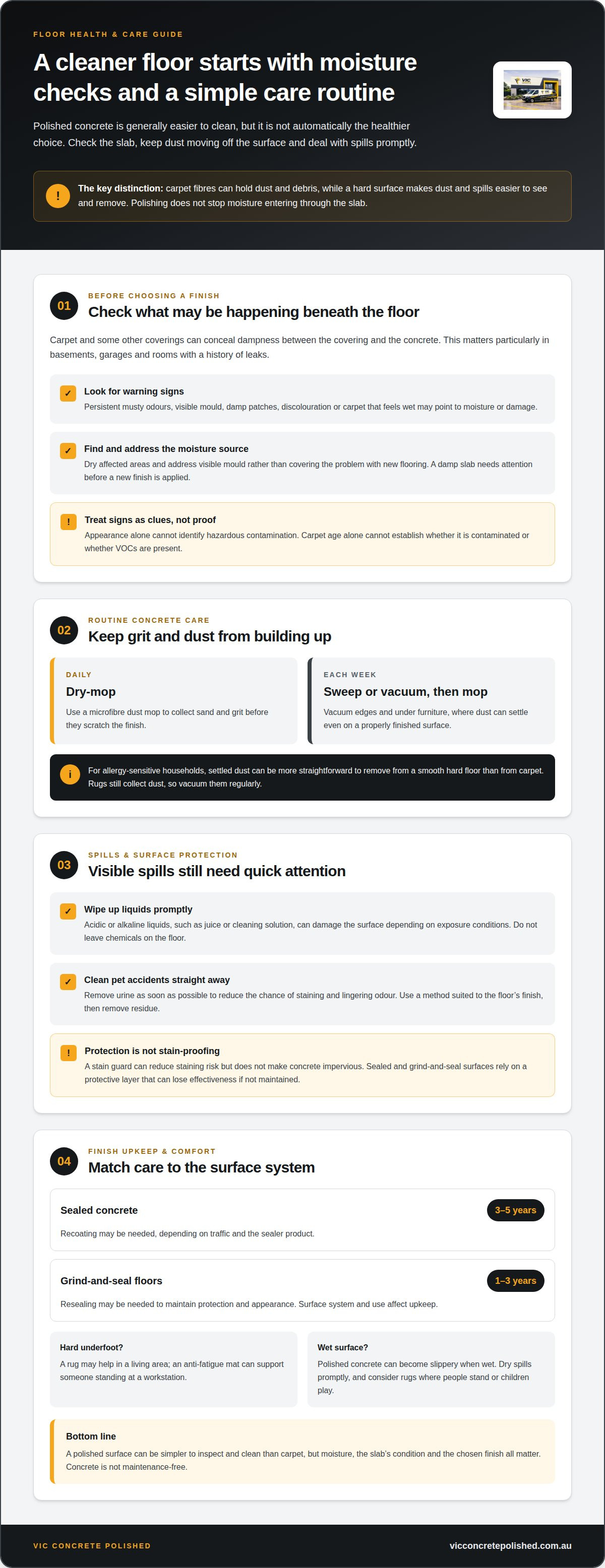
For routine care, dry-mop daily with a microfibre dust mop to collect sand and grit before they scratch the finish. Each week, sweep or vacuum the floor, then mop it. A vacuum is useful around edges and under furniture, where dust can settle even on a properly finished surface. For larger residential or commercial properties, professional providers such as Advance Cleaning Services Inc. offer comprehensive cleaning support to keep both hard floors and carpeted areas thoroughly maintained.
Sealed concrete still needs care. Recoating may be needed every 3 to 5 years, depending on traffic and the sealer product. Grind-and-seal floors may need resealing every 1-3 years to maintain protection and appearance. These periods differ because the surface system and its use affect upkeep.
For allergy-sensitive households, removing settled dust can be more straightforward than cleaning carpet. Rugs can soften a living area, but their fibres also collect dust, so vacuum them regularly. Laminate also has a hard surface, though its cleaning needs depend on the product and installation. Flooring is only one factor: ventilation, dampness and furnishings can all affect how dust behaves in a room.
Temperature and comfort matter too. Concrete can feel hard underfoot, so a rug may help in a living area, while an anti-fatigue mat can support someone standing at a workstation. In an industrial space, dry-mopping can remove loose grit before it is tracked across the floor. Mechanically polished concrete is not maintenance-free: traffic and the selected finish affect how the surface should be cared for.
Where an existing concrete surface needs preparation, concrete floor grinding can form part of the work before a polished finish is applied. A sound, properly prepared surface supports a more consistent result, while cleaning afterwards keeps dust and aggregate particles from building up.
Stains and chemical exposure
Polished concrete makes spills easier to see, but visibility does not prevent staining. Clean indoor spills promptly, especially acidic or alkaline liquids, as exposure conditions affect the risk of surface damage. For example, wipe up juice or cleaning solution rather than leaving it on the floor. Concrete itself contains no volatile organic compounds (VOCs), but that does not mean every coating or cleaning product is chemical-free.
Pet accidents also need prompt attention. Clean urine from polished concrete as soon as possible to reduce the chance of staining and lingering odour. Use a cleaning method suited to the floor’s finish, then remove any residue. A stain guard can reduce the risk of staining, but it does not make concrete impervious. Spills can still mark the surface, particularly if the protective layer has lost its effectiveness.
Coatings and maintenance affect how a floor responds to liquids. A sealed or grind-and-seal surface relies on its protective layer, and its water resistance can decline if that layer is not maintained. Dropped liquids may then leave marks. A penetrating stain guard offers another measure of protection, but it does not replace prompt cleaning. Mechanically polished concrete and coated concrete are different surface systems, so their care requirements can vary.
Carpet presents a different cleaning challenge: spills can soak into fibres and become harder to remove completely, while spills on concrete remain visible on the surface. This helps explain why polished concrete can be simpler to inspect after an accident. It is not a chemical-containment system, so remove chemicals promptly rather than leaving them on the floor. Follow the finish’s care requirements, and do not assume durability means stain-proof performance. Regular upkeep helps preserve the coating and appearance, while quick action limits contact between spills and the floor.
Removing carpet before concrete polishing
Removing carpet exposes the concrete slab, so its condition can be assessed before choosing a new finish. Carpet, underlay and adhesive can hide cracks, stains, uneven areas and signs of past moisture. Once exposed, the surface gives the preparation team a clearer view of what needs attention, rather than leaving defects concealed beneath the flooring.
After carpet removal, clear away adhesive and remaining material before grinding the surface. For commercial renovations, responsibly clearing away bulky old flooring and strip-out debris is also essential, with commercial waste management providers such as Greenline Environmental supporting efficient site clearance. Grinding reveals more of the concrete and helps create a suitable base for mechanically polished concrete. The slab needs to be structurally sound, reasonably flat and accessible to the required machinery. Severe cracks, movement or subsidence can make polishing unsuitable, while soft or crumbly concrete can affect the finish.
Moisture assessment is another important part of the decision. A damp slab may need further investigation before densifiers or sealers are applied, as the concrete needs to be sufficiently dry for these materials. If the floor has been wetted, assess the slab before treating it as sound. Persistent moisture, oil, paint or chemical contamination can also affect whether polishing is suitable and what preparation is needed.
Heating can change how a room feels, but it does not resolve moisture in the slab or correct structural damage. A resistant finish cannot compensate for a weak or uneven base either. The practical approach is to remove the covering, inspect the exposed concrete, then match the preparation and finish to the slab’s condition. This helps avoid concealing existing problems beneath a new surface.
For a coordinated transition from carpet removal to concrete preparation, arrange carpet removal and floor preparation before deciding on a polished finish.
Vic Concrete Polished: Tiles, Carpet and Vinyl removal
Vic Concrete Polished can remove old carpet, tiles and vinyl, clearing the way to assess the concrete beneath. This is a practical next step when flooring is worn, difficult to keep clean, or concealing the slab’s condition.
Once the covering is removed, the exposed concrete can be assessed and prepared before a finish is selected. Depending on the slab and the desired result, options include Mechanical Polished Concrete, Grind and Seal, or a Decorative Flakes Coating System. Proper preparation helps match the finish to the surface instead of covering up issues that could affect the result.
If you’re considering replacing old carpet with a concrete finish, contact Vic Concrete Polished to discuss carpet removal and the flooring options for your space.
Choose the next step for your floor
The health risks of old carpet versus polished concrete depend on more than the visible finish. The slab’s condition, any ongoing dampness and how the room is used all influence the next step. Changing the flooring is an opportunity to address hidden problems rather than covering them again.
Before choosing a finish, consider how the space needs to work day to day: whether easy cleaning is the priority, how much comfort rugs may add, and whether moisture needs attention first. The right option depends on these conditions, not appearance alone. A clear assessment can help you plan a practical surface and avoid overlooking what lies beneath the old covering.
If you’re ready to discuss the floor and possible finishes, contact Vic Concrete Polished. A considered next step can make your flooring decision feel more straightforward.
Frequently Asked Questions
What health risks or indoor air quality concerns are associated with polished concrete floors?
Polished concrete itself contains no volatile organic compounds (VOCs), but a hard, wet surface can increase the risk of slips and falls. When comparing the health risks of old carpet versus polished concrete, also consider the firmness of the floor, as falls can have more serious consequences for children or older people. Grinding during preparation creates dust, so safe work practices and thorough clean-up matter.
How do old carpet and polished concrete compare for asthma and allergy symptoms?
For asthma and allergy symptoms, the health risks of old carpet versus polished concrete depend partly on what else in the room collects dust. Polished concrete is generally easier to keep free of settled dust than carpet, but rugs, curtains, bedding and furniture can still collect it. A smooth floor may simplify cleaning, while soft furnishings still need regular attention. Flooring alone cannot identify the cause of symptoms.
Does removing old carpet in Australia risk exposure to asbestos-containing backing or underlay?
Yes. If carpet backing, underlay or adhesive contains asbestos, disturbing it during removal can release hazardous fibres. Not all old carpet contains asbestos, and appearance alone cannot establish what a material contains. If you uncover suspected material, stop disturbing it and arrange assessment by a qualified asbestos professional before continuing removal or floor preparation. This helps prevent fibres from spreading through the home.


